
Melville Fuller
Actor
Born: February 11, 1833 in Augusta, Maine, United States Died: July 4, 1910 Active: 1901 (film appearance), 1855-1910 (legal career) Birth Name: Melville Weston Fuller
Films
1 film
About Melville Fuller
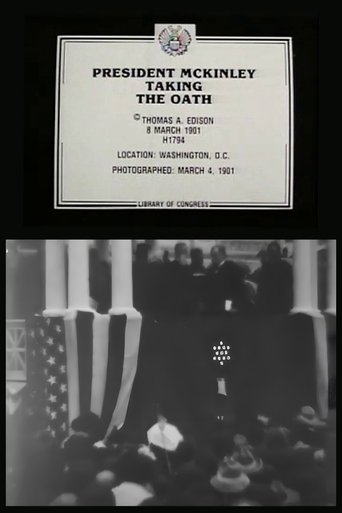
Melville Weston Fuller was the eighth Chief Justice of the United States Supreme Court, serving from 1888 until his death in 1910. Born in Maine in 1833, Fuller built a legal career before being appointed to the Supreme Court by President Grover Cleveland. As Chief Justice, he presided over some of the most significant cases of the Gilded Age and Progressive Era, including Plessy v. Ferguson. Fuller was known for his judicial restraint and conservative interpretation of the Constitution. His appearance in the 1901 film 'President McKinley Taking the Oath' was not as a professional actor but in his official capacity as Chief Justice administering the presidential oath of office. This historic moment captured on early motion picture film represents one of the earliest cinematic records of a U.S. Presidential inauguration. Fuller's legacy extends far beyond this brief film appearance, as he shaped American jurisprudence during a transformative period in U.S. History.
The Craft
On Screen
Not applicable - appeared as himself in official capacity during a documented historical event
Milestones
- Appointed Chief Justice of U.S. Supreme Court (1888)
- Administered presidential oath to William McKinley (1901)
- Presided over landmark cases including Plessy v. Ferguson (1896)
- Served 22 years as Chief Justice
- Appeared in historic early film documenting presidential inauguration
Best Known For
Iconic Roles
Must-See Films
Accolades
Won
- Honorary Doctor of Laws degrees from multiple universities
- Fellow of the American Academy of Arts and Sciences
Special Recognition
- Chief Justice of the United States Supreme Court
- Member of the American Philosophical Society
- Namesake of Fuller County, South Dakota
Why They Matter
Impact on Culture
Fuller's appearance in the 1901 inauguration film represents a significant moment in early American cinema, capturing one of the first moving images of a U.S. Presidential ceremony. This film serves as an invaluable historical document, preserving for posterity the solemn traditions of American democracy during the dawn of the motion picture era. His participation, though not as an actor, helped establish the practice of documenting important governmental events on film, setting a precedent for future political coverage in cinema and news media.
Lasting Legacy
Chief Justice Fuller's legacy in jurisprudence far outweighs his brief cinematic appearance, though the 1901 film provides a rare visual record of this important historical figure. His judicial decisions shaped American law during a critical period of industrialization and social change. The film itself has become historically significant as one of the earliest surviving examples of presidential inauguration footage, offering modern audiences a glimpse into early 20th-century American political ceremonies and the beginnings of political film documentation.
Who They Inspired
While not an actor or filmmaker, Fuller's appearance in early cinema influenced the development of political documentary filmmaking. The film of McKinley's inauguration helped establish the importance of capturing governmental ceremonies for historical preservation and public education. His dignified presence in this early motion picture demonstrated how film could serve as a medium for documenting official state functions, paving the way for future newsreels and political documentaries.
Off Screen
Fuller married Calista Reynolds in 1858, who died in 1878. He later married Mary Coolbaugh in 1882. He had six daughters from his first marriage. Fuller was known for his intellectual pursuits, including literature and languages. He maintained a reputation for integrity and dignity throughout his long judicial career. His personal life was marked by tragedy with the early death of his first wife, but he found happiness in his second marriage.
Education
Bowdoin College (graduated 1853), Harvard Law School (attended 1855, did not graduate)
Family
- Calista Reynolds (1858-1878)
- Mary Coolbaugh (1882-1910)
Did You Know?
- Was the first Chief Justice to appear in a motion picture film
- Administered the oath of office to three presidents: Harrison (1889), Cleveland (1893), and McKinley (1897 and 1901)
- The 1901 inauguration film was one of the earliest examples of presidential ceremony captured on moving film
- Fuller — cousin of poet Henry Wadsworth Longfellow
- He was the last Chief Justice to have served in the 19th century
- The film was produced by the Edison Manufacturing Company
- Fuller was originally a Democrat but was appointed by a Republican president (Benjamin Harrison)
- He was the first Chief Justice to graduate from a New England college (Bowdoin)
- Fuller Court decisions established important precedents in labor law and interstate commerce
- The McKinley inauguration film was only about 30 seconds long, typical of early motion pictures
In Their Own Words
The Constitution is a color-blind instrument, and knows no distinction among citizens
Judicial duty is to interpret law, not to make it
The liberty of the press is not confined to newspapers and periodicals. It embraces pamphlets and leaflets
The law is what it is - a majestic edifice, sheltering all of us, each stone of which is a rule
In the administration of justice, there is no room for passion or prejudice
Frequently Asked Questions
Who was Melville Fuller?
Melville Fuller was the eighth Chief Justice of the United States Supreme Court, serving from 1888 to 1910. He appeared in the 1901 film 'President McKinley Taking the Oath' not as an actor, but in his official capacity administering the presidential oath of office.
What films is Melville Fuller best known for?
Titles linked here include President McKinley Taking the Oath (1901).
When was Melville Fuller born and when did he die?
Born February 11, 1833; died July 4, 1910.
What awards did Melville Fuller win?
Fuller received numerous honorary doctorates and was a member of prestigious academic societies, including the American Academy of Arts and Sciences. His highest honor was his appointment as Chief Justice of the United States Supreme Court.
What was Melville Fuller's acting style?
Fuller was not an actor and had no acting style. His appearance in the 1901 film was as himself, performing his official duties as Chief Justice with the dignity and solemnity appropriate for a presidential inauguration ceremony.