
President McKinley Taking the Oath
"McKinley takes the oath as rain ends the camera roll"
Keys: Space play/pause · ←/→ 10s · F fullscreen · M mute · </> speed
About this film
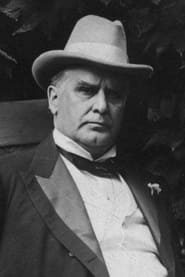
Edison cameramen recorded William McKinley's second inauguration on March 4, 1901, from a position near the East Portico of the Capitol. Diplomats, cabinet members, and congressional leaders take their places before Chief Justice Melville Fuller administers the oath on a small Bible. McKinley kisses the book and begins his address just as rain forces the crew to stop after roughly fifty feet of film—about forty-four seconds of history.
Cast & crew
More films like this
More Documentary films
View all →


More about this film
About the production
Release dateMarch 1901
Box officeUnknown - early films were typically sold rather than exhibited for box office returns
ProductionAmerican Mutoscope Company
Filmed inUnited States Capitol, Washington D.C., East Portico of the Capitol Building
The short was shot using the Biograph camera, which used 68mm film stock, significantly larger than Edison's 35mm format, allowing for higher image quality. The camera was hand-cranked, requiring careful operation by the cinematographer. The filming had to be conducted discreetly during the actual inauguration ceremony without disrupting the formal proceedings. The Biograph company had special permission to film the event, as motion picture photography of official government functions was still relatively new and required authorization.
Themes
Presidential PowerDemocratic TraditionHistorical DocumentationPolitical CeremonyAmerican Government
Themes & topics
InaugurationPresidential OathCeremonyGovernmentPoliticsWashington D.C.Capitol BuildingHistorical EventDocumentarySilent Film
Historical background
Thomas Edison's crew secured government permission to place a camera within fifteen feet of the president, continuing the company's practice of filming national ceremonies for peep-show and projector rental.
Why this film matters
The surviving fragment belongs to the earliest presidential inauguration footage and demonstrates how news-minded producers sold civic spectacle to exhibitors nationwide.
Making of
The production of represented a significant achievement in early documentary filmmaking. The American Mutoscope Company had to obtain special permission from government officials to film the inauguration ceremony. The cinematographer had to position the bulky Biograph camera carefully to capture the oath-taking without obstructing the view of attendees or disrupting the solemn proceedings. The camera was manually operated using a hand crank, requiring the operator to maintain consistent speed throughout the filming. The large 68mm film format used by Biograph produced exceptionally clear images but required more light and careful handling. The filming team likely had to arrive hours early to set up their equipment and coordinate with Capitol police and inauguration organizers. This was one of the first times a presidential inauguration was captured on motion picture film, setting a precedent for future documentary coverage of political events.
What critics said
Edison's July 1901 catalog boasted photographic quality despite the downpour; archivists now study the clip alongside Porter and White's companion parade film from the same day.
Did you know?
- This is one of the earliest surviving films of a presidential inauguration ceremony
- the picture captures what would become McKinley's final inauguration, as he was assassinated just six months later in September 1901
- The American Mutoscope Company used their unique 68mm film format, which produced images of exceptional quality for the time
- Chief Justice Melville Fuller, who administers the oath, served on the Supreme Court from 1888 to 1910
- Admiral George Dewey, hero of the Spanish-American War, can be seen in the background among the attendees
- predates the first narrative films by several years and represents early documentary cinema
- The inauguration took place before the current inaugural stands were built; the ceremony was held on the temporary platform
- McKinley's second inauguration was the first one of the 20th century
- the picture was shot at approximately 16 frames per second, standard for early silent films
- This footage is historically valuable as it shows the actual presidential oath being administered, a tradition that continues today
Visual style
The cinematography of was accomplished using the American Mutoscope Company's proprietary Biograph camera, which utilized 68mm film stock - nearly twice the width of the standard 35mm film that would later become industry standard. This larger format produced images of remarkable clarity and detail for the time period. The camera was stationary, positioned to capture the oath-taking ceremony from an optimal vantage point. The framing includes McKinley, Chief Justice Fuller administering the oath, and portions of the assembled crowd and dignitaries. The exposure appears well-balanced considering the outdoor lighting conditions and the limitations of early film stock. The camera work demonstrates the technical skill of early cinematographers in capturing important events with the cumbersome equipment of the era.
Innovations
represents several technical achievements for its time. The use of the 68mm Biograph format provided superior image quality compared to other contemporary film formats. The successful capture of an outdoor ceremony with proper exposure demonstrates the advancing capabilities of early film equipment. The ability to film such an important official event without disruption shows the growing acceptance of motion picture cameras in formal settings. the picture also demonstrates the technical skill required to hand-crank the camera at a consistent speed to produce smooth motion. The preservation of this footage for over 120 years is itself proof of the quality of the original film stock and the durability of early motion picture technology.
Music
As a silent film produced in 1901, this movie had no synchronized soundtrack. When originally exhibited, it would have been accompanied by live music, typically a pianist or small orchestra in the theater. The musical accompaniment would have been selected to match the solemn and patriotic nature of the inauguration ceremony. Popular choices might have included patriotic songs like 'Hail to the Chief' or other appropriate martial music. Some exhibitors might have used a lecturer to provide narration during the screening, explaining the significance of what was being shown to the audience. The lack of recorded sound was standard for films of this era, with the visual spectacle being the primary attraction.
Memorable scenes
- The solemn moment when Chief Justice Melville Fuller administers the presidential oath to William McKinley, capturing the formal transfer of executive power in the early 20th century
What audiences thought
Early audiences viewed with great interest, as motion pictures showing real events and real people were still a novelty. the picture would have been shown in vaudeville theaters and early nickelodeons, likely as part of a program of short films. Audiences were fascinated by the ability to see the President and other important figures in motion, as most people had only seen them in photographs or illustrations. the picture's educational value was also recognized, with some exhibitors promoting it as an opportunity for citizens to witness their government in action. The relatively short length of the picture made it suitable for the attention spans of early film audiences, who were still adapting to the new medium of motion pictures.
Film connections
Influenced by
- Early actuality films by the Lumière Brothers
- Edison's 'The Kiss' (1896)
- Biograph's previous documentary shorts
This film influenced
- Subsequent inauguration films
- Political documentary films
- Newsreel footage
- Presidential campaign films
Film restoration
the picture is preserved by the Library of Congress and has been digitized as part of their early motion picture collection. The original 68mm Biograph film elements are maintained in archival conditions. the picture is also available through various film archives and has been included in compilations of early American cinema. The preservation status is considered good, with the footage remaining clear and viewable despite its age.
Where to watch
- Library of Congress website (loc.gov)
- Internet Archive
- YouTube (through Library of Congress channel)
- Various film archive collections
- Educational film databases