Rose Hobart
Actor
Born: May 1, 1906 in New York City, New York, USA Died: August 29, 2000 Active: 1923-1971 Birth Name: Rose Kefer
Films
1 film
About Rose Hobart
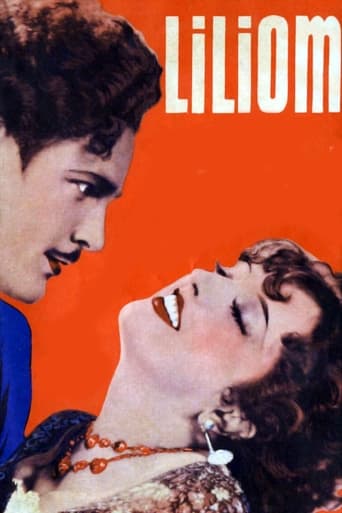
Sophisticated and versatile American actress: over five decades across stage, screen, and television. Born Rose Kefer to musician parents, she made her professional stage debut at age 15 and quickly rose to prominence on Broadway, most notably in the 1929 production of 'Death Takes a Holiday.' Her transition to Hollywood was marked by her haunting performance as Julie in the 1930 film 'Liliom,' directed by Frank Borzage, which established her as a capable leading lady of the early sound era. Throughout the 1930s and 1940s, she became a reliable fixture in both prestigious dramas and B-movie thrillers, often portraying intelligent, independent women or 'other woman' roles. Her career was tragically derailed in the early 1950s when she was blacklisted by the House Un-American Activities Committee (HUAC) due to her active involvement in the Screen Actors Guild and her vocal support for liberal causes. Despite this setback, she eventually returned to acting in the 1960s, finding a new generation of fans through her recurring role on the popular soap opera 'Peyton Place.'
The Craft
On Screen
Hobart was known for a restrained, naturalistic acting style that stood in contrast to the more theatrical performances of many of her contemporaries. She possessed a distinctive, melodic voice and a poise that allowed her to convey deep emotional complexity through subtle facial expressions. Critics often noted her ability to project intelligence and a sense of modern independence, which made her particularly effective in 'Pre-Code' cinema and noir-inflected dramas.
Milestones
- Broadway debut in 'The Lullaby' (1923)
- Breakthrough stage success in 'Death Takes a Holiday' (1929)
- Feature film debut in Frank Borzage's 'Liliom' (1930)
- Starring role opposite Fredric March in 'Dr. Jekyll and Mr. Hyde' (1931)
- Co-founding the Actors' Laboratory Theatre in Hollywood (1941)
- Elected to the Screen Actors Guild Board of Directors
- Resurgence in television on 'Peyton Place' (1966-1969)
Best Known For
Iconic Roles
Must-See Films
Accolades
Won
- Screen Actors Guild Ralph Morgan Award (1994)
Special Recognition
- Life Achievement Award from the Screen Actors Guild (1994)
- Subject of the experimental film 'Rose Hobart' by Joseph Cornell (1936)
Working Relationships
Worked Often With
Studios
Why They Matter
Impact on Culture
Rose Hobart's cultural impact is twofold: she was a pioneer of the 'modern woman' archetype in early sound cinema and a significant figure in the history of Hollywood labor relations. Her performance in 'East of Borneo' became the catalyst for. Furthermore, her refusal to name names during the HUAC hearings made her a symbol of integrity and resilience among blacklisted artists.
Lasting Legacy
Hobart's legacy is preserved through her autobiography, 'A Steady Digression to a Fixed Point,' which provides a candid look at the Golden Age of Hollywood and the devastating effects of the blacklist. She is remembered as a 'thinking man's actress' who prioritized the craft of acting over the trappings of stardom. In film history circles, she remains a celebrated figure for her contributions to the Screen Actors Guild and her role in shaping the professional standards of screen acting.
Who They Inspired
She influenced a generation of character actresses by proving that one could maintain a long, respected career without being a traditional 'glamour girl.' Her advocacy for actors' rights helped establish the protections that modern performers enjoy today through SAG-AFTRA.
Off Screen
Rose Hobart was born into a creative family; her father was a cellist and her mother was an opera singer. She was married three times: first to Benjamin Winter Jr., then to William M. Grosvenor, and finally to Barton H. Knowles. She was deeply committed to labor rights within the film industry, which led to her leadership roles in the Screen Actors Guild and her subsequent political troubles during the McCarthy era.
Education
She attended the Chappaqua Boarding School and later studied acting through practical experience in various stock theater companies.
Family
- Benjamin Winter Jr. (1932-1934)
- William M. Grosvenor (1936-1943)
- Barton H. Knowles (1946-1949)
Did You Know?
- The artist Joseph Cornell was so mesmerized by her in 'East of Borneo' that he cut the film down to 19 minutes, projected it through a blue glass, and named the resulting masterpiece after her.
- She was one of the first actors to be blacklisted after she refused to cooperate with the House Un-American Activities Committee in 1949.
- During the filming of 'East of Borneo' in 1931, she performed many of her own stunts involving live crocodiles and snakes.
- She served on the board of the Screen Actors Guild for many years, advocating for better working conditions.
- Her autobiography was published in 1994, just six years before her death at age 94.
- She was originally considered for the role of the nurse in 'Romeo and Juliet' but was deemed too young and beautiful at the time.
- She spent her final years at the Motion Picture & Television Country House and Hospital in Woodland Hills.
In Their Own Words
I was a very serious actress. I didn't want to be a star; I wanted to be a good actress.
The blacklist was a very strange time. You didn't know who your friends were, and suddenly the phone just stopped ringing.
I've always been a bit of a rebel. I think that's why I got into so much trouble with the committee.
Frequently Asked Questions
Who was Rose Hobart?
American stage and film actress best known for her roles in early 1930s cinema and her later television work. She was also a prominent labor activist within the Screen Actors Guild.
What films is Rose Hobart best known for?
Titles linked here include Liliom (1930), Dr. Jekyll and Mr. Hyde (1931).
Why was Rose Hobart blacklisted?
She was blacklisted during the McCarthy era in the early 1950s because of her political activism, her leadership in the Screen Actors Guild, and her refusal to cooperate with the House Un-American Activities Committee.
What is the Joseph Cornell film 'Rose Hobart'?
It is a famous 1936 surrealist collage film created by artist Joseph Cornell, who edited footage of Hobart from the movie 'East of Borneo' into a dreamlike, avant-garde short.
When did Rose Hobart die?
Rose Hobart passed away on August 29, 2000, at the age of 94 in Woodland Hills, California.