
Liliom
"Both are fired from their jobs."
Keys: Space play/pause · ←/→ 10s · F fullscreen · M mute · </> speed
About this film
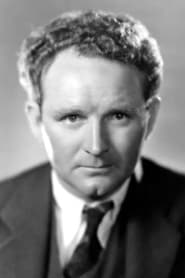
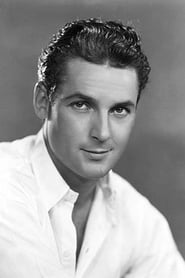
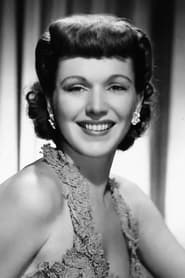
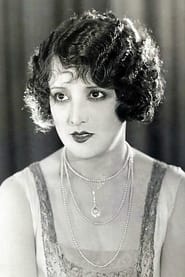
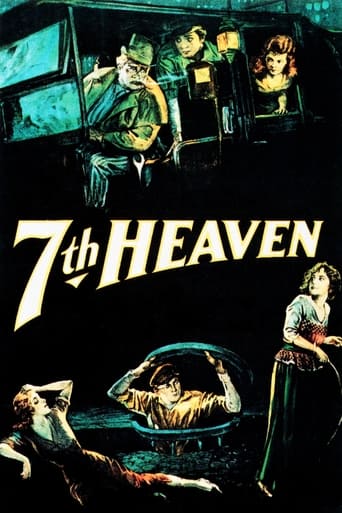
A carousel barker falls in love with a young woman. Both are fired from their jobs, and when the young woman becomes pregnant, the carousel barker tries to help pull off a robbery, which goes wrong. Because of the robbery, he dies, and after spending time in hell, is sent back to The film stars Charles Farrell, Rose Hobart, Estelle Taylor, H.
Cast & crew
More films like this
More Drama films
View all →







More from Frank Borzage
View all →
More about this film
About the production
Release dateOctober 5, 1930
Box officeConsidered a commercial failure upon its initial release.
ProductionFox Film Corporation
Filmed inFox Movietone City, Westwood, Los Angeles, California, USA
A significant departure for director Frank Borzage, moving away from his typical sentimental realism into the realm of German Expressionism and fantasy. It was one of the first major sound productions for Fox Film Corporation to experiment with complex visual effects like rear projection. The production faced challenges with the early sound technology of 1930, which often restricted camera movement; however, Borzage and cinematographer Chester Lyons managed to maintain a surprisingly mobile camera. The film also marked a rare instance where the studio allowed a tragic ending for a high-profile romantic lead like Charles Farrell.
Themes
Redemption and Second ChancesThe Transcendental Power of LovePoverty and Social ClassFate and FatalismThe Nature of the Afterlife
Themes & topics
Carousel BarkerBudapestSuicideAfterlifeRobbery Gone WrongUnemploymentPregnancyPurgatoryDomestic ViolenceHeavenly Court
Historical background
Made in 1930, in United States, under Frank Borzage, Liliom belongs to drama film filmmaking as studio systems and national cinemas competed for audiences. Liliom is a 1930 American pre-Code drama film directed by Frank Borzage and written by S.
Why this film matters
Within drama film history, Frank Borzage's name attaches to the work; 1930 film by Frank Borzage; N..
Making of
The production was characterized by Borzage's attempt to blend the 'Fox look' (influenced by F.W. Murnau) with the new requirements of sound. The 'Heavenly Train' sequence was a technical marvel of its time, using miniatures and the newly developed rear projection to create a sense of ethereal movement. Charles Farrell struggled with the transition to sound; his performance was criticized for being too 'stagy' and slow, a common issue for silent stars who were taught to enunciate every syllable for primitive microphones. The sets, designed by Harry Oliver, were built to look like a stylized, dreamlike version of Budapest rather than a realistic one, emphasizing the film's fairy-tale qualities.
What critics said
Contemporary reviews of Liliom are sparse in open sources; later catalog entries chiefly summarize plot and credits.
Did you know?
- The first film to ever utilize the technique of rear projection (process photography), specifically during the afterlife train sequence.
- An adaptation of the 1909 play by Ferenc Molnár, which later served as the basis for the Rodgers and Hammerstein musical 'Carousel'.
- Charles Farrell and Janet Gaynor were a screen duo; this film was notable for casting Rose Hobart instead of Gaynor, breaking up the 'America's Favorite Lovebirds' pairing.
- Banned in several Catholic countries upon release due to its 'irreverent' and non-traditional depiction of the afterlife and the heavenly magistrate.
- Rose Hobart made her film debut in this production, having previously been a stage actress.
- The character 'The Buzzard' was played by Lee Tracy, who became a specialist in fast-talking, cynical roles in the 1930s.
- A very young Anne Shirley (credited as Dawn O'Day) in the role of Liliom's daughter, Louise.
- Director Frank Borzage was so dedicated to the project that he also served as an uncredited producer.
Visual style
Chester A. Lyons utilized high-contrast chiaroscuro lighting and deep shadows to create a somber, expressionistic atmosphere. The film is noted for its 'privileged close-ups' of Rose Hobart, which use soft focus and specific framing to elevate her character's emotional state. The use of moving camera shots in the carnival scenes was highly advanced for a 1930 'talkie'.
Music
The score was composed by Richard Fall. It features a recurring musical motif for the carousel and a haunting, atmospheric soundscape for the afterlife sequences. The film also includes the song 'Look Out, Look Out, the Dumb Police are on Your Trail', which provides a moment of dark humor.
Famous quotes
Julie: 'It is possible, dear, for someone to hit you and hit you and hit you, and not hurt you at all.'
Liliom: 'I'm not a good man, Julie. I'm a barker.'
The Magistrate: 'You have one day to go back and do one good deed. One day to wipe out a lifetime of mistakes.'
Memorable scenes
- The Afterlife Train: A visually stunning sequence where a celestial train descends from the sky to pick up Liliom's soul, utilizing rear projection.
- The Deathbed Close-up: A long, intimate close-up of Rose Hobart as she weeps over Liliom's body, noted for its emotional intensity and unconventional framing.
- The Carousel Opening: A dizzying, rhythmic montage of the Budapest amusement park that establishes the film's frenetic energy.
What audiences thought
1930 audiences found the film's blend of gritty realism and high fantasy jarring, leading to poor box office performance. Many viewers were also put off by Charles Farrell playing a 'tough' and unsympathetic character, as they were used to his softer roles opposite Janet Gaynor.
Film connections
Influenced by
- The Passion of Joan of Arc (1928) - influenced the close-up style
- Sunrise: A Song of Two Humans (1927) - influenced the visual lyricism
- German Expressionism
This film influenced
- Liliom (1934) - Fritz Lang's adaptation
- Carousel (1956)
- A Matter of Life and Death (1946)
- Ghost (1990)
Film restoration
Preserved by the Academy Film Archive. It was restored in the 2000s, ensuring that its innovative visual effects are available for modern study.
Where to watch
- Available on various classic film streaming platforms (e.g., Criterion Channel occasionally)
- Physical media via specialized classic film distributors
- Public domain archives and YouTube (archival prints)