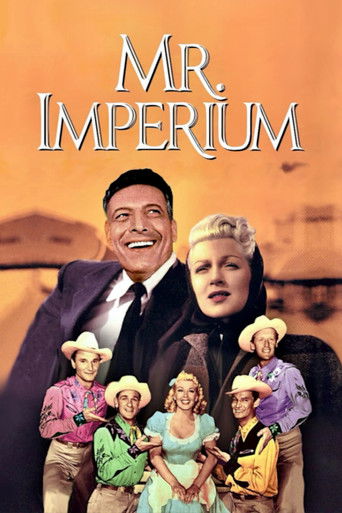

Lana Turner
Actor
Born: February 8, 1921 in Wallace, Idaho, USA Died: June 29, 1995 Active: 1937-1985 Birth Name: Julia Jean Turner
Films
1 film
About Lana Turner
Lana Turner was one of Hollywood's most glamorous and enduring stars, discovered at age 16 while sipping a soda at Schwab's Pharmacy in 1937. She rose to fame at MGM Studios in the late 1930s and became known as the 'Sweater Girl' for her form-fitting outfits that accentuated her figure. Her five decades, during which she starred in over 50 films, including classics like 'The Postman Always Rings Twice' (1946), 'Peyton Place' (1957), and 'Imitation of Life' (1959). Despite her glamorous image, Turner's personal life was marked by tragedy and scandal, most notably the 1958 killing of her abusive boyfriend Johnny Stompanato by her daughter Cheryl Crane. She received an Academy Award nomination for Best Actress for 'Peyton Place' and continued working in television and film through the 1980s. Turner's life story epitomized both the American dream and the dark side of Hollywood fame, making her fascinating figures of Golden Age cinema.
The Craft
On Screen
Lana Turner's acting style evolved from the glamorous, somewhat wooden performances of her early career to more nuanced and emotionally complex portrayals in her later years. She specialized in playing strong, often troubled women who navigated difficult circumstances with determination and style. Her screen presence was characterized by her stunning beauty, impeccable fashion sense, and ability to convey both vulnerability and strength. Turner excelled in melodramas and film noir, where her natural glamour contrasted effectively with the dark themes of her characters' lives. By the 1950s, she had developed greater emotional depth, particularly evident in her performances in 'Peyton Place' and 'Imitation of Life,' where she portrayed complex maternal figures with genuine pathos.
Milestones
- Discovered at Schwab's Pharmacy in 1937 at age 16
- Breakthrough role in 'They Won't Forget' (1937)
- Became MGM's 'Sweater Girl' sensation in the late 1930s
- Starred in film noir classic 'The Postman Always Rings Twice' (1946)
- Academy Award nomination for 'Peyton Place' (1957)
- Major comeback with 'Imitation of Life' (1959)
- Successful transition to television with 'Falcon Crest' (1982-1983)
Best Known For
Iconic Roles
Must-See Films
Accolades
Won
- Golden Globe for Best Actress in a Television Series - Drama for 'Falcon Crest' (1985)
- David di Donatello Award for Best Foreign Actress for 'Peyton Place' (1958)
- Photoplay Award for Most Popular Female Star (multiple years)
Nominated
- Academy Award nomination for Best Actress for 'Peyton Place' (1957)
- Golden Globe nominations for Best Actress in a Motion Picture - Drama (multiple years)
- Laurel Award nominations for Top Female Dramatic Performance (multiple years)
Special Recognition
- Hollywood Walk of Fame star at 6241 Hollywood Boulevard
- American Film Institute ranked #9 on their list of greatest female screen legends
- Golden Palm Star on the Palm Springs Walk of Stars
- Inducted into the International Best Dressed Hall of Fame
Working Relationships
Worked Often With
Studios
Why They Matter
Impact on Culture
Lana Turner's impact on American culture extended far beyond her film performances. As the original 'Sweater Girl,' she helped define 1930s and 1940s feminine glamour and became a style icon whose influence on fashion lasted decades. Her discovery story at Schwab's Pharmacy became part of Hollywood mythology, representing the dream of instant stardom that defined the Golden Age. Turner's public persona embodied the complex relationship between female sexuality, power, and vulnerability in mid-20th century America. The Stompanato scandal and its aftermath became a cultural touchstone, illuminating issues of domestic violence, mother-daughter relationships, and the dark side of celebrity. Her successful career comeback in the 1950s demonstrated remarkable resilience and adaptability in an industry that often discarded aging actresses.
Lasting Legacy
Lana Turner's legacy endures as one of Hollywood's most iconic and complex stars. She represents both the glamour and the tragedy of Golden Age Hollywood, a woman who achieved extraordinary success while enduring profound personal challenges. Her film performances, particularly in film noir and melodrama, continue to be studied for their emotional power and technical excellence. Turner's career longevity, spanning nearly five decades and multiple media formats, set a precedent for stars transitioning between film and television. Her life story has been the subject of numerous books and documentaries, cementing her status as a cultural figure beyond her acting achievements. Turner's influence on subsequent generations of actresses is evident in how she balanced glamour with emotional depth, creating a template for the modern female star.
Who They Inspired
Lana Turner influenced countless actresses who followed, particularly in how she navigated the challenges of maintaining stardom while aging in Hollywood. Her ability to reinvent herself from a teenage sex symbol to a respected dramatic actress provided a model for career longevity. Turner's work in film noir helped establish the genre's conventions for femme fatale characters, influencing how such roles would be portrayed for decades. Her public handling of personal scandals with dignity and resilience set a precedent for how celebrities could manage crisis while maintaining their careers. The emotional depth she brought to maternal roles in films like 'Peyton Place' and 'Imitation of Life' expanded the possibilities for complex female characters in mainstream cinema.
Off Screen
Lana Turner's personal life was as dramatic as her film roles, marked by seven marriages to eight husbands (she married and divorced Stephen Crane twice), numerous high-profile affairs, and constant media attention. She had one daughter, Cheryl Crane, who became embroiled in one of Hollywood's most notorious scandals when she stabbed Turner's abusive boyfriend Johnny Stompanato to death in 1958. The incident was ruled justifiable homicide, but it haunted Turner for the rest of her life. Despite the turmoil, Turner maintained a close relationship with her daughter. Her later years were spent in relative seclusion, though she made a successful television comeback in the 1980s with 'Falcon Crest.' She died of throat cancer at age 74.
Education
Attended Hollywood High School but dropped out to pursue her acting career after being discovered
Family
- Artie Shaw (1940-1940)
- Stephen Crane (1942-1944)
- Joseph Stephen Crane (1943-1944)
- Bob Topping (1948-1952)
- Lex Barker (1953-1957)
- Fred May (1960-1962)
- Robert Eaton (1965-1969)
- Ronald P. Dante (1969-1972)
Did You Know?
- Was discovered at age 16 while drinking a Coke at Schwab's Pharmacy in Hollywood
- Her nickname 'The Sweater Girl' came from her form-fitting sweaters in 1937's 'They Won't Forget'
- Her daughter Cheryl Crane stabbed her abusive boyfriend Johnny Stompanato to death in 1958
- Was married eight times to seven different men (she married Stephen Crane twice)
- Turner Classic Movies' name is partially inspired by her (though primarily named after Ted Turner)
- She was a close friend of Ava Gardner and Joan Crawford
- Her 1958 autobiography was titled 'The Lady, the Legend, the Truth'
- She earned $1,000 per week in her first MGM contract, equivalent to over $19,000 today
- Her films have grossed over $500 million adjusted for inflation
- She was one of the first stars to successfully transition from film to regular television work
In Their Own Words
A successful man is one who makes more money than his wife can spend. A successful woman is one who can find such a man.
I think acting is a little bit of lying and a little bit of truth.
Hollywood is a place where they'll pay you a thousand dollars for a kiss and fifty cents for your soul.
I've been up and down, I've been rich and poor, I've been happy and sad, but I've always been Lana Turner.
The story of my life is about men. I've always been attracted to them and they to me.
Frequently Asked Questions
Who was Lana Turner?
Lana Turner was one of Hollywood's most glamorous and enduring stars of the Golden Age, known as the 'Sweater Girl' and for starring in classic films like 'The Postman Always Rings Twice,' 'Peyton Place,' and 'Imitation of Life.' She was discovered at age 16 and had a career spanning nearly five decades.
What films is Lana Turner best known for?
Lana Turner is best known for 'The Postman Always Rings Twice' (1946), 'Peyton Place' (1957) which earned her an Academy Award nomination, 'Imitation of Life' (1959), 'The Bad and the Beautiful' (1952), and her early breakout role in 'They Won't Forget' (1937).
When was Lana Turner born and when did she die?
Lana Turner was born on February 8, 1921, in Wallace, Idaho, and died on June 29, 1995, at age 74 in Century City, California from throat cancer.
What awards did Lana Turner win?
Lana Turner received an Academy Award nomination for Best Actress for 'Peyton Place' (1957), won a Golden Globe for her television work in 'Falcon Crest' (1985), and received numerous other honors including a star on the Hollywood Walk of Fame.
What was Lana Turner's acting style?
Lana Turner's acting style evolved from glamorous but somewhat wooden early performances to more nuanced emotional portrayals. She specialized in playing strong, troubled women in melodramas and film noir, combining her natural glamour with increasing emotional depth and complexity.
What was the Stompanato scandal?
In 1958, Lana Turner's 14-year-old daughter Cheryl Crane stabbed Turner's abusive boyfriend Johnny Stompanato to death during a domestic dispute. The death was ruled justifiable homicide, but the scandal became one of Hollywood's most notorious incidents.
How many times was Lana Turner married?
Lana Turner was married eight times to seven different men, famously marrying and divorcing Stephen Crane twice. Her marriages included high-profile figures like bandleader Artie Shaw and actor Lex Barker.
What was Lana Turner's legacy in Hollywood?
Lana Turner's legacy includes her status as one of Hollywood's greatest screen legends (AFI ranked her #9), her influence on fashion and glamour, her successful career transitions between film and television, and her representation of both the glamour and tragedy of Golden Age Hollywood stardom.