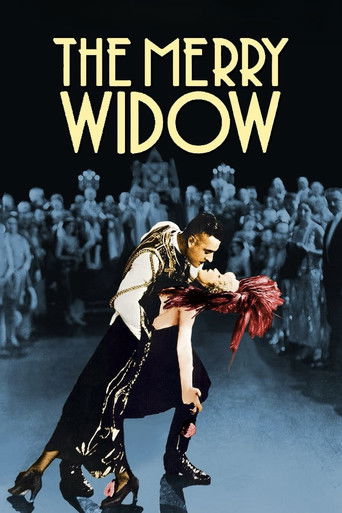
Mr. Imperium
"An exiled king courts a movie star"
Keys: Space play/pause · ←/→ 10s · F fullscreen · M mute · </> speed
About this film
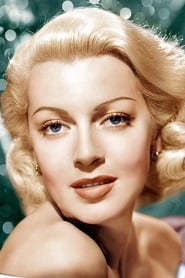
Mr. romantic musical drama film produced by Metro-Goldwyn-Mayer and starring Lana Turner and singer Ezio Pinza.
Cast & crew
More films like this
More Music films
View all →
More about this film
About the production
Release dateMarch 2, 1951
Budget$1,500,000
Box office$1,200,000 (considered a box office disappointment)
ProductionMetro-Goldwyn-Mayer
Filmed inMGM Studios, Culver City, California, Santa Anita Park, Arcadia, California, Bel Air, Los Angeles, California
The film was originally titled 'You Belong to Me' but was changed to 'Mr. Imperium' to capitalize on Ezio Pinza's operatic background. Production was delayed several months due to Lana Turner's health issues. The film featured elaborate musical numbers choreographed by Charles Walters, and the racing sequences were filmed on location at Santa Anita Park with professional drivers as stunt doubles.
Themes
Love versus dutyClass differences and social barriersThe price of fameCultural collision between Europe and AmericaThe nature of royalty in modern times
Themes & topics
exiled monarchHollywood starforbidden lovemusical romanceracing drivernightclub singerroyal dutysecond chance at lovecross-cultural romanceglamour and sacrifice
Historical background
Contemporary records classify Mr. Imperium (1951) as 1951 film by don hartman, placing it within mid-century cinema across Hollywood and world markets.
Why this film matters
Mr. Imperium (1951) helps trace genre evolution, performer careers, and the material conditions of sound exhibition.
Making of
The production faced numerous challenges from the start. Director Don Hartman, primarily known for comedies, struggled with the musical format and clashed with MGM executives over the film's tone. Lana Turner, initially enthusiastic about her first musical, became increasingly difficult on set as she realized her singing limitations. The studio secretly hired Trudy Erwin to dub Turner's vocals, a fact that was kept from the press during filming. Ezio Pinza, despite his operatic background, had difficulty adapting to film acting techniques and required extensive coaching. The elaborate racing sequences caused production delays when weather conditions proved unsuitable for filming. MGM invested heavily in the film's marketing, positioning it as their prestige musical of 1951, but the final product was considered overproduced and emotionally distant by preview audiences.
What critics said
Where contemporary reviews survive, Mr. Imperium is discussed in terms of audience appeal at release; later criticism often reframes it through archive restoration and festival programming.
Did you know?
- This was Lana Turner's first and only musical film for MGM, despite her being under contract to the studio for nearly two decades
- Ezio Pinza, a renowned opera basso, was paid $150,000 for his role, making him one of the highest-paid actors in Hollywood at the time
- The film was originally conceived as a vehicle for Mario Lanza, but he was replaced by Pinza after Lanza's contract disputes with MGM
- Lana Turner's singing voice was dubbed by singer Trudy Erwin for the musical numbers
- The film's failure at the box office contributed to director Don Hartman's departure from MGM shortly after its release
- The racing car driven by Pinza's character was a 1950 Ferrari 166 MM, one of the first Ferraris imported to America
- The film's costumes were designed by Helen Rose, who created over 30 different outfits for Lana Turner
- The movie was shot in Technicolor, one of MGM's most expensive productions of 1951
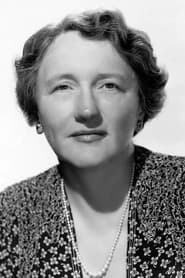
- Marjorie Main's character was added to provide comic relief and to appeal to rural audiences
- The film's premiere was held at the Paramount Theatre in Hollywood with a live orchestra performance
Awards & recognition
- Academy Award for Best Original Song Nominee - 'Never' by Sammy Cahn and Nicholas Brodszky
Visual style
The film's cinematography, handled by Robert Surtees, showcased MGM's mastery of Technicolor. Surtees employed rich, saturated colors particularly in the musical sequences, creating a dreamlike quality that contrasted with the more realistic racing scenes. The camera work during the musical numbers featured sweeping crane shots and elaborate tracking movements, characteristic of MGM's prestige productions. The lighting design emphasized Turner's glamour, using soft focus and backlighting to create her signature luminous appearance. The racing sequences utilized innovative camera mounting techniques to capture the speed and excitement of the track scenes, representing some of the most dynamic automotive cinematography of its time.
Innovations
Mr. Imperium showcased several technical innovations for its time. The racing sequences featured some of the earliest uses of camera mounts directly on racing cars, providing audiences with unprecedented perspectives of high-speed action. The film's sound recording techniques were particularly advanced for the musical numbers, using multiple microphone setups to capture both the performances and orchestral accompaniment with clarity. The Technicolor processing employed the latest three-strip technology, allowing for more subtle color gradations than earlier color films. The production design utilized new techniques in creating realistic European palace interiors on studio soundstages, incorporating forced perspective and matte paintings to achieve grandeur within budget constraints.
Music
The musical score was composed by Bronisław Kaper, with lyrics by Sammy Cahn for the original songs. The film featured six original musical numbers, with 'Never' emerging as the standout piece that earned an Academy Award nomination. The orchestration blended classical European motifs with contemporary American popular music, reflecting the story's cultural themes. Ezio Pinza performed his own singing, bringing his operatic training to the popular songs, while Lana Turner's vocals were provided by Trudy Erwin. The soundtrack was released on MGM Records and became modestly popular, particularly the ballad 'Never,' which was covered by several popular artists of the era including Perry Como and The Ink Spots.
Famous quotes
A king is never really alone. He carries his kingdom with him wherever he goes.
In America, everyone can be a king. In my country, only one man has that privilege, and it's more of a prison than a palace.
Love is the only crown that matters, and the only one that can't be taken away.
You belong to the world now, but I belong to you.
Sometimes the greatest sacrifice is not giving something up, but accepting what you cannot have.
Memorable scenes
- The opening sequence where the king and Fredda first meet at the nightclub in Italy, featuring the romantic duet 'We'll Go Walking Together'
- The elaborate racing sequence at Santa Anita Park where the king demonstrates his driving skills while Fredda watches from the stands
- The emotional balcony scene where the king must choose between his royal duties and his love for Fredda
- The final musical number 'Never' performed against a backdrop of European palace interiors
- The Hollywood premiere sequence where Fredda's stardom contrasts with the king's anonymity
What audiences thought
Audience reception in 1951 was lukewarm, contributing to the film's box office failure. Turner's fans were disappointed by her limited singing and the lack of her usual dramatic intensity. Opera enthusiasts who came to see Pinza found the material beneath his talents. The film struggled to find its target audience, being too sophisticated for mass appeal yet not sophisticated enough for art-house patrons. Modern audiences who discover the film through classic movie channels often appreciate its visual splendor and period charm, though many find the pacing slow by contemporary standards. The film has developed a small cult following among musical enthusiasts who appreciate its unique place in MGM's catalog.
Film connections
Influenced by
- The Merry Widow (1952)
- The Great Caruso (1951)
- On Moonlight Bay (1951)
- Royal Wedding (1951)
This film influenced
- The Girl Who Had Everything (1953)
- The King's Thief (1955)
- The Glass Slipper (1955)
Film restoration
The film is preserved in the MGM/UA film library and has been digitally restored. The original three-strip Technicolor negatives are maintained in the Warner Bros. archive. The film has been released on DVD through the Warner Archive Collection and is occasionally screened at classic film festivals. The soundtrack has been digitally remastered and is available on streaming platforms. No complete 35mm theatrical prints are known to be in circulation, though the film exists in various institutional archives.
Where to watch
- Warner Archive DVD
- Classic movie streaming services
- Turner Classic Movies (TCM) periodic broadcasts
- Digital rental platforms
- Film archives and museum screenings