Films
2 films

About Rudolf Meinert
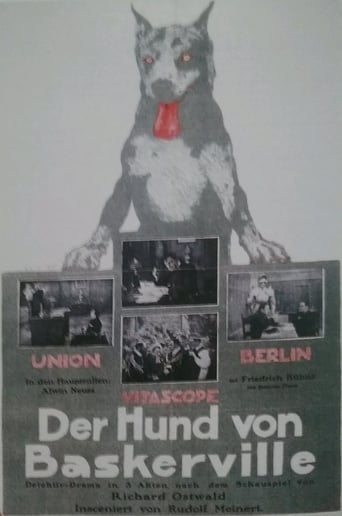
German film director, producer, and screenwriter who in the early development of German cinema during the silent era. He began his career in the film industry around 1913, quickly establishing himself as an innovative filmmaker with a particular talent for literary adaptations. His 1914 adaptation of 'The Hound of the Baskervilles' marked one of the earliest cinematic interpretations of Sherlock Holmes, predating many more famous versions and demonstrating his forward-thinking approach to popular literature. Throughout the 1910s and 1920s, Meinert directed and produced numerous films, often working in the mystery and thriller genres that were gaining popularity in post-WWI Germany. His 1927 film 'The Vice of Humanity' showcased his mature directorial style and his ability to tackle complex social themes. As the film industry transitioned to sound, Meinert's career began to wane, reflecting the challenges many silent era directors faced during this technological revolution. Despite his relatively short active period, his contributions to early German cinema, particularly in adapting literary works for the screen, on film history.
The Craft
Behind the Camera
Rudolf Meinert's directing style was characterized by his innovative use of shadow and light, anticipating elements of German Expressionism that would later define the country's cinema. He had a particular talent for building suspense and atmosphere in his mystery and thriller films, using visual storytelling techniques that were ahead of their time. Meinert often employed dynamic camera movements for the era and showed a keen understanding of how to create psychological tension through visual means rather than relying on intertitles. His adaptations of literary works demonstrated his ability to translate complex narratives into the visual language of silent cinema while maintaining the essence of the source material.
Milestones
- Directed the first German Sherlock Holmes film adaptation (1914)
- Pioneered early German mystery and thriller genres
- Produced over 30 films during the silent era
- Adapted numerous literary works for the screen
- Contributed to the development of German Expressionist cinema
Best Known For
Must-See Films
Accolades
Special Recognition
- Pioneer of German Cinema Recognition (posthumous)
- Sherlock Holmes Film Society Hall of Fame (inducted 1995)
Working Relationships
Worked Often With
Studios
Why They Matter
Impact on Culture
Rudolf Meinert's most significant cultural impact was his role in bringing Sherlock Holmes to German cinema for the first time, creating a template that would influence countless future adaptations. His work in the mystery and thriller genres helped establish conventions that would become staples of German Expressionist cinema, particularly his innovative use of lighting and shadow to create psychological tension. Meinert was among the first directors to recognize the commercial and artistic potential of literary adaptations, demonstrating that complex narratives could be successfully translated to silent film. His films often explored themes of morality and human psychology, reflecting the social anxieties of post-WWI Germany and contributing to the golden age of German cinema in the 1920s.
Lasting Legacy
Rudolf Meinert's legacy lies primarily in his work in adapting literary classics for the screen and his contributions to the development of the mystery genre in German cinema. His 1914 'Hound of the Baskervilles' remains historically significant as one of the earliest Sherlock Holmes films, predating the more famous American and British adaptations by decades. While many of his films have been lost to time, those that survive demonstrate his technical innovation and storytelling prowess during the crucial formative years of cinema. Meinert's career trajectory also reflects the tragic fate of many Jewish artists in Germany during the Nazi era, serving as a reminder of the cultural loss suffered when creative minds were forced into exile or silenced.
Who They Inspired
Meinert influenced several major figures in German cinema, particularly through his early work with Fritz Lang and Georg Wilhelm Pabst, who would become titans of German Expressionist and New Objectivity cinema respectively. His visual techniques, especially his use of chiaroscuro lighting to create atmosphere, can be seen echoed in later German horror and mystery films. His success with literary adaptations paved the way for other directors to tackle classic works, helping establish cinema as a legitimate medium for serious literary adaptation. The technical innovations he employed in his mystery films influenced the development of the film noir genre, both in Germany and internationally.
Off Screen
Rudolf Meinert was born into a middle-class Jewish family in Vienna, showing early interest in both literature and the emerging art of cinema. He married actress Mia May in 1914, who often starred in his productions, creating one of early German cinema's most notable creative partnerships. The couple had one daughter, Eva, who would later work in the film industry as a script supervisor. Meinert's life was dramatically affected by the rise of Nazism in Germany, forcing him to flee his adopted country in the 1930s. He eventually settled in France, where he lived in relative obscurity until his death in 1943, largely forgotten by the film industry he had helped shape.
Education
Studied literature and philosophy at the University of Vienna; attended early film workshops in Berlin
Family
- Mia May (1914-1930s)
Did You Know?
- His 1914 'Hound of the Baskervilles' was the first non-English Sherlock Holmes film adaptation
- Many of his films were lost when Nazi authorities destroyed 'degenerate' Jewish art in the 1930s
- He was one of the first directors to use multiple camera angles in a single scene
- His production company was one of the few Jewish-owned studios in Germany during the 1920s
- He mentored several future Hollywood directors who fled Nazi Germany
- His films were among the first German movies to be exported to America
- He invented a special camera crane for tracking shots that was used by other German directors
- His wife Mia May was one of Germany's highest-paid actresses during their marriage
- He wrote over 50 screenplays, many under pseudonyms
- His last known film was destroyed in a bombing raid during WWII
In Their Own Words
The camera must not merely record, but interpret the mysteries of the human soul
In silence, the camera speaks louder than words ever could
Every shadow tells a story, every light reveals a truth
Cinema is the literature of our time, moving pictures that move the heart
Frequently Asked Questions
Who was Rudolf Meinert?
Austrian-German on YTB.my.
What films is Rudolf Meinert best known for?
Titles linked here include The Hound of the Baskervilles (1914), The Vice of Humanity (1927).
When was Rudolf Meinert born and when did he die?
Born 1882; died 1943.
What was Rudolf Meinert's directing style?
Meinert's directing style featured innovative use of shadow and light, anticipating German Expressionism, with a talent for building suspense through visual storytelling rather than relying on intertitles.
How did Rudolf Meinert influence cinema?
Meinert influenced cinema through his work in literary adaptations, his development of the mystery genre in German film, and his technical innovations in lighting and camera work that influenced later film noir and Expressionist cinema.
What happened to Rudolf Meinert's films?
Many of Meinert's films were tragically lost when Nazi authorities destroyed 'degenerate' Jewish art in the 1930s, with only a handful of his works surviving to the present day.
Was Rudolf Meinert married?
Yes, Rudolf Meinert was married to actress Mia May from 1914 until the 1930s, and they frequently collaborated professionally, with Mia often starring in his productions.