Films
1 film
About Mohan Saigal
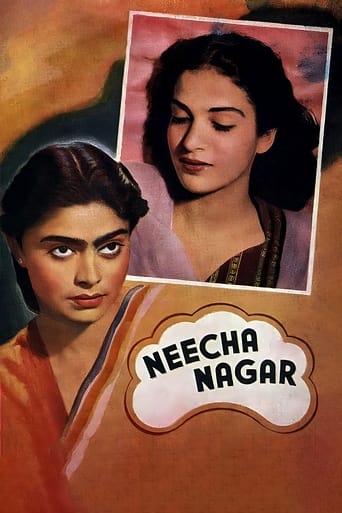
The 1946 film Neecha Nagar is the only title linked here for Mohan Saigal. His most notable work was in the 1946 film 'Neecha Nagar,' which marked a significant milestone in Indian film history. While detailed records about his career are limited, his participation in this socially conscious film places him among the actors of India's parallel cinema movement. 'Neecha Nagar' was directed by Khwaja Ahmad Abbas and dealt with themes of class struggle and social inequality, making it one of the first Indian films to address such serious social issues. The film's international recognition at the first Cannes Film Festival brought attention to its cast, though Saigal's career appears to have been brief, with records showing only this single film credit. His contribution, though limited in scope, was part of a revolutionary moment in Indian cinema that would influence future generations of filmmakers and actors.
The Craft
On Screen
Based on his appearance in 'Neecha Nagar,' Mohan Saigal was part of the naturalistic acting style that characterized early Indian parallel cinema, moving away from the theatrical traditions of earlier Indian films to embrace more realistic performances suited to the film's social realist themes.
Milestones
- Appeared in 'Neecha Nagar' (1946), the first Indian film to win the Palme d'Or at Cannes Film Festival
- Participated in early Indian social realist cinema movement
Best Known For
Iconic Roles
Must-See Films
Accolades
Special Recognition
- Part of the cast of 'Neecha Nagar,' which won the Grand Prix du Festival International du Film (Palme d'Or) at the first Cannes Film Festival in 1946
Working Relationships
Worked Often With
Why They Matter
Impact on Culture
Mohan Saigal's cultural impact is primarily tied to his participation in 'Neecha Nagar,' a film that revolutionized Indian cinema by proving that Indian films could compete and succeed on the international stage. The film's victory at Cannes in 1946 opened doors for Indian cinema globally and inspired a generation of filmmakers to explore socially relevant themes. While Saigal's individual contribution was small, he was part of a collective that demonstrated the artistic potential of Indian cinema beyond commercial entertainment, helping establish India as a serious contender in world cinema.
Lasting Legacy
Mohan Saigal's legacy, though limited to a single film appearance, is connected to. 'Neecha Nagar' is studied in film schools and referenced in cinema histories as the film that put Indian cinema on the international map. As a participant in this groundbreaking work, Saigal represents the many actors and technicians who contributed to India's cinematic revolution during the 1940s, even if their names are not widely remembered today.
Who They Inspired
Due to the brief nature of his documented career, specific information about Mohan Saigal's influence on other actors or filmmakers is not available. However, his participation in 'Neecha Nagar' contributed to the film's success, which in turn influenced the direction of Indian parallel cinema and inspired future generations to pursue socially relevant filmmaking.
Off Screen
Very little information is available about Mohan Saigal's personal life, as was common for many supporting actors in early Indian cinema whose careers were brief and whose lives were not extensively documented in film histories or contemporary media.
Did You Know?
- 'Neecha Nagar' was the first Indian film to win an award at an international film festival
- The film's victory at Cannes came as a surprise to many in the Indian film industry
- Mohan Saigal's only known film appearance was in this historically significant movie
- The film was based on a story by Maxim Gorky
- The production faced budget constraints but still managed to create a technically and artistically impressive film
- The film's success helped establish the parallel cinema movement in India
- Mohan Saigal was part of a cast that included both established and debut actors
Frequently Asked Questions
Who was Mohan Saigal?
Screen credits include the 1946 film 'Neecha Nagar,' which was historically significant as the first Indian film to win the Palme d'Or at the Cannes Film Festival. His documented career appears to be limited to this single film appearance.
What films is Mohan Saigal best known for?
Titles linked here include Neecha Nagar (1946).
When was Mohan Saigal born and when did he die?
Specific birth and death dates for Mohan Saigal are not documented in available film historical records, which was common for many supporting actors in early Indian cinema.
What awards did Mohan Saigal win?
While Mohan Saigal did not receive individual documented awards, he was part of the cast of 'Neecha Nagar,' which won the Grand Prix du Festival International du Film (Palme d'Or) at the first Cannes Film Festival in 1946.
What was Mohan Saigal's acting style?
Based on his appearance in 'Neecha Nagar,' Mohan Saigal employed a naturalistic acting style that was characteristic of early Indian parallel cinema, moving away from theatrical traditions to embrace realistic performances suited to the film's social realist themes.