Khakim Davletbekov
Actor
- Active
- 1938-1938
Films 1
About Khakim Davletbekov
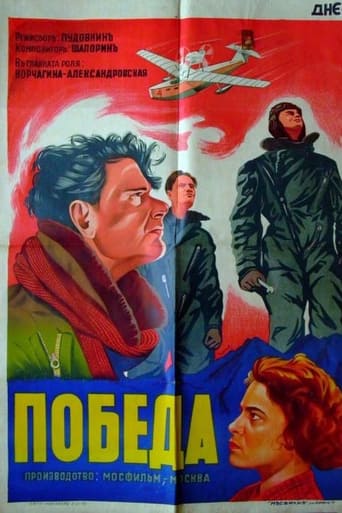
Khakim Davletbekov is a little-documented Soviet-era actor whose confirmed screen work is associated with the 1938 film Pobeda. Available reference material on him is extremely sparse, and he appears in surviving filmographic records primarily as a credited performer rather than as a widely profiled star of the period. Because of the limited surviving documentation, detailed information about his early life, training, stage background, and later career has not been reliably verified in standard English-language film references. What can be said with confidence is that he worked during the late 1930s, a formative period for Soviet cinema when regional and republic studios were producing films that blended ideological themes with emerging sound-era performance styles. His known filmography places him among the many capable actors whose contributions helped build the breadth of Soviet screen culture even when their names did not become internationally familiar. Further research in Russian- and Central Asian-language archival sources may yield additional details about his personal biography, stage work, or other screen appearances, but at present his documented legacy rests chiefly on his participation in Pobeda.
More about Khakim Davletbekov
On screen
No reliable contemporary description of Khakim Davletbekov's acting style has been located in readily available English-language sources. As a performer in a 1938 Soviet production, his screen work would likely have reflected the period's emphasis on naturalistic but socially purposeful acting, clear characterization, and expressive delivery suited to sound cinema. Any more specific assessment would require viewing the film and consulting archival criticism or production records.
In film history
Khakim Davletbekov's cultural significance lies less in celebrity than in what his sparse documentation reveals about the broader ecosystem of early Soviet screen production. Performers like him formed the working body of cinema in the 1930s, helping bring regional stories, republic-based productions, and ideological narratives to life even when they were not promoted as marquee names. His presence in Pobeda situates him within the expanding Soviet film culture of the late Stalin era, when cinema was both an artistic medium and a state instrument of mass communication. For film historians, names such as his are important because they point to the many artists whose labor supported national cinema histories but who remain underrepresented in mainstream reference sources.
Later reputation
Davletbekov's legacy is that of a documented but still largely anonymous participant in classic Soviet cinema. While he does not currently have a widely established body of work in accessible international databases, his credit in Pobeda preserves his place in film history and invites further archival research. In the history of cinema, such figures matter because they broaden the record beyond the best-known stars and directors, revealing the collaborative nature of film production in the studio era. If additional records emerge, his reputation may expand beyond a single surviving credit; for now, his legacy is chiefly archival and historical.
Influence
There is no verified evidence that Khakim Davletbekov directly influenced named actors or directors in a way that can be documented from available sources. His broader influence is indirect: he contributed to the performance culture of Soviet cinema at a time when regional actors helped define the textures of republic and studio productions. For historians, his career underscores how many working actors shaped early screen acting traditions without leaving behind extensive publicity materials. Any more specific account of influence would require corroborating archival or critical sources.
Off screen
No dependable public information about Khakim Davletbekov's personal life has been verified in the sources available to this dataset. His family background, marital history, and possible stage or regional theater career are not documented in the accessible records consulted here. Because he appears to be a minimally documented figure from early Soviet cinema, it is possible that relevant information survives only in local archives, studio files, or Russian-language reference works that are not broadly indexed online.
Credits
- Credited screen appearance in the 1938 film Pobeda
- Documented participation in late-1930s Soviet cinema during the early sound era
- Representative of underdocumented regional or republic-level performers whose work survives in filmographic records
Roles
- Role in Pobeda (1938)
Films
- Pobeda (1938)
Notes
- He is currently documented in accessible film records primarily through a single known screen credit.
- His known active period is only 1938, suggesting either a very brief recorded film career or incomplete surviving documentation.
- He is associated with Soviet cinema rather than Hollywood or Western European studio systems.
- His name may be better preserved in Russian-language archives than in English-language reference works.
- He is an example of the many historically important but underdocumented performers whose work survives in cast lists even when biographies do not.
- No verified awards, nominations, or honors are currently associated with him in accessible sources.
- The title Pobeda means 'Victory,' which places his known work within the ideological vocabulary common to Soviet film titles of the era.
Questions
Who was Khakim Davletbekov?
Khakim Davletbekov was a Soviet-era actor whose accessible film record identifies him as a performer in Pobeda (1938). Beyond that credit, little biographical information is widely available in standard English-language sources. He remains an underdocumented figure in classic cinema history.
What films is Khakim Davletbekov best known for?
He is best known for Pobeda (1938), which is the only confirmed film credit available in the information used here. If he appeared in other productions, they are not currently verified in the accessible record. His surviving reputation is therefore tied primarily to that single film.
When was Khakim Davletbekov born and when did he die?
His birth and death dates are not reliably documented in the accessible sources available for this profile. Likewise, his birth place and death place have not been verified. Additional archival research in regional or Russian-language references may be necessary to establish those details.
What awards did Khakim Davletbekov win?
No awards or nominations have been reliably verified for Khakim Davletbekov in the accessible record. This does not necessarily mean he received none; it means that no dependable documentation was found in the sources consulted here. His historical importance is therefore primarily archival rather than award-based.
What was Khakim Davletbekov's acting style?
There is no surviving detailed critical description of his acting style in the accessible sources. Given his 1938 Soviet film context, his performance likely aligned with the era's sound-era realism and clear, purposeful character presentation. Any more precise stylistic judgment would require direct analysis of Pobeda and archival criticism.
What is Khakim Davletbekov's legacy in film history?
His legacy is that of an underdocumented participant in classic Soviet cinema whose name survives through film credits. He represents the many working actors who contributed to the production culture of the period without becoming internationally famous. For historians, he is important as part of the broader cast of artists who shaped early Soviet screen culture.