Amala Shankar
Actor
Born: 1919 in Jessore, Bengal Presidency (now Bangladesh) Active: 1940s-2010s (Dance), 1948 (Film) Birth Name: Amala Nandy
Films
1 film
About Amala Shankar
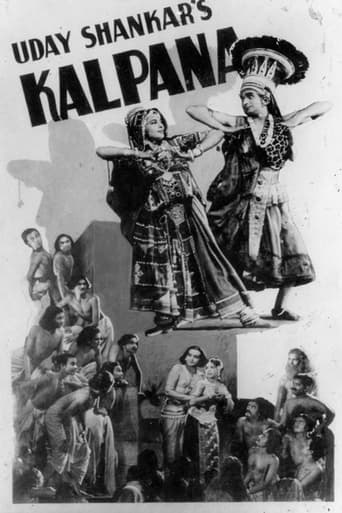
Made her mark in the history of Indian cinema through her performance in the 1948 film 'Kalpana. ' Born in 1919 in Jessore (now in Bangladesh), she emerged as a talented dancer who caught the attention of Uday Shankar, the dancer and choreographer who revolutionized Indian dance on the global stage. Her collaboration with Uday Shankar began when she joined his dance troupe, eventually leading to their marriage and artistic partnership. 'Kalpana' (Imagination/Fantasy) was a landmark film that seamlessly blended classical Indian dance with cinematic techniques, and Amala's performance as the female lead showcased her exceptional dance abilities and screen presence. The film was one of the earliest Indian productions to explore dance as a narrative medium, featuring elaborate choreographed sequences that were revolutionary for their time. After 'Kalpana,' Amala primarily focused on dance education and cultural promotion through the Uday Shankar India Culture Centre, which she helped establish and nurture. Her several decades as a dance educator and cultural ambassador, though her film career remained centered around this single but highly influential work. She continued to perform and teach well into her later years, becoming a respected figure in Indian cultural circles and preserving the legacy of Uday Shankar's unique dance style.
The Craft
On Screen
Classical Indian dance-based performance style with expressive movements and traditional techniques adapted for cinematic presentation
Milestones
- Lead role in 'Kalpana' (1948)
- Co-founder of Uday Shankar India Culture Centre
- Padma Shri Award recipient (1991)
- International dance tours with Uday Shankar troupe
- Pioneer in dance education in India
- Preservation and promotion of Indian classical dance forms
Best Known For
Iconic Roles
Must-See Films
Accolades
Won
- Padma Shri (1991)
- Sangeet Natak Akademi Award
- Kalidas Samman
Special Recognition
- Honored by various cultural institutions for contributions to Indian dance
- Recognized as a pioneer in Indian dance education
Working Relationships
Worked Often With
Why They Matter
Impact on Culture
Amala Shankar played a crucial role in bridging traditional Indian dance with contemporary artistic expression through her work in 'Kalpana,' which remains a landmark film in Indian cinema history. The film was revolutionary in its approach to integrating dance sequences with narrative storytelling, influencing generations of Indian filmmakers and choreographers. Her performance demonstrated how classical dance could be adapted for the cinematic medium without losing its cultural essence and artistic integrity. Through the Uday Shankar India Culture Centre, she helped train thousands of students in Indian dance forms, contributing significantly to the preservation and evolution of these art forms in post-independence India. Her work helped establish dance as a legitimate and respected art form in both theatrical and cinematic contexts, paving the way for future dance-based films and performances in Indian cinema.
Lasting Legacy
Amala Shankar's legacy is defined by her role in bringing Indian classical dance to the cinematic medium and her lifelong dedication to dance education. 'Kalpana' continues to be studied by film scholars and dance historians as an example of early successful fusion of traditional art forms with modern technology. Her contributions to Indian dance education through the Uday Shankar India Culture Centre have influenced multiple generations of dancers and performers. The artistic philosophy she helped develop - combining traditional Indian dance with contemporary expression - continues to influence Indian performing arts today. Her family, particularly her daughter Mamata Shankar, continues to carry forward this artistic legacy, ensuring that the Uday Shankar- Amala Shankar approach to dance remains relevant in contemporary Indian culture.
Who They Inspired
Amala Shankar influenced the integration of dance in Indian cinema, demonstrating how traditional art forms could be adapted for modern media without cultural compromise. Her work in 'Kalpana' inspired future filmmakers to incorporate dance sequences more meaningfully into their narratives rather than as mere entertainment insertions. Through her teaching at the Uday Shankar India Culture Centre, she influenced thousands of students who went on to become performers, choreographers, and dance educators across India and internationally. Her approach to dance education, which emphasized both technical proficiency and artistic expression, became a model for dance institutions across India. The collaborative artistic approach she developed with Uday Shankar continues to influence how Indian dance is presented and taught globally.
Off Screen
Amala Shankar was married to Uday Shankar, the legendary Indian dancer and choreographer who is credited with revolutionizing Indian dance and bringing it to international prominence. Their marriage in 1942 was both a personal and artistic partnership that significantly influenced Indian cultural history. The couple had two children, Ananda Shankar, who became a renowned musician, and Mamata Shankar, who followed in her parents' footsteps as a dancer and actress. After Uday Shankar's death in 1977, Amala dedicated herself to preserving his artistic legacy and continuing their work in dance education and cultural promotion. She lived a long life dedicated to the arts, remaining active in cultural activities well into her 90s and becoming a respected elder stateswoman of Indian classical dance.
Education
Trained in classical Indian dance forms under Uday Shankar's guidance, formal education details not widely documented
Family
- Uday Shankar (1942-1977)
Did You Know?
- 'Kalpana' was
- The film was India's official entry to several international film festivals in 1948
- Amala was discovered by Uday Shankar when she performed at a cultural event in Kolkata
- She continued to perform dance recitals well into her 80s
- The Uday Shankar India Culture Centre she helped establish was one of the first formal dance education institutions in independent India
- Her son Ananda Shankar — pioneer in fusion music, blending Indian classical music with Western rock and electronic elements
- She was instrumental in preserving and documenting Uday Shankar's choreographic works
- Amala appeared in a documentary about Uday Shankar's life and work in the 1970s
- She was one of the first Indian dancers to perform on international television
- The film 'Kalpana' was restored and screened at international film festivals decades after its release
In Their Own Words
Dance is not just movement, it is the expression of the soul through the body
Our work was to show that Indian art could be both traditional and modern
When you dance, you don't just tell a story with your body, you live it
The camera can capture what the stage cannot - the subtle emotions in a dancer's eyes
Teaching dance is not just about steps, it's about passing on a cultural heritage
Frequently Asked Questions
Who was Amala Shankar?
Indian dancer and actress best known for her performance in the 1948 film 'Kalpana.' She was married to legendary dancer Uday Shankar and played a crucial role in promoting Indian classical dance both nationally and internationally through her performances and teaching.
What films is Amala Shankar best known for?
Titles linked here include Kalpana (1948).
When was Amala Shankar born and when did she die?
Born 1919; died death date not listed.
What awards did Amala Shankar win?
Amala Shankar received the Padma Shri, India's fourth-highest civilian award, in 1991 for her contributions to the arts. She also received the Sangeet Natak Akademi Award and the Kalidas Samman for her lifelong dedication to Indian dance and culture.
What was Amala Shankar's dance style?
Amala Shankar specialized in a unique dance style developed by Uday Shankar that blended elements of Indian classical dance with folk traditions and contemporary expression. Her style emphasized graceful movements, expressive storytelling, and the seamless integration of traditional techniques with modern artistic sensibilities.