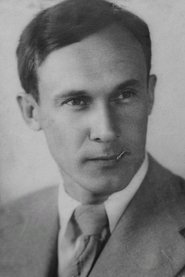
Mikhail Karyukov
Director
Born: July 27, 1905 in Odessa, Russian Empire (now Ukraine) Died: December 2, 1992 Active: 1930-1970 Birth Name: Mikhail Fyodorovich Karyukov
Films
1 film
About Mikhail Karyukov
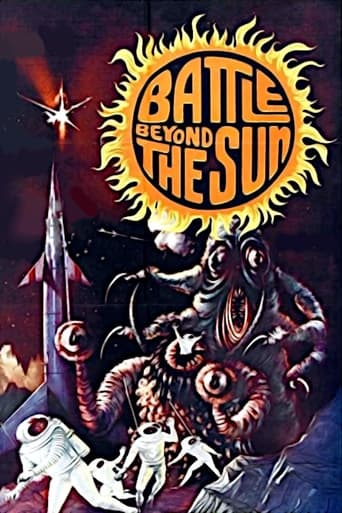
Mikhail Fyodorovich Karyukov — Soviet film director, cinematographer, and special effects innovator who in the development of early science fiction cinema. Born in Odessa in 1905, he began his journey in film by studying at the Odessa State College of Cinematographers, graduating in 1925. Throughout the 1930s and 1940s, Karyukov established himself excelled in visual trickery and combined shooting, even authoring a book on the subject in 1939 titled 'New Ways of Combined Shooting.' His career reached its zenith during the early Space Race era when he directed visually stunning epics like 'Nebo Zovyot' (1959), which showcased technical sophistication that rivaled and often surpassed Western productions of the time. Karyukov's work was so visually impressive that American producer Roger Corman purchased the rights to his films, famously hiring a young Francis Ford Coppola to re-edit 'Nebo Zovyot' into the American version 'Battle Beyond the Sun.' Despite the political tensions of the Cold War, Karyukov's imaginative depictions of space travel and alien worlds on the global science fiction genre.
The Craft
Behind the Camera
Karyukov was known for his highly technical and visually imaginative approach to filmmaking, prioritizing the 'spectacle' of science and space exploration. His directing style often blended socialist realism with futuristic fantasy, utilizing groundbreaking special effects, intricate miniatures, and forced perspective to create vast, alien landscapes. He focused on the technical accuracy of space travel (for the time) while maintaining a sense of wonder and cosmic scale.
Milestones
- Authored 'New Ways of Combined Shooting' (1939), a foundational text for Soviet special effects.
- Directed the landmark science fiction film 'Nebo Zovyot' (The Heavens Call) in 1959.
- Pioneered the use of high-quality miniature effects and matte paintings in Soviet cinema.
- His work was adapted by Francis Ford Coppola and Roger Corman for American audiences.
- Served as a leading cinematographer at the Odessa Film Studio and Dovzhenko Film Studios.
Best Known For
Must-See Films
Accolades
Won
- Honored Worker of Arts of the Ukrainian SSR
- Various Soviet state recognitions for technical innovation in cinematography
Special Recognition
- Recognized as a pioneer of the Soviet 'Space Opera' genre
- Subject of retrospective analysis in international science fiction film history
Working Relationships
Worked Often With
Studios
Why They Matter
Impact on Culture
Mikhail Karyukov was instrumental in proving that Soviet cinema could produce high-concept science fiction that was technically equal to Hollywood. His films provided a visual template for the 'Space Age' optimism of the late 1950s and early 1960s. By creating imagery that was later 'cannibalized' by American filmmakers like Roger Corman and Francis Ford Coppola, Karyukov inadvertently bridged the gap between Eastern and Western cinematic aesthetics during the Cold War.
Lasting Legacy
His legacy resides in his technical contributions to the art of special effects. He is remembered as the 'father' of Soviet space cinematography, whose work on 'Nebo Zovyot' influenced the look of later masterpieces like Stanley Kubrick's '2001: A Space Odyssey.' His book on combined shooting remained a standard reference for Soviet cameramen for decades.
Who They Inspired
He influenced a generation of Soviet cinematographers in the art of 'combined shooting' (special effects). Internationally, his visual sequences were so compelling that they were repurposed in several American B-movies, influencing the visual language of 1960s American sci-fi television and film.
Off Screen
Karyukov spent the majority of his life and career in Odessa and Kyiv. He was deeply academic about his craft, spending years teaching and writing about the mechanics of cinematography. He remained a dedicated member of the Soviet film industry until his retirement, witnessing the transition from early trick photography to the sophisticated effects of the 1960s.
Education
Studied at the Economic Faculty of Trade-Industrial College (1923-1925); Graduated from the Odessa State College of Cinematographers (1925).
Did You Know?
- In the American version of his film, 'Battle Beyond the Sun,' his name was changed to 'Maurice Kaplin' to hide the film's Soviet origins.
- Francis Ford Coppola's first professional directing job involved re-editing Karyukov's footage and adding scenes of space monsters.
- Karyukov — expert in 'trick photography' long before the advent of digital effects.
- His film 'Nebo Zovyot' was praised for its realistic depiction of weightlessness and rocket docking procedures.
- He was one of the few directors of his era to write extensively on the theory of special effects.
- The monsters added to his film by Coppola were designed to look like human anatomy as a prank on the producers.
In Their Own Words
The camera must not only record reality but create the impossible through the science of light and shadow. (Translated from Russian context regarding his work on combined shooting)
Frequently Asked Questions
Who was Mikhail Karyukov?
Prominent Soviet on YTB.my. He is best known for directing the 1959 film 'Nebo Zovyot,' which was later adapted into the American film 'Battle Beyond the Sun.'
What films is Mikhail Karyukov best known for?
Titles linked here include Nebo Zovyot (The Heavens Call) (1959), Mechte Navstrechu (A Dream Come True) (1963).
When was Mikhail Karyukov born and when did he die?
Born July 27, 1905; died December 2, 1992.
What was Mikhail Karyukov's connection to Francis Ford Coppola?
Coppola was hired by Roger Corman to re-edit Karyukov's film 'Nebo Zovyot' for the American market. Coppola added new footage and changed the credits, effectively using Karyukov's work as the foundation for 'Battle Beyond the Sun.'
What was Mikhail Karyukov's directing style?
His style was defined by technical precision and a mastery of visual effects. He specialized in 'combined shooting,' using miniatures and optical illusions to create grand, futuristic environments that were ahead of their time.