Battle Beyond the Sun
"Corman and Coppola re-edit Soviet space race footage."
Keys: Space play/pause · ←/→ 10s · F fullscreen · M mute · </> speed
About this film
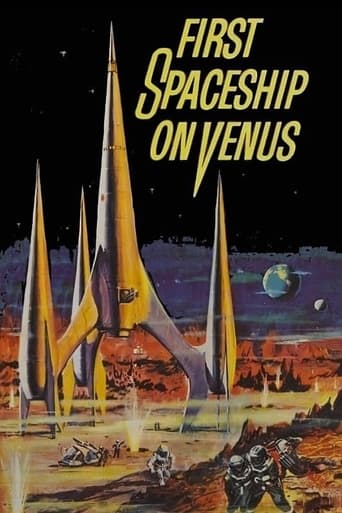
In a future where Earth is divided into two rival superstates, North Hemis and South Hemis, following a devastating nuclear war, both nations compete in a high-stakes 'Project Red Planet' to reach Mars first. When the North Hemis ship 'Typhoon' launches prematurely to beat their rivals and subsequently suffers a catastrophic engine failure near the sun, the South Hemis crew of the 'Mercury' must decide whether to continue their mission or risk their lives in a perilous rescue. After successfully saving their rivals, the combined crews find themselves low on fuel and are forced to make an emerg…
Cast & crew
More films like this
More Science Fiction films
View all →

More about this film
About the production
Release dateApril 1962 (USA)
BudgetApproximately $20,000 for the American re-edit (Original Soviet budget unknown)
ProductionDovzhenko Film Studios (Original), The Filmgroup (US Distribution), American International Pictures (US Distribution)
Filmed inKiev, Ukrainian SSR (Original Soviet footage), Hollywood, Los Angeles, California (Additional monster sequences), Pasadena, California (Rose Parade footage for the finale)
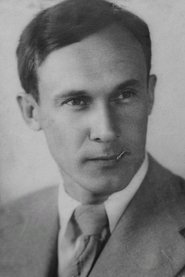
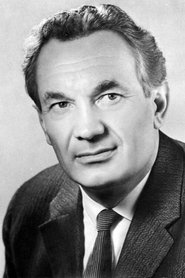
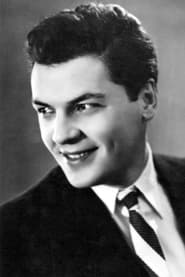
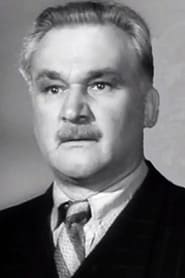
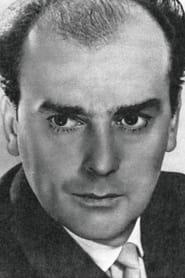
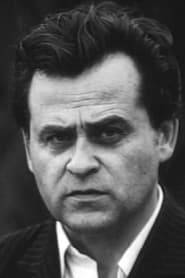
The film is a heavily re-edited version of the 1959 Soviet film 'Nebo Zovyot' (The Heavens Call). Roger Corman purchased the rights for a few thousand dollars and hired a young UCLA film student named Francis Ford Coppola to 'Americanize' it. Coppola was tasked with removing all Soviet propaganda, dubbing the dialogue into English, and adding 'monster' elements to make it more marketable to American drive-in audiences. To hide the film's Soviet origins, the credits were completely fabricated with American-sounding names: director Mikhail Karyukov became 'Maurice Kaplin' and lead actor Ivan Pereverzev was credited as 'Edd Perry'.
Themes
Space RaceInternational CooperationMan vs. NaturePost-Apocalyptic SurvivalTechnological Hubris
Themes & topics
Mars missionspace rescueasteroidmonstersCold War allegoryfuture superstatesrocket shipspace station
Historical background
Battle Beyond the Sun (1962) reached screens through Dovzhenko Film Studios (Original). Exhibitors of the time built postwar exhibition that mixed shorts, features, and live acts, so a clear premise helped Battle Beyond the Sun travel between cities and exchange markets.
Why this film matters
Archivists and revival programmers still cite Battle Beyond the Sun (1962) when tracing studio habits, casting pools, and the visual rhetoric audiences once took for granted. Even modest surviving prints help map how Battle Beyond the Sun fit beside competing releases of its day.
Making of
The production of 'Battle Beyond the Sun' is a classic example of Roger Corman's exploitation filmmaking. After acquiring the Soviet film 'Nebo Zovyot', Corman realized the slow-paced, philosophical Soviet drama wouldn't appeal to American teenagers. He gave Francis Ford Coppola a small budget and access to a soundstage to film 'something exciting.' Coppola and Jack Hill constructed the infamous monsters out of rubber and cheap materials, filming them in a dark studio to hide the low production values. Coppola also had to supervise the dubbing process, which involved rewriting the script entirely to change the political context from a Cold War race to a post-apocalyptic future rivalry. The process was grueling, as Coppola had to match the new English dialogue to the lip movements of Russian actors who were often speaking about entirely different subjects.
What critics said
Trade coverage around 1962 discussed Battle Beyond the Sun for pacing, clarity, and program fit rather than blockbuster grosses. Later writers value it as evidence of period style and as a reference point beside other films from the same era.
Did you know?
- the production marked the professional directorial debut of Francis Ford Coppola, though he was credited under the pseudonym Thomas Colchart.
- The two space monsters added by Coppola were intentionally designed to resemble male and female genitalia as a private joke between Coppola and his assistant Jack Hill.
- To hide the 'CCCP' (USSR) markings on the Soviet rockets, Coppola had a pastel rhombus shape matted over the letters in almost every shot.
- The film's score features contributions from Carmine Coppola, Francis Ford Coppola's father, marking an early collaboration between the two.
- The original Soviet film 'Nebo Zovyot' was actually a high-budget, prestigious production in the USSR, praised for its special effects which were far superior to American B-movies of the time.
- Jack Hill, who helped Coppola with the monster scenes, went on to become a cult director famous for 'Spider Baby' and 'Foxy Brown'.
- Footage from the production was later recycled by Roger Corman for other space films, including 'Voyage to the Prehistoric Planet' (1965) and 'Queen of Blood' (1966).
- The 'North Hemis' and 'South Hemis' concept was created specifically for the US version to avoid mentioning the USA and USSR directly during the Cold War.
- The ending of the film uses stock footage of the Pasadena Rose Parade to simulate a hero's welcome for the returning astronauts.
- Stanley Kubrick reportedly studied the special effects of the original Soviet version while preparing for '2001: A Space Odyssey'.
Visual style
The film features two distinct styles: the original Soviet cinematography by Nikolai Kulchitsky is characterized by grand, sweeping shots of space stations and impressive miniature work that utilized innovative lighting to create a sense of scale. In contrast, the US-added footage by Jack Hill is claustrophobic, dimly lit, and shot on low-grade film stock, creating a noticeable visual disconnect when the monsters appear.
Innovations
The film's primary technical achievement lies in the original Soviet miniature effects, which featured highly detailed models of space stations and rockets that were significantly more realistic than contemporary American efforts like 'Plan 9 from Outer Space'. The use of forced perspective and complex matte paintings in the Soviet footage provided a blueprint for later, more famous space epics.
Music
The original score by Yuliy Meitus was largely replaced or supplemented in the US version. Carmine Coppola provided new themes, and stock music from Ronald Stein and Les Baxter was used to heighten the tension during the monster sequences. The resulting soundtrack is a patchwork of orchestral Soviet themes and typical 1960s sci-fi 'stingers'.
Famous quotes
The motion picture you are about to see may be called 'a fantasy of the future'.
In the fear-ridden years following the great atomic war, the world has been divided into northern and southern hemispheres.
Two lives are at stake. and we can save them! But the project. the project is for man!
Memorable scenes
- The 'Monster Battle' on the asteroid Angkor, where two abstract, pulsating creatures fight while an astronaut watches in horror.
- The docking sequence at the wheel-shaped space station, which features impressive miniature work for the early 1960s.
- The final parade sequence, which bizarrely blends Soviet actors with American Rose Parade footage.
What audiences thought
Original 1960s audiences primarily saw the film at drive-ins or as part of double features. It was successful enough to justify Corman's strategy of buying foreign films for cheap re-edits. Today, it has a niche following among 'bad movie' aficionados and Coppola completists who find the film's transformation from a serious Soviet epic to a monster flick fascinating.
Film connections
Influenced by
- The Heavens Call (Nebo Zovyot)
- Destination Moon
- Soviet Constructivism
This film influenced
- 2001: A Space Odyssey
- Voyage to the Prehistoric Planet
- Queen of Blood
Film restoration
The film exists in the public domain and is widely available. While the original Soviet version 'Nebo Zovyot' has been restored in Russia, the Coppola/Corman 'Battle Beyond the Sun' edit is mostly found in low-quality transfers on multi-film DVD sets.
Where to watch
- Internet Archive (Streaming)
- YouTube (Public Domain uploads)
- Mill Creek Entertainment Sci-Fi Box Sets
- Amazon Prime Video (via various budget distributors)