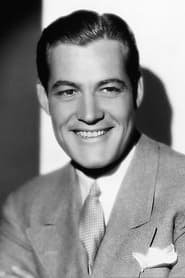
Charles Starrett
Actor
Born: March 28, 1903 in Athol, Massachusetts, USA Died: March 22, 1986 Active: 1926-1952 Birth Name: Charles Robert Starrett
Films
1 film
About Charles Starrett
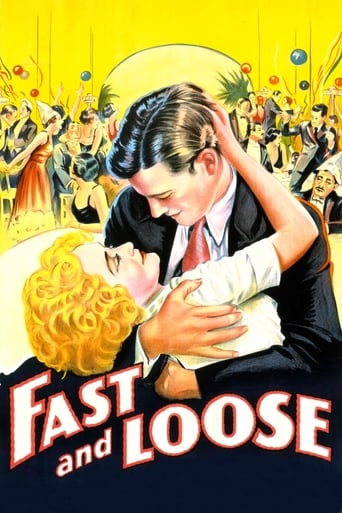
Prolific American actor who transitioned from a collegiate football star to enduring icons of the B-western genre. After graduating from Dartmouth College, where he played football and appeared in the 1926 film 'The Quarterback' as an extra, he pursued a professional acting career on Broadway before moving to Hollywood. He signed with Paramount Pictures in 1930, making his credited debut in 'Fast and Loose' alongside Miriam Hopkins and Carole Lombard. While he initially played romantic leads in various dramas and comedies, his career was redefined in 1935 when he signed with Columbia Pictures and became a dedicated western star. Over the next 17 years, he became a fixture of the Saturday matinee, eventually creating his most famous persona, the Durango Kid, in 1940. Starrett's athletic prowess and stoic screen presence allowed him to maintain a high level of popularity, consistently ranking among the top ten western money-makers for over a decade until his retirement in 1952.
The Craft
On Screen
Starrett was known for his physical agility and understated, stoic delivery. Unlike some of the more flamboyant 'singing cowboys' of the era, Starrett projected a more serious, athletic, and traditional hero image. His performance as the Durango Kid required a dual-acting style: playing the mild-mannered Steve Bentley and the mysterious, black-clad masked vigilante, effectively utilizing body language and voice modulation to differentiate the two personas.
Milestones
- Played varsity football for Dartmouth College and was discovered during the filming of 'The Quarterback' (1926)
- Signed a major contract with Paramount Pictures in 1930
- Became one of the founding members of the Screen Actors Guild (SAG) in 1933
- Signed with Columbia Pictures in 1935, beginning a record-breaking run of western films
- Introduced the character of 'The Durango Kid' in 1940, which became a long-running franchise
- Ranked as a Top Ten Western Star by the Motion Picture Herald for nine consecutive years (1937-1945)
- Set a record for starring in 132 westerns at Columbia Pictures
Best Known For
Iconic Roles
Must-See Films
Accolades
Won
- Golden Boot Award (1984) - Posthumous recognition for significant contributions to the Western genre
Special Recognition
- Inducted into the Hall of Great Western Performers of the National Cowboy and Western Heritage Museum (1990)
- Founding Member of the Screen Actors Guild (Card #102)
- Commemorative 'Durango Kid' museum exhibits in his hometown of Athol
Working Relationships
Worked Often With
Studios
Why They Matter
Impact on Culture
Charles Starrett was instrumental in defining the 'masked hero' trope in Western cinema through the Durango Kid. His films provided a moral compass for a generation of youth during the Great Depression and World War II, emphasizing justice and the protection of the weak. He was also a pivotal figure in labor history as one of the first actors to risk his career by joining the Screen Actors Guild during its volatile early years, helping to secure better working conditions for future generations of performers.
Lasting Legacy
Starrett holds the record for the most films in a single western series (65 Durango Kid films) and is remembered as. He is often cited alongside Gene Autry and Roy Rogers as one of the 'Big Three' of the B-western era. His transition from a sophisticated leading man in 'Fast and Loose' to a rugged western icon remains.
Who They Inspired
His portrayal of a dual-identity hero influenced the presentation of later masked characters in television and film. His athletic approach to stunts and screen fighting set a standard for the action-oriented B-westerns of the 1940s.
Off Screen
Starrett was born into a wealthy family; his father was an executive at the L.S. Starrett Tool Company. He married Mary MacKinnon in 1927, and the couple remained married for 59 years until his death. They had two sons, Charles Jr. And Steven. Despite his fame as a cowboy, Starrett — sophisticated New Englander who enjoyed traveling and remained active in the Dartmouth alumni community throughout his life.
Education
Dartmouth College (Class of 1926)
Family
- Mary MacKinnon (1927-1986)
Did You Know?
- He was a member of the Psi Upsilon fraternity at Dartmouth.
- Starrett — expert horseman, but his famous white horse 'Raider' was actually several different horses over the years.
- He retired from acting in 1952 at the age of 49, largely because he felt he was getting too old for the physical demands of the roles.
- Unlike many of his contemporaries, he did not need the money from acting due to his family's wealth, which allowed him to retire early and travel the world.
- In 'The Mask of Fu Manchu' (1932), he played the hero Terrence Granville opposite Boris Karloff.
- He was known as the 'Silver Star' in some international markets.
- He was a lifelong Republican and active in various civic organizations.
In Their Own Words
I never wanted to be a 'singing' cowboy. I wanted to be an 'acting' cowboy.
The Durango Kid was a way to give the kids a hero who was a bit more mysterious than the average lawman.
I've always felt that the Western is the most honest form of American entertainment.
Frequently Asked Questions
Who was Charles Starrett?
Major American film star best known for his record-breaking run as the 'Durango Kid' in a series of B-westerns for Columbia Pictures. He appeared in over 160 films between 1926 and 1952.
What films is Charles Starrett best known for?
Titles linked here include The Durango Kid (1940), Fast and Loose (1930).
When was Charles Starrett born and when did he die?
Born March 28, 1903; died March 22, 1986.
What awards did Charles Starrett win?
While he did not win an Oscar, he received the Golden Boot Award in 1984 for his lifetime contribution to Western films and was inducted into the Hall of Great Western Performers.
What was Charles Starrett's acting style?
Starrett was known for a rugged, athletic, and stoic acting style. He excelled at playing dual roles, particularly the contrast between a polite citizen and a mysterious masked vigilante.