

Fast and Loose
"fast under pre-war skies"
Keys: Space play/pause · ←/→ 10s · F fullscreen · M mute · </> speed
About this film
Gradually, pre-war life, a wealthy family is thrown into turmoil when the daughter falls for the family chauffeur and the son begins to keep company with a chorus girl.
Cast & crew
More films like this
More Comedy films
View all →







More from Fred C. Newmeyer
View all →
More about this film
About the production
Release dateNovember 8, 1930
ProductionParamount Pictures
Filmed inParamount Astoria Studios, Astoria, Queens, New York City, New York, USA
The film was one of the many early 'talkies' produced at Paramount's East Coast facility in Astoria to take advantage of Broadway talent. It served as a significant early vehicle for Miriam Hopkins, who was an established stage star at the time. Notably, the film features the second Hollywood assignment for writer-director Preston Sturges, who provided the snappy dialogue that helped the film transcend its stage-bound origins.
Themes
Class ConflictSocial MobilityGenerational RebellionThe Nature of True Love vs. Social StatusPersonal Reform and Redemption
Themes & topics
heiressmechanicchorus girlLong Islandwealthy familyforbidden lovepolice raidroadhousepre-codemarriage
Historical background
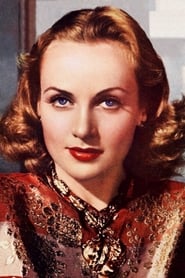
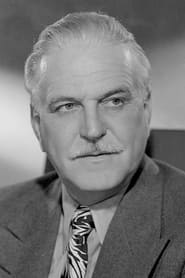
The 1930 premiere of Fast and Loose coincided with broader shifts in pre-war culture, from technology to social norms. Newmeyer and starring Miriam Hopkins, Carole Lombard and Frank Morgan. The film was written by Doris Anderson, Jack Kirkland and Preston Sturges, based on the 1924 play The Best People by David Gray and Avery Hopwood.
Why this film matters
Fast and Loose has outlived its original run as a document of pre-war popular entertainment and craft.
Making of
The production was part of Paramount's strategy to adapt successful Broadway plays into sound films using the original New York-based talent. Director Fred C. Newmeyer, known for his work with silent comedy legend Harold Lloyd, was tasked with transitioning the witty, fast-paced dialogue of the stage play to the screen. The production faced the typical challenges of early sound cinema, including static camera placements necessitated by bulky soundproofing 'blimps' for the cameras. However, the chemistry between Hopkins and Starrett, particularly in the scene where she joins him under a car, was noted for its naturalism and charm, breaking away from the stiff theatricality common in 1930.
What critics said
Re-evaluation in film journals has kept Fast and Loose in circulation among enthusiasts who track pre-war releases.
Did you know?
- A mistake in the opening credits famously misspelled 'Carol Lombard' as 'Carole Lombard.' The actress liked the look of the extra 'e' so much that she permanently adopted it as her professional stage name.
- This was only the second feature film appearance for Miriam Hopkins, who had just signed a contract with Paramount.
- The film is based on the 1924 Broadway play 'The Best People' by David Gray and Avery Hopwood.
- Preston Sturges, who wrote the dialogue, was paid $2,500 for his work on the script.
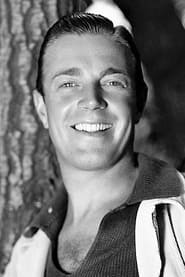
- Charles Starrett, who plays the mechanic Henry Morgan, would later become a major star in Western films, famously known as 'The Durango Kid.'
- The film was shot entirely in New York, rather than Hollywood, which was common for Paramount's 'prestige' theatrical adaptations of the era.
- Frank Morgan, who plays the father, would later achieve cinematic immortality as the titular character in 'The Wizard of Oz' (1939).
- Despite being marketed as a Carole Lombard film in modern collections, she actually plays a supporting role to Miriam Hopkins' lead.
Visual style
The cinematography by William O. Steiner is characteristic of early sound films, featuring many static medium shots and 'room-by-room' staging. However, it does include some creative outdoor sequences, such as a beach swimming scene and a charmingly staged sequence involving the leads working under an automobile.
Innovations
The film is a notable example of early sound synchronization in a non-musical comedy, focusing on capturing the nuances of sophisticated 'drawing room' dialogue without the aid of a musical background.
Music
The film does not have a formal musical score in the modern sense, as was common in 1930. It relies on diegetic music (music occurring within the world of the film) and the rhythmic, rapid-fire dialogue provided by Preston Sturges to maintain its pace.
Famous quotes
Marion Lenox: 'I know it isn't sensible to marry a mechanic and live in Birdsville... but have I ever done anything sensible?'
Alice O'Neil: 'You know it's all right for a chorus girl to be a sap... in our business you don't need brains, only legs.'
Bronson Lenox: 'I'm still not sure that I want that man to be the father of my grandchildren.'
Millie: 'The only orange blossoms you'll ever see will come out of a cocktail shaker!'
Memorable scenes
- The Beach Meeting: Marion ditches her engagement party and meets Henry at the beach, pretending to insult him while clearly being smitten.
- Under the Car: A charming and intimate scene where Marion joins Henry while he is repairing an automobile, showing her willingness to enter his world.
- The Roadhouse Raid: The climactic sequence where the entire family and their various love interests end up at a rowdy roadhouse just as the police arrive to raid the establishment.
What audiences thought
Contemporary audiences enjoyed the film as a lighthearted escapist comedy during the early years of the Great Depression. Today, it maintains a modest but appreciative following among classic film enthusiasts who view it as a vital piece of Carole Lombard's and Miriam Hopkins' early filmography.
Film connections
Influenced by
- The Best People (1924 play)
- The Best People (1925 silent film)
This film influenced
- My Man Godfrey (1936)
- The Philadelphia Story (1940)
- Easy Living (1937)
Film restoration
The film is preserved and was notably remastered and released on Blu-ray by Kino Lorber as part of the 'Carole Lombard Collection I' in 2020.
Where to watch
- Kino Lorber Blu-ray/DVD
- The Criterion Channel (occasionally)
- Kanopy
- Amazon Video (Purchase/Rent)