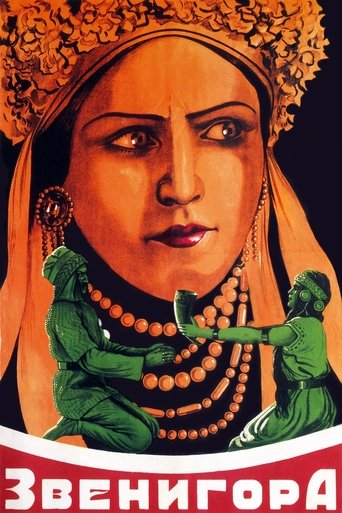
Films
1 film
About Anastasii Symonov
This archive lists one role for Anastasii Symonov: Zvenyhora (1928). His documented career centers primarily around his role in Alexander Dovzhenko's Ukrainian silent film 'Zvenyhora' (1928), which is now considered a masterpiece of Soviet cinema. While his filmography appears limited to this single known credit, his participation in such an historically significant film places him within the context of early Ukrainian/Soviet cinematic innovation. The film itself was part of Dovzhenko's acclaimed Ukrainian trilogy and represented a major artistic achievement in silent filmmaking. Symonov's career coincided with the golden age of Soviet silent cinema, a period that produced some of the most influential experimental films of the era. Unfortunately, like many actors from this period and region, detailed biographical information remains scarce due to limited documentation and the historical upheavals that followed in the Soviet Union.
The Craft
On Screen
While specific details about Symonov's acting style are not extensively documented, as an actor in Dovzhenko's 'Zvenyhora', he would have worked within the experimental and poetic tradition of Soviet silent cinema. This style emphasized visual storytelling, expressive movement, and symbolic gesture rather than realistic performance. Actors in Dovzhenko's films often embodied archetypal characters that served the director's mythic and philosophical vision of Ukrainian history and culture.
Milestones
- Appeared in Alexander Dovzhenko's 'Zvenyhora' (1928)
- Participated in Ukrainian silent cinema during its artistic peak
Best Known For
Iconic Roles
Must-See Films
Working Relationships
Worked Often With
Studios
Why They Matter
Impact on Culture
Anastasii Symonov's cultural impact is primarily derived from his participation in 'Zvenyhora,'. The film itself was revolutionary in its approach to storytelling, blending historical epic with modernist cinematic techniques. While Symonov's individual contribution may have been small, his involvement places him within the artistic movement that helped establish Ukrainian cinema as a significant force in international film culture during the silent era.
Lasting Legacy
Symonov's legacy is intrinsically tied to the preservation and recognition of 'Zvenyhora' as a cinematic masterpiece. As the film continues to be studied and celebrated by film historians and scholars worldwide, all participants in its creation, including Symonov, are remembered as contributors to this important work. His name appears in film archives and credits whenever this influential work is discussed or exhibited, ensuring his place in cinema history, however modest.
Who They Inspired
Given the limited scope of his documented career, Symonov's direct influence on subsequent generations of actors appears minimal. However, his participation in Dovzhenko's work contributes to the broader understanding of how ensemble acting functioned in early Soviet cinema, where individual performances often served the director's larger artistic and ideological vision.
Off Screen
Very little documented information exists about Anastasii Symonov's personal life, which is typical for many supporting actors from the early Soviet cinema period. Historical records from this era, particularly for regional film productions, were often incomplete or lost during the political and social upheavals of the 20th century. Like many actors of his generation, his life story remains largely undocumented in Western film archives.
Did You Know?
- Appeared in only one known film, 'Zvenyhora' (1928)
- Worked with renowned director Alexander Dovzhenko
- Participated during the golden age of Ukrainian silent cinema
- His film 'Zvenyhora' was part of Dovzhenko's famous Ukrainian trilogy
- The film he appeared in is now considered a masterpiece of world cinema
- Like many Soviet actors of the 1920s, his biographical details remain largely undocumented
Frequently Asked Questions
Who was Anastasii Symonov?
Soviet with credits in this catalog. His documented career appears limited to this single but historically significant film production.
What films is Anastasii Symonov best known for?
Titles linked here include Zvenyhora (1928).
When was Anastasii Symonov born and when did he die?
Unfortunately, specific birth and death dates for Anastasii Symonov are not documented in available historical records, which is common for many supporting actors from this period of Soviet cinema.
What awards did Anastasii Symonov win?
There are no documented awards or nominations for Anastasii Symonov, which is typical for many actors from early Soviet cinema, especially those in supporting or minor roles.
What was Anastasii Symonov's acting style?
Based on his work in 'Zvenyhora,' Symonov would have employed the expressive, gestural style common in silent cinema, serving the poetic and experimental vision of director Alexander Dovzhenko rather than realistic performance techniques.