Films
1 film
About D.N. Madhok
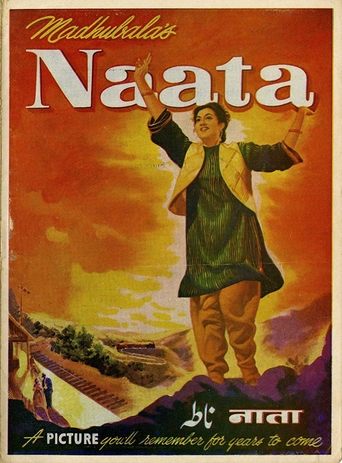
Indian film director active in the 1950s, best known for directing the 1955 film 'Naata'. His career appears to have been brief but significant, with 'Naata' standing as his primary directorial work. The film was produced during the early phase of Indian parallel cinema, a movement that sought to create more realistic and socially conscious films distinct from mainstream Bollywood productions. Madhok's work on 'Naata' demonstrated a commitment to social themes and realistic storytelling, characteristic of the emerging parallel cinema movement in India. Unfortunately, detailed records about his broader career trajectory, training, or other potential works are scarce in historical archives, making 'Naata' his most documented contribution to Indian cinema. His directorial approach showed an understanding of social issues affecting common people in post-independence India.
The Craft
Behind the Camera
Social realist approach, focusing on themes relevant to post-independence Indian society, with an emphasis on human stories and social issues
Milestones
- Directed the social drama film 'Naata' (1955)
Best Known For
Must-See Films
Why They Matter
Impact on Culture
D.N. Madhok's contribution to Indian cinema, though limited to primarily one documented work, represents the early parallel cinema movement in India. 'Naata' (1955) was part of a growing trend of socially conscious filmmaking that emerged in the 1950s, seeking to address real issues faced by Indian society rather than providing pure entertainment. This movement would later influence generations of Indian filmmakers, including those who would create internationally acclaimed art house cinema. Madhok's work, though not widely documented, stands as an example of the early attempts to create a more realistic and meaningful cinema in post-independence India.
Lasting Legacy
D.N. Madhok's legacy is primarily preserved through his film 'Naata' (1955), which serves as an important artifact of early Indian parallel cinema. While his career appears to have been brief, his contribution represents the broader movement toward socially relevant filmmaking in India during the 1950s. The film stands as proof of the artistic and social consciousness that characterized a new wave of Indian filmmakers who sought to use cinema as a medium for social commentary and change.
Who They Inspired
Due to limited documentation of D.N. Madhok's broader body of work, his direct influence on subsequent filmmakers is difficult to trace. However, his participation in the early parallel cinema movement places him among the pioneers who helped establish an alternative to mainstream commercial cinema in India. The social realist approach demonstrated in 'Naata' would later become a hallmark of acclaimed Indian filmmakers like Satyajit Ray, Mrinal Sen, and Ritwik Ghatak.
Off Screen
Very limited information is available about D.N. Madhok's personal life in historical records and film archives.
Did You Know?
- D.N. Madhok's film 'Naata' (1955) is considered part of the early Indian parallel cinema movement
- The title 'Naata' translates to 'Kinship' or 'Relationship' in English
- His active period appears to have been limited to just 1955, making him a one-film director in documented records
- Very little biographical information about Madhok survives in film archives and historical records
- His work emerged during a significant period in Indian cinema history, shortly after India's independence
- The 1950s saw the emergence of many socially conscious filmmakers in India, with Madhok being among them
- Despite the scarcity of information about him, 'Naata' is occasionally referenced in studies of early Indian art house cinema
Frequently Asked Questions
Who was D.N. Madhok?
Indian on YTB.my. He was part of the early parallel cinema movement in India that focused on socially relevant themes.
What films is D.N. Madhok best known for?
Titles linked here include Naata (1955).
When was D.N. Madhok born and when did he die?
Unfortunately, specific birth and death dates for D.N. Madhok are not available in historical records and film archives. His documented career was limited to 1955 when he directed 'Naata'.
What awards did D.N. Madhok win?
There are no documented awards or nominations for D.N. Madhok in available film archives and historical records. His contribution is primarily recognized through his participation in the early Indian parallel cinema movement.
What was D.N. Madhok's directing style?
D.N. Madhok's directing style, as evidenced by 'Naata' (1955), was characterized by social realism and a focus on themes relevant to post-independence Indian society. His work was part of the parallel cinema movement that sought to address real social issues through film.
What is the significance of 'Naata' (1955)?
'Naata' (1955) is significant as it represents the early parallel cinema movement in India, which sought to create socially conscious films distinct from mainstream commercial cinema. The film focused on realistic storytelling and social themes affecting common people in post-independence India.