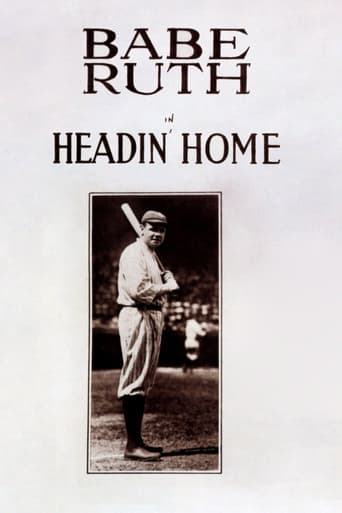
Films
1 film
About Frances Victory
The 1920 film Headin' Home is the only title linked here for Frances Victory. Victory's career appears to have been extremely brief, spanning only the year 1920, which was not uncommon for many supporting players and extras during the early days of Hollywood when the film industry was still establishing itself. Like many actors from this period, detailed records of her life and career are scarce, as the industry had not yet developed the comprehensive documentation systems that would later become standard. Her participation in 'Headin' Home' places her within the context of early sports films and the burgeoning celebrity culture of the 1920s, where famous athletes were beginning to cross over into motion pictures.
The Craft
Milestones
- Appeared in 'Headin' Home' (1920), Babe Ruth's film debut
Best Known For
Must-See Films
Why They Matter
Impact on Culture
Frances Victory's cultural impact is minimal due to her extremely brief film career, limited to a single appearance in 'Headin' Home' (1920). However, her participation in this historically significant film places her within the context of early sports cinema and the beginning of celebrity athlete crossovers into Hollywood. The film itself represents an important moment in cinema history as one of the earliest examples of a sports star appearing in a motion picture, a trend that would become increasingly common throughout the 20th century. While Victory herself did not achieve lasting fame, she was part of this transitional period in American entertainment where the boundaries between sports and popular culture began to blur.
Lasting Legacy
Frances Victory's legacy is primarily that of a typical supporting player from the silent era whose career was brief and largely undocumented. Like many actors from this period who appeared in only one or two films, she represents the countless individuals who contributed to early cinema but whose names have been lost to time. Her appearance in 'Headin' Home' ensures she is at least minimally recorded in film history, though her role was likely minor. She serves as an example of the transient nature of early Hollywood careers and the difficulty of preserving complete records from cinema's formative years.
Who They Inspired
Given her extremely limited filmography, Frances Victory had no discernible influence on subsequent actors or filmmakers. Her brief appearance in a single silent film did not provide enough material or visibility to impact the industry or inspire future performers. She represents the many anonymous contributors to early cinema whose individual influences cannot be traced due to the brevity of their careers and the lack of documentation from the period.
Off Screen
Very little is documented about Frances Victory's personal life, which is typical for many supporting actors from the silent era who had brief careers. The lack of available records makes it difficult to determine details about her family background, education, or life outside of her brief film appearance.
Did You Know?
- Frances Victory appeared in 'Headin' Home' (1920), which was Babe Ruth's first film appearance
- Her film career appears to have lasted only one year (1920)
- Like many silent era actors with brief careers, comprehensive biographical information about her is scarce
- 'Headin' Home' was produced by Kesselrubber Productions and distributed by Paramount Pictures
- The film 'Headin' Home' is now considered lost, with no complete copies known to survive
- Frances Victory's role in the film was likely minor, possibly as an extra or supporting character
- Her career coincided with the transition from short films to feature-length productions in Hollywood
Frequently Asked Questions
Who was Frances Victory?
Screen credits include only one known film, 'Headin' Home' (1920). Her career was extremely brief, spanning just the year 1920, and very little biographical information about her survives today.
What films is Frances Victory best known for?
Titles linked here include Headin' Home (1920).
When was Frances Victory born and when did she die?
Specific birth and death dates for Frances Victory are not documented in available historical records, which is common for many supporting actors from the silent era who had brief careers and limited public recognition.
What awards did Frances Victory win?
Frances Victory did not receive any known awards or nominations for her work in film. Given her extremely brief career consisting of only one film appearance in 1920, she was not in the running for industry recognition.
What was Frances Victory's acting style?
Due to the lack of surviving footage from 'Headin' Home' (the film is considered lost) and minimal documentation of her performance, Frances Victory's acting style cannot be determined. Like many supporting players of the era, her techniques remain undocumented.