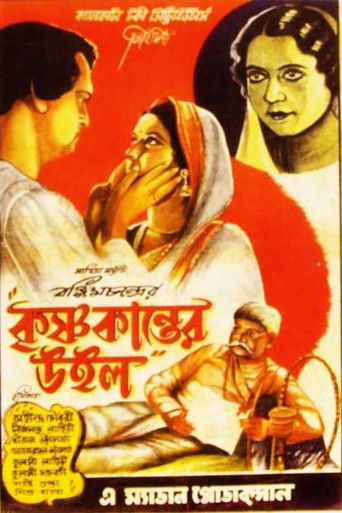

Films
1 film
About Nirmalendu Lahiri
Early pioneer of Bengali cinema during the transition from silent films to talkies in the 1930s. His career, though brief, marked an important period in Indian film history when regional cinema was establishing its identity. Lahiri appeared in the landmark 1932 film 'Krishnakanter Will,' which was one of the early sound films in Bengali cinema and a significant adaptation of Bankim Chandra Chattopadhyay's famous novel. His work in this film demonstrated the dramatic potential of sound cinema in capturing literary classics for the screen. While his filmography appears limited to this single known work, his contribution to early Bengali cinema represents the foundation upon which later generations of actors would build. The early 1930s was a crucial period for Indian cinema, with the sound revolution transforming the art form, and actors like Lahiri were among the first to navigate this new medium. His performance in 'Krishnakanter Will' helped establish the dramatic conventions that would influence Bengali cinema for decades.
The Craft
On Screen
Theatrical and dramatic style typical of early talkies, emphasizing clear diction and exaggerated gestures suitable for the new sound medium
Milestones
- Starred in 'Krishnakanter Will' (1932), one of the early sound films in Bengali cinema
- Participated in the adaptation of Bankim Chandra Chattopadhyay's literary work
- Contributed to the foundation of Bengali film industry during its formative years
Best Known For
Iconic Roles
Must-See Films
Working Relationships
Worked Often With
Studios
Why They Matter
Impact on Culture
Nirmalendu Lahiri's work in 'Krishnakanter Will' contributed to the cultural movement of adapting Bengali literary classics to cinema, helping establish a tradition of literary films in Bengali cinema. His participation in this early sound film represents the bridging of theatrical traditions with the new medium of cinema, influencing how Bengali stories would be told on screen. The film itself was significant in bringing Bankim Chandra Chattopadhyay's important literary work to a broader audience through the new technology of sound cinema.
Lasting Legacy
While his individual legacy is not extensively documented, Nirmalendu Lahiri represents the generation of Bengali film actors who helped establish regional cinema in India. His work in the 1930s contributed to the foundation upon which the golden age of Bengali cinema would be built in the following decades. Early actors like Lahiri paved the way for later legends such as Uttam Kumar and Soumitra Chatterjee.
Who They Inspired
As an early actor in Bengali cinema, Lahiri was part of the generation that established acting conventions for regional Indian films. His work helped demonstrate how literary adaptations could be successfully translated to the screen, influencing future filmmakers and actors in Bengali cinema.
Off Screen
Very limited information is available about Nirmalendu Lahiri's personal life, which was typical for many early cinema actors whose records were not systematically preserved during the colonial era.
Did You Know?
- Appeared in one of the earliest Bengali talkies during the sound revolution in Indian cinema
- Participated in adapting one of Bankim Chandra Chattopadhyay's most famous works
- His active years covered the crucial transition year of 1932 when sound cinema was taking root in India
- Early Bengali cinema actors like Lahiri often came from theatrical backgrounds
- The 1930s marked the beginning of organized film production in Bengal
- Many early cinema records from this period were lost or poorly preserved
- Early sound films required actors to have strong vocal abilities and clear pronunciation
Frequently Asked Questions
Who was Nirmalendu Lahiri?
Screen credits include the 1932 film 'Krishnakanter Will,' one of the sound films in Bengali cinema during the transition from silent to talkies.
What films is Nirmalendu Lahiri best known for?
Titles linked here include Krishnakanter Will (1932).
When was Nirmalendu Lahiri active in cinema?
Nirmalendu Lahiri was active in cinema in 1932, appearing during the crucial period when Indian cinema was transitioning to sound technology.
What was the significance of 'Krishnakanter Will'?
'Krishnakanter Will' was significant as one of the early Bengali sound films and an adaptation of a major literary work, helping establish the tradition of literary cinema in Bengal.
What was acting like in early Bengali talkies?
Acting in early Bengali talkies like Lahiri's was typically theatrical with clear diction and dramatic gestures, as actors adapted stage techniques for the new sound medium.