
René Clair
Director
Born: November 11, 1898 in Paris, France Died: March 15, 1981 Active: 1923-1965 Birth Name: René-Lucien Chomette
Films
2 films
About René Clair
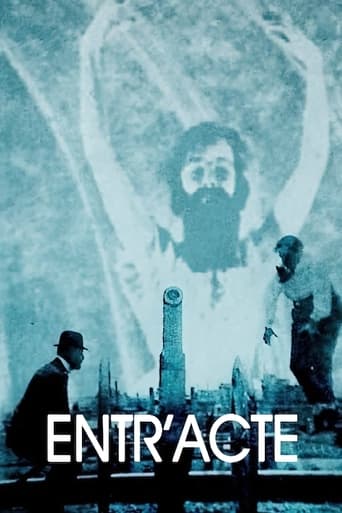
René Clair, born René-Lucien Chomette, was a French film director and writer who emerged as a major voice in the avant-garde cinema of the 1920s. After serving in World War I and working as a journalist, he entered the film industry as an assistant director before making his directorial debut with 'Paris qui dort' (1923). His surrealist short 'Entr'acte' (1924), created for the Ballets Suédois production 'Relâche', became a manifesto of Dadaist cinema with its dreamlike sequences and experimental techniques. Clair successfully navigated the transition from silent to sound films, with early talkies like 'Under the Roofs of Paris' (1930) and 'Le Million' (1931) showcasing his innovative use of sound as a musical and narrative element. During World War II, he worked in Hollywood, directing films like 'I Married a Witch' (1942) before returning to France post-war. His four decades, during which he developed a distinctive style characterized by whimsical humor, social satire, and technical innovation. Clair was elected to the Académie française in 1960, becoming one of the few filmmakers to receive this honor, cementing his legacy as one of cinema's true auteurs.
The Craft
Behind the Camera
René Clair's directing style was characterized by visual wit, technical innovation, and a light, satirical touch. He pioneered the use of slow motion, fast motion, and reverse photography in 'Entr'acte', creating dreamlike sequences that influenced surrealist cinema. In his sound films, he treated sound as a musical element rather than merely dialogue, using it rhythmically and atmospherically. His visual comedy relied on choreographed movement and clever sight gags rather than slapstick, and he often employed floating camera movements to create a sense of fantasy. Clair's films typically featured gentle social satire, romantic whimsy, and a sophisticated urban sensibility that contrasted with the more gritty realism of some of his contemporaries.
Milestones
- Directed the surrealist masterpiece 'Entr'acte' (1924)
- Successfully transitioned from silent to sound films with innovative techniques
- Created influential early sound films including 'Under the Roofs of Paris' (1930)
- Directed the acclaimed comedy 'Le Million' (1931)
- Made successful Hollywood films during WWII including 'I Married a Witch' (1942)
- Elected to the Académie française in 1960
- Received Honorary César Award in 1974
Best Known For
Must-See Films
Accolades
Won
- Venice Film Festival Volpi Cup for Best Director (1937) for 'Le Miroir à deux faces'
- Venice Film Festival Mussolini Cup for Best Italian Film (1936) for 'The Ghost Goes West'
- Honorary César Award (1974)
- New York Film Critics Circle Award for Best Foreign Language Film (1935) for 'The Ghost Goes West'
Nominated
- Academy Award nomination for Best Original Story (1941) for 'The Flame of New Orleans'
- Academy Award nomination for Best Writing, Original Screenplay (1946) for 'And Then There Were None'
- Venice Film Festival Golden Lion nomination (1952) for 'Les Belles de nuit'
Special Recognition
- Elected to the Académie française (1960)
- Commander of the Legion of Honour
- President of the Cannes Film Festival jury (1966)
- Retrospective at the Cannes Film Festival (1974)
Working Relationships
Worked Often With
Studios
Why They Matter
Impact on Culture
René Clair profoundly influenced both avant-garde and mainstream cinema through his innovative techniques and artistic vision. 'Entr'acte' became a cornerstone of surrealist cinema, influencing directors like Luis Buñuel and Jean Cocteau in their exploration of dream logic and visual experimentation. His successful transition to sound films demonstrated how audio could enhance rather than restrict cinematic expression, with his musical approach to sound design predating and influencing the Hollywood musical tradition. During his Hollywood period, Clair brought European sophistication to American comedy, influencing the development of romantic comedy and fantasy films. His films helped establish the French reputation for cinematic artistry and intellectual wit, contributing to the international perception of French cinema as both artistically ambitious and commercially viable.
Lasting Legacy
René Clair's legacy endures through his technical innovations, artistic achievements, and influence on generations of filmmakers. His early avant-garde work remains studied in film schools as exemplars of experimental cinema, while his sound films demonstrate how technological transitions can be opportunities for artistic growth. The election to the Académie française represented the ultimate recognition of cinema as a legitimate art form in French culture. His films continue to be restored and screened at international film festivals, with 'Entr'acte' particularly celebrated in surrealist and Dadaist retrospectives. Clair's ability to balance artistic experimentation with popular appeal created a template for the European auteur director working within both commercial and artistic cinema. His writings on film theory and his memoirs provide valuable insights into the development of cinema from silent to modern eras.
Who They Inspired
Clair influenced filmmakers across multiple generations and national cinemas. His visual comedy techniques directly influenced Jacques Tati's physical comedy and Charlie Chaplin's later sound work. The surreal imagery in 'Entr'acte' anticipated and influenced the dream sequences in Alfred Hitchcock's 'Spellbound' and the experimental techniques of directors like Chris Marker and Jean-Luc Godard. His sophisticated use of sound in early talkies influenced the development of musical cinema in both Europe and Hollywood. Directors like Ernst Lubitsch and Billy Wilder admired his ability to combine wit with social commentary. Contemporary filmmakers continue to reference his work, particularly his floating camera movements and innovative editing techniques. His influence extends beyond directors to cinematographers and editors who study his technical achievements.
Off Screen
René Clair married Bronja Perlmutter, a Czech-born actress, in 1930. The couple remained together until her death in 1965. They had no children. Clair was known for his intellectual pursuits beyond cinema, including literature and philosophy, which contributed to his election to the Académie française. During World War II, he fled occupied France and worked in the United States before returning to his homeland after the war. In his later years, he wrote several books on cinema theory and memoirs about his experiences in the film industry.
Education
Lycée Montaigne, Paris; University of Paris (Sorbonne) - studied philosophy but did not complete degree due to World War I service
Family
- Bronja Perlmutter (1930-1965)
Did You Know?
- Originally worked as a film critic under the pseudonym René Desprès before becoming a director
- Served as a pilot in the French Air Force during World War I
- 'Entr'acte' was originally created as an intermission piece for a ballet by Francis Picabia
- His film 'A Nous la Liberté' (1931) led to a famous plagiarism lawsuit from MGM over similarities to 'Modern Times'
- Was one of the first directors to successfully make the transition from silent to sound films
- Fled France in 1940 after refusing to work for the Vichy government
- His production company was one of the first independent film companies in France
- Spoke fluent English, which helped his Hollywood career
- His real surname 'Chomette' means 'little shoe' in French
- Was offered but declined the position of head of the French Cinematheque
- His film 'The Italian Straw Hat' was considered lost for decades before a print was discovered in the 1960s
In Their Own Words
Cinema should make you forget you are sitting in a theater
The camera is a pen that writes with light
I want to make films that are like dreams you can wake up from smiling
Sound should be to film what perfume is to a woman - an enhancement, not the main attraction
Comedy is the most serious business in the world
The greatest special effect is the human face
I don't make films to teach lessons, but to make people think
Silence in cinema is as powerful as sound in music
Frequently Asked Questions
Who was René Clair?
French on YTB.my. He is best known for his surrealist masterpiece 'Entr'acte' (1924) and for successfully transitioning from silent to sound films with innovative techniques. Clair was one of the few filmmakers elected to the Académie française, recognizing cinema as a legitimate art form.
What films is René Clair best known for?
Titles linked here include Entr'acte (1924), The Italian Straw Hat (1928).
When was René Clair born and when did he die?
Born November 11, 1898; died March 15, 1981.
What awards did René Clair win?
René Clair received the Venice Film Festival Volpi Cup for Best Director in 1937 and the Mussolini Cup for Best Italian Film in 1936. He was honored with the New York Film Critics Circle Award for Best Foreign Language Film in 1935. In 1974, he received the Honorary César Award, and in 1960, he achieved the rare distinction of being elected to the Académie française.
What was René Clair's directing style?
René Clair's directing style combined visual wit, technical innovation, and sophisticated humor. He pioneered experimental techniques like slow motion and reverse photography in his surrealist works. In sound films, he treated audio as a musical element rather than just dialogue, creating rhythmically edited sequences. His comedy relied on clever sight gags and choreographed movement rather than slapstick, often featuring gentle social satire and whimsical fantasy.