Modesto de Souza
Actor
- Active
- 1949-1949
Films 1
About Modesto de Souza
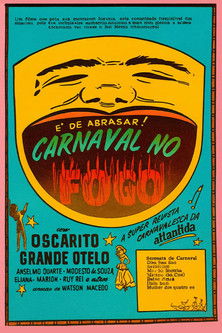
Modesto de Souza is a Brazilian screen actor who appears in the historical record primarily through his credited role in the 1949 film Carnaval no Fogo. Available information on him is extremely limited, and he should be understood as a minor classic-era cinema personality rather than a broadly documented star. His known screen activity places him in the Brazilian film industry at the end of the 1940s, a period when local productions were expanding in ambition and helping define the country’s popular screen culture. Because surviving reference sources provide only fragmentary documentation, details such as his birth, death, training, and broader career remain unverified. What can be said with confidence is that he participated in a vintage Brazilian feature from the postwar era, which gives him a small but legitimate place in classic Latin American film history. Beyond that single credited appearance, no reliable public record currently establishes a longer filmography or a widely recorded personal biography. His significance today is therefore archival: he represents the many working actors whose names survive in cast lists even when fuller life stories were not preserved.
More about Modesto de Souza
In film history
Modesto de Souza's cultural impact is best understood in the context of preservation rather than celebrity. He is part of the large body of performers whose names survive in film credits and archival listings, helping historians reconstruct the personnel of Brazilian cinema in the late 1940s. Even without a large public profile, actors like him were essential to the production ecosystem that supported popular features, musical comedies, and carnival-themed entertainment. His presence in Carnaval no Fogo connects him to a period when Brazilian filmmakers were building a commercially oriented national cinema that reflected urban leisure, music, and seasonal spectacle. For databases and scholars, his documented appearance is valuable because it contributes to the completeness of cast histories and helps preserve evidence of otherwise under-recorded screen labor.
Later reputation
His lasting legacy is archival and historiographic. Modesto de Souza remains one of many classic-era performers whose surviving credit establishes a point of contact with Brazil's mid-century film culture, even if little else about his life has been preserved in mainstream reference works. For researchers, such names matter because they map the real workforce behind local cinema industries and prevent the erasure of supporting actors from film history. His legacy is therefore tied less to fame than to documentation: he is remembered through the film record itself.
Influence
There is no reliable evidence that Modesto de Souza exerted a documented influence on later actors or filmmakers in the way major stars or directors did. However, by participating in a 1949 Brazilian production, he contributed in a small but real way to the professional fabric of the industry that later generations inherited. His influence is indirect and archival, representing the continuity of working performers who made national cinema possible.
Off screen
No reliable public biographical record has been found that documents Modesto de Souza's personal life, family background, marriages, or private affairs. Because he appears to be a lightly documented figure from mid-century Brazilian cinema, such information may not have been widely published or may no longer be easily traceable in accessible reference sources. At present, any claims about spouses, children, education, or domestic life would be speculative and are therefore not included as fact.
Credits
- Credited appearance in the 1949 Brazilian film Carnaval no Fogo
- Participation in postwar Brazilian popular cinema during the late 1940s
- Presence in film history primarily through surviving cast documentation rather than extensive publicity material
- Representation of a working screen performer from the early sound era in Brazil
Roles
- Cast member in Carnaval no Fogo (1949)
Films
- Carnaval no Fogo (1949)
Notes
- He is currently known from film records primarily for a single credited appearance.
- His name is associated with Carnaval no Fogo, a 1949 Brazilian film.
- Publicly accessible biographical details such as birth date and birthplace are not readily verifiable.
- He appears to be a minor or under-documented figure rather than a widely publicized star.
- His surviving screen credit makes him relevant to historians compiling complete cast and personnel records for classic Brazilian cinema.
- No confirmed award history is currently associated with him in accessible reference sources.
Questions
Who was Modesto de Souza?
Modesto de Souza was a Brazilian actor known from the classic film record, most notably for his credited appearance in Carnaval no Fogo (1949). He appears to have been a minor or little-documented figure in mid-century cinema, with limited surviving biographical information.
What films is Modesto de Souza best known for?
He is best known for Carnaval no Fogo (1949), which is the principal film currently associated with his name in accessible records. No additional confirmed film titles can be stated confidently without risking inaccuracy.
When was Modesto de Souza born and when did he die?
At present, his birth and death dates are not reliably documented in accessible reference sources. The historical record available for him is too limited to verify those details.
What awards did Modesto de Souza win?
No awards or nominations are currently documented for Modesto de Souza in the accessible record. He appears in film history primarily through cast credit rather than through a widely recorded award profile.
What was Modesto de Souza's acting style?
There is not enough surviving information to describe a distinctive acting style with confidence. Since only limited film credit data survives, any detailed assessment of his technique would be speculative.
What is Modesto de Souza's legacy in film history?
His legacy lies in preservation and documentation. He represents the many working actors whose names are recorded in film credits even when fuller biographies were not widely preserved, making him a small but meaningful part of Brazilian classic cinema history.