Films
2 films
About Lady the Horse
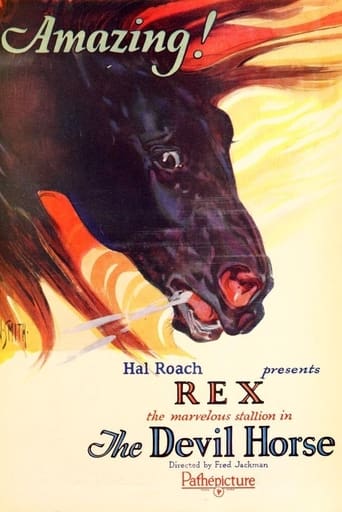
Remarkable equine performer who rose to brief but notable fame during the silent film era of the 1920s. Her entire known film career was centered around her starring role in the 1926 Universal Pictures serial 'Rex the Devil Horse,' where she was billed as the lead actor. In this action-packed Western serial, Lady portrayed the title character 'Rex,' a wild and intelligent black stallion with a mysterious past, performing complex stunts and displaying an impressive range of emotions that captivated audiences of the time. Her performance required extensive training and a deep bond with her handlers, allowing her to execute intricate cues for scenes of heroism, rage, and affection. While the film itself capitalized on the popular 'animal star' trend of the era, Lady's on-screen charisma and athletic prowess were widely praised in contemporary trade publications. Following the success of the serial, she did not appear in any other known feature films, making her career a singular, albeit memorable, contribution to classic cinema. Her story exemplifies the unique and often overlooked role of animal actors in the foundational years of Hollywood.
The Craft
On Screen
Lady's 'acting style' was characterized by a highly trained responsiveness to off-screen cues from her handlers, enabling her to convey a wide array of emotions crucial for a silent film protagonist. She demonstrated remarkable intelligence in performing specific actions on command, such as rearing, charging, 'kissing' a child actor, and appearing to listen intently to human co-stars. Her physicality and expressive eyes were key assets, allowing her to carry the narrative weight of the film's titular character without the benefit of dialogue. Her performance was proof of the patience and skill of her trainers, who conditioned her to associate specific gestures, sounds, or props with required actions.
Milestones
- Starred as the title character in the Universal serial 'Rex the Devil Horse' (1926)
- Received top billing in the film's credits, a rare honor for an animal performer
- Successfully performed complex and dangerous stunts for the 15-chapter action serial
Best Known For
Iconic Roles
Must-See Films
Working Relationships
Worked Often With
Studios
Why They Matter
Impact on Culture
Lady the Horse's cultural impact is intrinsically tied to the phenomenon of animal stars in early Hollywood, a trend that demonstrated the public's fascination with non-human performers. 'Rex the Devil Horse' was part of a wave of films that featured animals as central heroic figures, alongside stars like Rin Tin Tin and Strongheart. By headlining her own serial, Lady contributed to the cinematic language of animal performance, proving that a horse could carry a complex narrative and be marketed as a genuine star. Her role reinforced the idea of the noble, intelligent animal companion, a powerful archetype in the Western genre that resonated deeply with American audiences of the 1920s.
Lasting Legacy
Lady the Horse's legacy is that of a animal performer who achieved top billing in a major studio production, a rarity that highlights the novelty and spectacle of the silent film era. While her fame was fleeting and confined to a single production, she remains a fascinating case study in the history of animal actors. Her work in 'Rex the Devil Horse' serves as a historical artifact, showcasing the training techniques, cinematic tricks, and audience appetites of the 1920s. For film historians, she represents an important, if minor, footnote in the broader story of how Hollywood has consistently turned to animals to create magic, wonder, and emotional connection on screen.
Who They Inspired
As a star with a very short and singular career, Lady the Horse's direct influence on subsequent performers is difficult to trace. However, her success was part of a collective influence that demonstrated the commercial viability of animal-led features, paving the way for more famous successors like Trigger (Roy Rogers' horse) and Mr. Ed (from the 1960s TV show). The very fact that Universal Pictures invested in a 15-chapter serial around her proves that she and her contemporaries helped establish a precedent for treating animals as bankable stars. Her performance contributed to the evolving craft of animal training for film, influencing the methods used by future generations of Hollywood animal handlers.
Off Screen
Details about Lady's personal life off the studio lot are not documented, which is typical for animal performers of the silent era. Her life was likely centered around her training and work with Universal Pictures' animal department. She would have been housed and cared for by the studio, living a life vastly different from a typical horse, dedicated to her film career. Her primary 'personal' relationship would have been with the trainer or handler who worked with her most closely on the set of 'Rex the Devil Horse'.
Did You Know?
- Despite the character being named 'Rex' and referred to as male in the film, the horse performing the role was a female named Lady.
- She received top billing on the film's promotional posters, appearing above her human co-star, Jack Hoxie.
- 'Rex the Devil Horse' was a 15-chapter action serial, requiring Lady to perform stunts and scenes over a long and demanding production schedule.
- The film's plot involved Rex being framed for a crime and having to clear his name, a narrative that required the horse to convey complex emotions like suspicion and determination.
- She was part of Universal Pictures' stable of animal actors, which was a valuable asset for the studio during the silent era.
- The film's title, 'Rex the Devil Horse,' was designed to be sensational and attract audiences, a common marketing practice for serials of the period.
- No other film credits are known for Lady, making 'Rex the Devil Horse' her singular cinematic legacy.
Frequently Asked Questions
Who was Lady the Horse?
Female equine with credits in this catalog.' She received top billing for her role, a rare honor for an animal performer, and was known for her ability to perform complex stunts and convey emotion on screen.
What films is Lady the Horse best known for?
Titles linked here include Rex the Devil Horse (1926).
When was Lady the Horse born and when did she die?
The specific dates of Lady the Horse's birth and death are not documented in historical records. As an animal performer from the silent era, such detailed biographical information was rarely recorded or preserved by the studios.
What awards did Lady the Horse win?
Lady the Horse did not receive any formal awards or nominations for her performance. During the silent era, awards for acting, especially for animal performers, were not yet established as they are in modern times.
What was Lady the Horse's acting style?
Her 'acting style' was based on meticulous training that allowed her to respond to subtle cues from her handlers. She used her physicality, from powerful gallops to gentle nudges, and expressive eyes to portray a character with a wide emotional range, essential for a silent film's narrative.
Why was a female horse named Lady playing a male character named Rex?
It was a common practice in filmmaking, even then, to use female horses for male roles. Mares (female horses) are often considered more level-headed, easier to train, and less prone to unpredictable behavior than stallions (uncastrated males), making them more reliable and consistent performers on a chaotic film set.