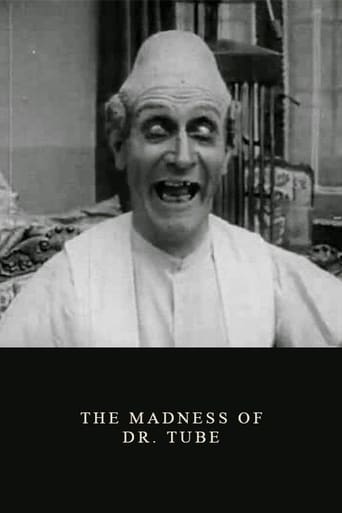
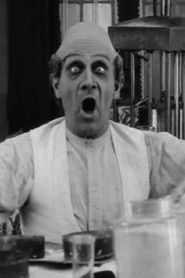
Le Clown Di-go-mo
Actor
- Active
- 1915-1915
Films 1
About Le Clown Di-go-mo
Le Clown Di-go-mo is an obscure early-cinema screen performer credited in the 1915 silent short The Madness of Dr. Tube, a film associated with the eccentric French avant-garde production circles of the period. The name appears to be a stage or character-style credit rather than a clearly documented civil identity, and surviving reference sources provide very little biographical information beyond the film credit itself. Because of that, he remains one of the many enigmatic figures from the silent era whose screen presence is preserved in surviving catalogues and filmographies rather than in detailed studio or press records. His known work places him within the experimental, trick-film, and comic-anarchic traditions that flourished in early European cinema, where performers often worked without the enduring fame of later star systems. There is no reliable evidence in standard historical references that he built a long screen career, and his active film record currently documented in major film databases is limited to 1915. As a result, Le Clown Di-go-mo is best understood as a fragmentary but intriguing trace of early film performance history, emblematic of the many performers whose contributions survive only in credits and archival listings. His exact real name, place of birth, personal life, and later career remain undocumented in the sources consulted.
More about Le Clown Di-go-mo
On screen
Based on the nature of the production in which he appeared, his acting style would likely have relied on silent-era physical expressiveness, pantomime, exaggerated gesture, and visual comedy or character work. The credit suggests a clown persona, so his screen presence may have emphasized broad movement, eccentricity, and stylized physical performance rather than dialogue-driven characterization. However, no surviving critical description of his individual technique has been verified in accessible historical sources.
In film history
Le Clown Di-go-mo's cultural significance lies less in a documented personal fame than in what his credit reveals about the texture of early silent cinema. Performers like him were part of a transitional era when film was still developing its own performance languages, and when comic or surreal screen personas could appear briefly in experimental shorts without becoming household names. His presence in The Madness of Dr. Tube connects him to the tradition of visually inventive, early trick-based filmmaking that helped define silent-era screen comedy and fantasy. For modern scholars, such figures are valuable because they illustrate how many contributors to film history remain partially anonymous, yet were essential to the evolution of cinematic form.
Later reputation
His legacy is primarily archival and historical: he stands as a representative of the many lost or obscure performers whose names survive in film credits even when their biographies do not. This kind of fragmentary record is important to film history because it underscores how dependent our understanding of early cinema is on incomplete documentation, surviving prints, and database reconstructions. In that sense, Le Clown Di-go-mo contributes to the broader narrative of silent-era performance by embodying the playful, experimental, and sometimes mysterious nature of early screen acting. His name remains of interest to historians and database users precisely because it preserves a trace of an otherwise undocumented performer from the formative years of cinema.
Influence
There is no verifiable evidence that Le Clown Di-go-mo directly mentored or was widely influential in the industry. His influence, if any, was likely limited to the immediate context of early 1910s performance traditions in which clowning, pantomime, and physical comedy were foundational. More broadly, his surviving credit contributes to the understanding of how anonymous performers helped shape the expressive vocabulary later used by silent comedians, avant-garde filmmakers, and physical-performance specialists.
Off screen
No reliable biographical information about Le Clown Di-go-mo's personal life has been verified in standard film-reference sources. His family background, marital status, relationships, and later life remain unknown, and no documented memoirs, interviews, or studio profiles appear to have survived in accessible historical records. The absence of this information is common for minor or experimental silent-era performers whose work was not preserved in the celebrity-focused publicity systems that developed later in Hollywood. At present, any statement about spouses, children, or education would be speculative and therefore unsubstantiated.
Credits
- Credited screen appearance in the 1915 silent film The Madness of Dr. Tube
- Association with one of the better-known early avant-garde or trick-comedy short subjects of the 1910s
- Participation in an experimental silent-cinema environment where performance, visual novelty, and pantomime were central
- Representation of the many anonymous or semi-anonymous performers active in early European film production
- Survival in film-history records primarily through archival filmographies and database entries rather than extensive publicity materials
Roles
- Le Clown Di-go-mo in The Madness of Dr. Tube
Films
- The Madness of Dr. Tube (1915)
Notes
- Le Clown Di-go-mo is credited under a name that sounds like a stage persona rather than a civil name.
- He is currently documented in accessible sources primarily for one film credit.
- His known screen appearance is in The Madness of Dr. Tube, a 1915 silent short.
- The limited record suggests he may have been part of experimental or novelty cinema rather than mainstream star production.
- No reliable birth, death, family, or nationality information is readily available in standard references.
- His obscurity makes him a useful example of how many silent-era performers are known only through filmographies.
- The clown designation implies a performance style rooted in physical comedy and visual exaggeration.
- He belongs to the early period before film publicity systems fully standardized star biographies.
Questions
Who was Le Clown Di-go-mo?
Le Clown Di-go-mo was an obscure silent-era screen performer credited in the 1915 film The Madness of Dr. Tube. Very little biographical information survives about him, and he is known mainly through archival film records rather than detailed studio publicity.
What films is Le Clown Di-go-mo best known for?
He is best known for The Madness of Dr. Tube (1915), which is the only widely documented screen credit currently associated with him. No other confirmed film appearances are readily verifiable in standard reference sources.
When was Le Clown Di-go-mo born and when did he die?
His birth and death dates are not currently documented in reliable public sources. His exact birthplace and life dates remain unknown.
What awards did Le Clown Di-go-mo win?
No awards or nominations are known for Le Clown Di-go-mo. As a very obscure silent-era performer, he does not appear in surviving award records or major honors lists.
What was Le Clown Di-go-mo's acting style?
His exact acting style is not documented, but the clown-related name and silent-era context suggest a performance based on physical expressiveness, pantomime, and visual comedy. That style would have suited early trick-film and experimental productions such as The Madness of Dr. Tube.
What is Le Clown Di-go-mo's legacy in film history?
His legacy is primarily historical and archival, because he represents the many early cinema performers whose names survive even when their biographies do not. He is important to film historians as a reminder of how much silent-era performance history remains fragmentary.
Was Le Clown Di-go-mo a real stage name or a character name?
Available records do not clearly establish whether it was a stage name, a character credit, or a performance alias. The wording strongly suggests a theatrical persona, but no verified civil identity has been found.