The Madness of Dr. Tube
Plot
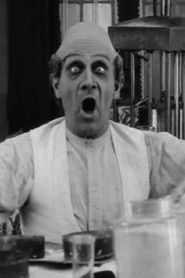
A young assistant and a set of amused onlookers become the unwilling test subjects of the eccentric Dr. Tube, a scientist who believes he has invented a powder capable of distorting reality for anyone who takes it. Confident in his discovery, the doctor begins by trying the substance on his boy assistant and then extends his experiments to his pets, his nieces, and their suitors. The results are wildly comic and increasingly chaotic, as the powder produces bizarre visual effects and strange behavior that the doctor initially mistakes for scientific success. When the doctor realizes that his nieces are less amused by the transformation than everyone else, he must scramble to undo the damage and restore order before the situation spirals completely out of control.
Director
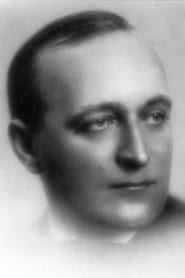
Abel GanceAbout the Production
The film is a short comic fantasy made early in Abel Gance’s career, before he became internationally known for large-scale historical epics. It belongs to the tradition of French pre-World War I trick film and theatrical burlesque, relying on visual comedy, expressive performance, and optical effects rather than dialogue. Production details are scarce, and surviving documentation does not reliably preserve full technical credits or location information, which is common for a great many silent-era shorts. The film’s modest scale and playful invention are consistent with the lightweight fantasy comedies being produced in France during the mid-1910s.
Historical Background
The film was made in 1915, during the first year of World War I, when French cinema was operating under enormous social and economic strain. Even amid wartime conditions, filmmakers continued producing short comedies and fantasies that provided escapism and reflected the continuing vitality of prewar popular entertainment. The Madness of Dr. Tube matters historically because it shows Abel Gance working in a lighter, more experimental mode before he moved toward the grand emotional and visual ambition that would define his mature career. It also belongs to the broader lineage of early twentieth-century European fantasy cinema, when filmmakers were discovering how film could transform reality through effects, editing, and performance.
Why This Film Matters
Although not a major canonical title, the film is culturally significant as a rare surviving or documented example of early comic science fiction in French silent cinema. It illustrates the period’s fascination with science, invention, and the comedic misuse of knowledge—concerns that would recur throughout twentieth-century film. For Abel Gance scholarship, it helps map the transition from short-form novelty films to the expressive, large-scale cinema he later championed. The film also contributes to the history of screen mad-scientist narratives, a character type that became a durable cinematic archetype.
Making Of
The Madness of Dr. Tube was made during the period when Abel Gance was still developing his style and working within the constraints of short-format commercial cinema. Surviving production documentation is limited, so there is no complete modern production history comparable to later studio films, but the movie clearly draws on the theatrical comic traditions familiar to French audiences at the time. Its inventive premise allowed Gance to explore visual distortion, character comedy, and light fantasy without the scale of his later epics. The film stands as an example of how early directors used short comedies to test special effects, pacing, and visual rhythm, with cast performances and camera tricks doing much of the expressive work.
Visual Style
The film’s visual style likely emphasizes theatrical framing, exaggerated gestures, and effects-driven imagery characteristic of mid-1910s French fantasy shorts. Even without extensive technical documentation, the premise strongly suggests the use of in-camera tricks, editorial distortions, and comic visual substitutions to convey the doctor’s reality-altering powder. Early Abel Gance works often show attention to movement and expressive composition, and this title fits that experimental tendency. The cinematography is historically important less for virtuoso complexity than for how it supports illusion, parody, and transformation.
Innovations
The film’s main technical interest lies in its use of cinematic trickery to represent altered perception and comic deformation. While precise methods are not fully documented, works of this kind often relied on double exposure, substitution editing, masking, or other practical effects to create uncanny visual changes. The premise itself is a showcase for cinema’s ability to make the impossible appear mundane and funny, which was a key attraction of early fantasy filmmaking. In the context of Abel Gance’s career, it demonstrates an early interest in using technique to externalize psychological or perceptual states.
Music
As a silent film, The Madness of Dr. Tube was originally exhibited with live musical accompaniment rather than a fixed recorded soundtrack. No definitive original score is widely documented in surviving reference material. Modern screenings, restorations, or archive presentations may use newly compiled piano accompaniment or commissioned silent-film music depending on the venue. The musical experience would have varied from theater to theater in the film’s original exhibition period.
Famous Quotes
No verifiable surviving dialogue or intertitles are widely documented for this film.
As a silent film, any quotations would depend on specific surviving title cards or later translation materials, which are not consistently preserved.
Memorable Scenes
- Dr. Tube tests his reality-distorting powder on his boy assistant, setting off the film’s central chain of comic misadventures.
- The doctor applies the powder to animals and family members, turning a private experiment into a public spectacle of visual confusion.
- The nieces’ reactions, especially when the effects become personally embarrassing rather than merely amusing, drive the story from playful experimentation into frantic repair.
- The doctor’s attempts to undo the chaos provide the final comic escalation, typical of a short-form silent farce that builds through repetition and reversal.
Did You Know?
- It is one of the early screen works directed by Abel Gance, long before his major reputation was secured by J’accuse and Napoléon.
- The film is sometimes discussed as an example of early French comic science-fiction, a rare hybrid in the silent era.
- The title character, Dr. Tube, is portrayed as a mad inventor whose experiments produce visual distortions and social chaos.
- Albert Dieudonné, who appears in the cast, later became famous for his association with Napoléon in Abel Gance’s epic of the same name.
- The film’s comic effects reflect the influence of stage farce and vaudeville as much as cinema-specific trick photography.
- Because the surviving record is limited, many details about the film’s original release and reception are fragmentary.
- The film is not among Gance’s best-known works, but it is often cited by historians as part of his formative experimentation with fantasy and visual wit.
- The story’s emphasis on a substance that alters perception anticipates later cinematic fantasies about chemistry, hallucination, and reality-bending science.
- The cast list associated with extant databases is small, suggesting a compact production typical of early short subjects.
- Like many silent comedies of the period, it likely relied heavily on exaggerated gesture and visual transformation gags to convey its humor.
What Critics Said
Contemporary critical reception is not well documented in surviving sources, which is typical for many 1910s short films. Modern critics and film historians who mention it generally treat it as a minor but intriguing early work, valued more for its historical place in Abel Gance’s development than for its standalone fame. Its reputation today is that of a curious, imaginative short that reveals Gance’s early taste for visual experimentation and comic absurdity. Because it is little seen compared with Gance’s major features, critical discussion tends to be scholarly rather than popular.
What Audiences Thought
Audience reception records are not readily preserved, so there is no reliable box-office or popularity data. As a short comic fantasy, it was likely intended as light entertainment for general audiences familiar with trick-film humor and theatrical farce. Its appeal would have depended on visual gags, performance, and novelty, which were common attractions in early cinema. Today, audience interest is largely among silent-film enthusiasts, archival viewers, and admirers of Abel Gance.
Film Connections
Influenced By
- Stage farce and vaudeville comedy
- Early French trick films and cinematic fantasy shorts
- Popular mad-scientist literature and theatrical caricature
This Film Influenced
- Later mad-scientist comedies and fantasy films that use comic invention as a source of visual chaos
- Abel Gance’s own later experiments with expressive visual storytelling
You Might Also Like
More Science Fiction Films
View allMore from Abel Gance
View allFilm Restoration
The film is obscure and incompletely documented, but it is not generally classified as a total lost film in the way many silent shorts are; extant archival references and database records indicate that it is known to survive in some form or at least through documented prints/fragments. Exact restoration status is not widely standardized in public reference sources, and viewable material may be limited or archive-dependent.