

Abel Gance
Actor & Director
Born: August 25, 1889 in Paris, France Died: November 10, 1981 Active: 1911-1971 Birth Name: Abel Eugène Alexandre Perthon
Films
6 films
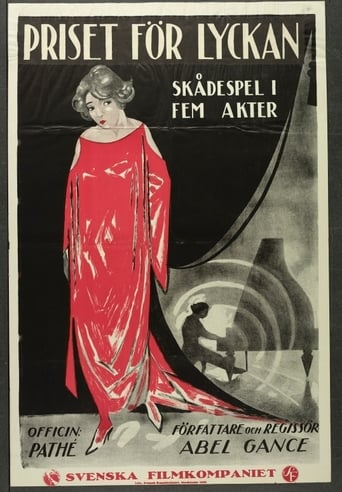
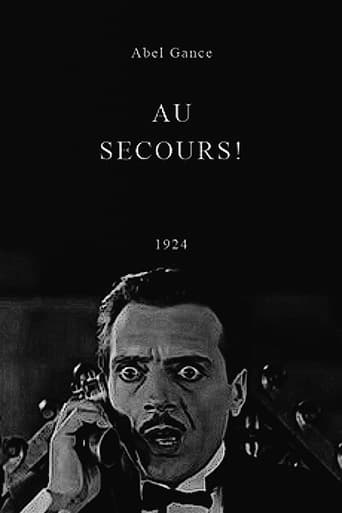
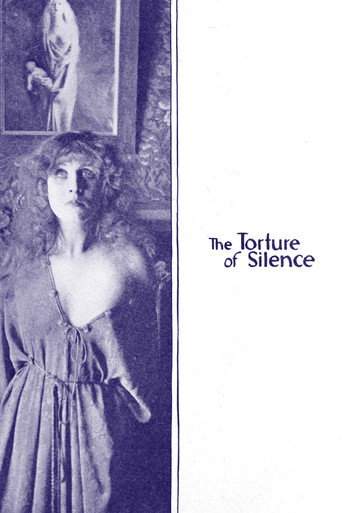
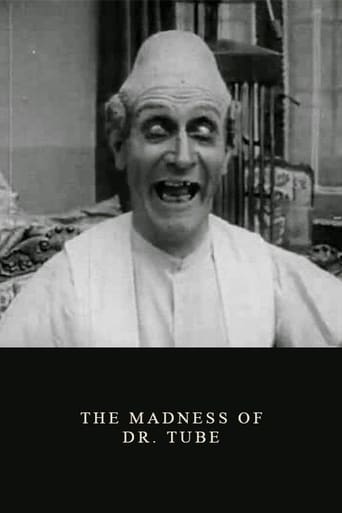
About Abel Gance
French film director, writer, producer, and actor: innovative techniques revolutionized cinema during the silent era. Born in Paris in 1889, Gance began his career as an actor and playwright before transitioning to filmmaking in 1911. His early works established his reputation for ambitious, emotionally charged storytelling, culminating in the anti-war masterpiece 'J'accuse' (1919), which featured hundreds of actual soldiers as extras. Throughout the 1920s, Gance pushed the boundaries of cinematic technology and narrative structure, most famously with his epic 'Napoléon' (1927), which employed his revolutionary Polyvision technique using three synchronized projectors. After the transition to sound, Gance continued directing, though his later works never achieved the same critical acclaim as his silent masterpieces. His over five decades, from 1911 to the early 1970s, during which he directed more than 60 films and established himself as one of cinema's true visionaries. Gance's relentless experimentation with camera movement, editing techniques, and visual effects prefigured many developments in modern cinema, cementing his legacy as directors in film history.
The Craft
Behind the Camera
Gance's directing style was characterized by extreme innovation, technical experimentation, and epic emotional scope. He pioneered techniques including handheld cameras, rapid montage sequences, superimposition, split screens, and dynamic camera movements that were decades ahead of their time. His visual approach combined poetic romanticism with brutal realism, particularly evident in his war sequences. Gance believed in the emotional power of cinema and used every technical tool available to create overwhelming sensory experiences for audiences. His films often featured massive scale, both in terms of production values and emotional intensity, with running times that frequently exceeded three hours.
Milestones
- Directed groundbreaking anti-war film 'J'accuse' (1919)
- Created revolutionary epic 'La Roue' (1923)
- Pioneered Polyvision technique with 'Napoléon' (1927)
- First to use handheld cameras for dynamic shots
- Developed rapid editing techniques decades before their widespread adoption
- Survived both World Wars and continued filmmaking into his 80s
- Restored and re-released 'Napoléon' multiple times throughout his life
Best Known For
Must-See Films
Accolades
Won
- Legion of Honour (Chevalier, 1936)
- Legion of Honour (Officer, 1972)
- Venice Film Festival Golden Lion (1935) for 'J'accuse' restoration
- French Academy Film Award (1971) Honorary Award
- Locarno International Film Festival Honorary Award (1966)
Nominated
- Academy Award nomination for Best Art Direction (1938) for 'Port Arthur'
Special Recognition
- Commander of the Order of Arts and Letters
- Honorary President of the Cannes Film Festival (1968)
- Prix René Clair (1971) for lifetime achievement
- Film preservation efforts by Kevin Brownlow and Francis Ford Coppola
Working Relationships
Worked Often With
Studios
Why They Matter
Impact on Culture
Abel Gance fundamentally transformed cinema through his technical innovations and artistic vision. His development of Polyvision, a precursor to modern widescreen formats, demonstrated the potential for immersive cinematic experiences decades before Cinerama or CinemaScope. The rapid editing techniques he pioneered in 'La Roue' influenced Soviet montage theory and Hollywood action cinema. His anti-war masterpiece 'J'accuse' established cinema as a medium for serious political commentary and social critique. Gance's use of handheld cameras and subjective point-of-view shots revolutionized visual storytelling, techniques that would become standard in documentary and narrative filmmaking. His epic approach to historical subjects, particularly in 'Napoléon', established new standards for biographical films and historical epics.
Lasting Legacy
Gance's legacy endures through his preserved films and the techniques he pioneered that are now standard in cinema. His masterpiece 'Napoléon' has been restored multiple times, most famously by film historian Kevin Brownlow, with screenings accompanied by live orchestras and conducted by luminaries like Carl Davis and Francis Ford Coppola. The Polyvision technique directly influenced the development of Cinerama and other widescreen formats of the 1950s. His editing innovations prefigured MTV-style rapid cuts by nearly 60 years. Film schools worldwide study his techniques, and directors from Stanley Kubrick to Francis Ford Coppola have cited him as a major influence. The French film industry honors him as one of its founding fathers, and the Cinémathèque Françaque regularly hosts retrospectives of his work.
Who They Inspired
Gance influenced generations of filmmakers through his technical innovations and epic storytelling approach. Soviet directors like Sergei Eisenstein and Vsevolod Pudovkin studied his editing techniques while developing montage theory. Hollywood directors including Cecil B. DeMille and D.W. Griffith incorporated his epic scale and visual innovations. Modern directors like Francis Ford Coppola, who helped restore 'Napoléon', and Martin Scorsese have acknowledged his influence on their work. His handheld camera techniques influenced documentary filmmakers and newsreel cinematographers. The emotional intensity and romantic visual style of his films can be seen in the work of directors from Federico Fellini to Terrence Malick. His experiments with color and sound in the 1930s paved the way for later developments in those mediums.
Off Screen
Abel Gance had a tumultuous personal life marked by multiple marriages and passionate relationships that often influenced his work. He was known for his intense dedication to cinema, often at the expense of his personal relationships. During World War I, he served in the French Army and was wounded, an experience that deeply influenced his anti-war stance in 'J'accuse'. His later years were marked by financial struggles despite his artistic achievements, and he lived modestly in Paris until his death at age 92. Gance remained passionate about filmmaking until the very end, constantly working on new projects and restorations of his classic works.
Education
Self-taught filmmaker; attended Lycée Condorcet in Paris but left to pursue acting and writing
Family
- Marguerite Danis (1912-1923)
- Sylvie Gance (1923-1929)
- Marie-Odile Véron (1933-1948)
- Claude Ivry (1955-1971)
Did You Know?
- Was the first director to use handheld cameras for dynamic movement in 'J'accuse'
- Originally wanted to be a poet and playwright before turning to cinema
- Filmed 'Napoléon' over two years with a budget equivalent to $20 million today
- Used real soldiers on leave from the front lines in 'J'accuse', many of whom died before the film's release
- Invented a special camera mount that could be strapped to a horse's back for cavalry sequences
- His Polyvision technique for 'Napoléon' required three synchronized projectors and a curved screen
- Was a close friend of fellow director Jean Renoir
- Survived a serious bout of tuberculosis in the 1920s
- Continued making films well into his 70s, directing his final feature at age 81
- His original cut of 'Napoléon' ran over 6 hours
- Was briefly married to his leading actress Sylvie Gance, who starred in many of his films
- Fled France during World War II but returned to continue filmmaking after the war
In Their Own Words
Cinema is the truth 24 times per second
I make films as a painter paints, with the same passion and the same freedom
The camera is the pen of the 20th century
Film is a language that speaks to the heart before it speaks to the mind
Every film I make is a battle against time and money
I don't make films for today, I make them for tomorrow
The cinema must become a symphony of light, movement, and emotion
When I die, I want to be projected on a screen
Frequently Asked Questions
Who was Abel Gance?
French on YTB.my. He revolutionized filmmaking through technical innovations including handheld cameras, rapid editing, and his Polyvision widescreen system.
What films is Abel Gance best known for?
Titles linked here include Napoléon (1927), J'accuse (1919).
When was Abel Gance born and when did he die?
Born August 25, 1889; died November 10, 1981.
What awards did Abel Gance win?
Gance received numerous honors including the Legion of Honour (both Chevalier and Officer ranks), the Venice Film Festival Golden Lion for his 'J'accuse' restoration, the French Academy Film Honorary Award, and the Prix René Clair for lifetime achievement. He was also named Commander of the Order of Arts and Letters.
What was Abel Gance's directing style?
Gance's directing style was characterized by extreme technical innovation, epic emotional scope, and romantic visual poetry. He pioneered handheld cameras, rapid montage, superimposition, and split screens, creating overwhelming sensory experiences. His approach combined poetic romanticism with brutal realism, particularly in war sequences, and he believed in cinema's power to evoke deep emotional responses through visual spectacle.