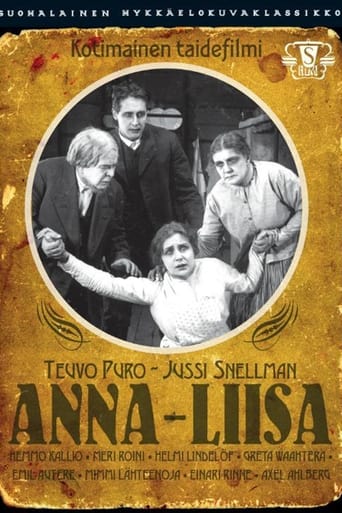
Axel Ahlberg
Actor
- Active
- 1922-1922
Films 1
About Axel Ahlberg
Axel Ahlberg is a little-documented Scandinavian screen actor associated with the Finnish silent film Anna-Liisa (1922), one of the early screen adaptations of Minna Canth’s celebrated play. Available film reference sources indicate that his known film career, at least in currently accessible filmography records, is extremely brief and may have been limited to this single credited appearance. Because surviving biographical documentation is sparse, his broader life outside cinema, including training, stage background, and later activities, is not well established in standard film histories. His name appears in the context of early Finnish cinema, a period when productions often drew on theater performers and national literary works to build a local film culture. As with many performers of the silent era in smaller national industries, his contribution is preserved mainly through cast listings rather than extensive contemporary publicity. He is therefore remembered less as a major star than as part of the historical personnel of early Nordic screen production. Further archival research in Finnish-language sources, studio records, and period newspapers would be necessary to reconstruct a fuller personal and professional profile.
More about Axel Ahlberg
In film history
Axel Ahlberg’s cultural impact is best understood within the broader context of early Finnish silent cinema rather than through an individually extensive star persona. By appearing in Anna-Liisa, he became part of a film tradition that adapted respected national literature for the screen, helping establish cinema as a medium capable of representing Finnish cultural identity. Performers like Ahlberg contributed to the formation of a domestic screen culture in which theater-trained actors and literary adaptations played an essential role. Even when surviving records are sparse, such credits matter because they document the collaborative labor behind the earliest nationally significant films.
Later reputation
His legacy lies in historical documentation rather than celebrity: Axel Ahlberg remains a named participant in a key early Finnish silent feature, preserved in cast records as part of the country’s film heritage. For scholars of silent-era Nordic cinema, names like his are important because they help reconstruct production networks, casting practices, and the migration of stage performers into film. Although he does not appear to have left behind a large filmography or a widely celebrated star image, his presence in Anna-Liisa secures him a small but real place in film history. In database terms, he is one of the many early screen artists whose surviving credit is valuable evidence of a developing national cinema.
Influence
There is no documented evidence that Axel Ahlberg exerted a broad or identifiable influence on later actors or directors. Any influence he may have had would have been indirect, through participation in early Finnish production culture and the ensemble practice typical of silent-era filmmaking. His credit nevertheless contributes to the historical record from which later researchers understand casting, performance traditions, and the use of established cultural properties in early Scandinavian film.
Off screen
No reliable public biographical information is readily available regarding Axel Ahlberg’s personal life, family background, marriages, or later years. Standard film reference materials accessible for silent-era performers do not provide confirmed details about his private life. At present, any claim about spouse, children, or non-cinematic activities would be speculative and is therefore not included. His historical footprint is almost entirely tied to his credited film appearance in Anna-Liisa (1922).
Credits
- Appeared in the Finnish silent feature Anna-Liisa (1922), an important early screen adaptation of a major national literary and stage work
- Participated in one of the formative years of Finnish cinema during the silent era
- Represents the category of early Nordic character actors whose film careers are preserved primarily through cast records
Roles
- Role unspecified in Anna-Liisa (1922)
Films
- Anna-Liisa (1922)
Studios
- Finnish silent film production associated with Anna-Liisa (1922)
Notes
- His known filmography, as currently accessible in standard reference data, appears to consist of a single credited screen appearance.
- He is associated with Anna-Liisa (1922), a film adaptation of a highly regarded Finnish literary/dramatic work.
- Because silent-era documentation is incomplete, many details of his life may survive only in local archives or period newspapers.
- He is part of the early generation of performers whose names are preserved even when personal biographies are not.
- His career highlights the importance of cast lists in reconstructing the history of small national cinemas.
- The role credited to him in Anna-Liisa has not been widely preserved in widely accessible English-language sources.
- He should not be confused with similarly named individuals in other fields or later periods.
Questions
Who was Axel Ahlberg?
Axel Ahlberg was a classic-era screen actor known from the Finnish silent film Anna-Liisa (1922). Surviving film reference information about him is very limited, so he is remembered mainly as part of the early history of Finnish cinema.
What films is Axel Ahlberg best known for?
He is best known for Anna-Liisa (1922), which appears to be his primary or only documented screen credit. No additional widely documented film appearances are currently available in the standard reference information used here.
When was Axel Ahlberg born and when did he die?
His birth and death dates are not reliably documented in the accessible film reference record used for this profile. Until archival sources provide confirmation, those details remain unknown.
What awards did Axel Ahlberg win?
No awards or formal honors are currently documented for Axel Ahlberg in the available classic-cinema reference material. His importance is historical rather than award-based.
What was Axel Ahlberg's acting style?
There is no surviving critical description of his acting style in the accessible record. Given that he worked in a silent film from the early 1920s, his performance would have been shaped by the expressive conventions of silent-era screen acting.
What is Axel Ahlberg's legacy in film history?
His legacy is primarily archival: he is part of the cast history of Anna-Liisa (1922) and therefore part of Finland’s early cinema record. Even with limited surviving biographical detail, his credit helps document the people who built national film production in the silent era.