
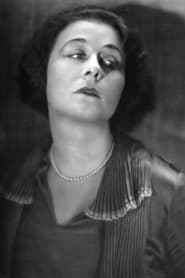
Frances Marion
Director
Born: November 18, 1888 in San Francisco, California, USA Died: May 12, 1973 Active: 1915-1940 Birth Name: Marion Benson Owens
Films
1 film
About Frances Marion
Frances Marion was prolific and influential screenwriters in Hollywood history, writing over 300 screenplays during her remarkable career that spanned from the silent era through the early sound period. Born Marion Benson Owens, she began her career as an artist and journalist before entering the film industry as an assistant to director Lois Weber in 1914. Her breakthrough came when she became the preferred screenwriter for Mary Pickford, writing many of the star's most successful films including 'Rebecca of Sunnybrook Farm' and 'Stella Maris'. In 1921, she expanded her creative control by directing 'The Love Light,' starring Pickford, though screenwriting remained her primary focus. Marion won two Academy Awards for Best Writing for 'The Big House' (1930) and 'The Champ' (1931), becoming one of the first women to win multiple Oscars. She transitioned successfully to talkies and continued writing through the 1930s before retiring to focus on novels and teaching. Her career represented unprecedented success for a woman in early Hollywood, where she commanded salaries equal to or exceeding those of her male counterparts.
The Craft
Behind the Camera
Marion's directorial approach, though limited in number of films, emphasized emotional storytelling and strong character development, particularly for female protagonists. Her work on 'The Love Light' demonstrated a keen visual sense and ability to elicit powerful performances, drawing from her extensive experience as a screenwriter to craft narratives with emotional depth and dramatic tension.
Milestones
- Became Mary Pickford's primary screenwriter in 1915
- Directed 'The Love Light' (1921) starring Mary Pickford
- Won first Academy Award for Best Writing for 'The Big House' (1930)
- Won second Academy Award for 'The Champ' (1931)
- Became highest-paid screenwriter in Hollywood
- Wrote over 300 screenplays during her career
- Published several novels and taught screenwriting after retiring from films
Best Known For
Must-See Films
Accolades
Won
- Academy Award for Best Writing (Adapted Screenplay) - The Big House (1930)
- Academy Award for Best Writing (Original Story) - The Champ (1931)
Nominated
- Academy Award nomination for Best Writing (Original) - The Prizefighter and the Lady (1933)
- Academy Award nomination for Best Writing (Adaptation) - Anna Christie (1930)
Special Recognition
- Hollywood Walk of Fame star (located at 6323 Hollywood Blvd)
- Pioneer Woman of Motion Pictures honor
- Screen Writers Guild lifetime achievement recognition
Working Relationships
Worked Often With
Studios
Why They Matter
Impact on Culture
Frances Marion fundamentally changed the landscape for women in Hollywood, proving that women could achieve commercial success and creative control in the male-dominated film industry. As the highest-paid screenwriter of her era, she commanded salaries of up to $50,000 per screenplay (equivalent to over $800,000 today) and maintained unprecedented creative control over her work. Her success story challenged gender norms in the 1920s and 1930s, demonstrating that women could excel in both creative and business aspects of filmmaking. Marion's screenplays often featured strong, complex female characters, helping shape the portrayal of women in early cinema and providing actresses with substantive roles that went beyond stereotypes. Her Academy Awards were particularly significant, as they represented formal recognition of women's creative contributions to cinema at the highest level.
Lasting Legacy
Frances Marion's legacy endures as one of Hollywood's most important pioneers, particularly for women in the film industry. Her extensive body of work, including over 300 produced screenplays, helped establish many of the narrative techniques and character development approaches that became standard in American cinema. The Frances Marion Papers, housed at the Margaret Herrick Library, provide invaluable insight into early Hollywood screenwriting practices and the challenges faced by women in the industry. Her success paved the way for future generations of female screenwriters and filmmakers, and her name remains synonymous with the golden age of Hollywood screenwriting. Modern film historians and feminist scholars frequently cite Marion as an example of how women could achieve and maintain power in early Hollywood before the industry became more rigidly gender-segregated.
Who They Inspired
Marion's influence extended beyond her own work to the entire profession of screenwriting, helping establish it as a respected and essential craft in filmmaking. Her ability to write across genres - from melodramas to comedies to social dramas - demonstrated the versatility and artistic potential of screenwriting. Her mentorship and support of other women in the industry helped create a network of female professionals during a period when such support was crucial. Contemporary screenwriters continue to study her techniques for character development and emotional storytelling, while her business acumen serves as a model for creative professionals seeking to maintain artistic control while achieving commercial success.
Off Screen
Frances Marion married four times throughout her life, with her most significant relationship being her marriage to actor Fred Thomson, with whom she had two sons. Her first marriage to Wesley de Lappe ended in divorce, followed by a brief marriage to Robert Pike. Her third marriage to Fred Thomson in 1920 was both personally fulfilling and professionally collaborative, ending with Thomson's tragic death in 1928. She later married director George W. Hill in 1930, but this marriage also ended in divorce. Marion was known for her independence and business acumen, managing her own career and finances at a time when few women in Hollywood had such autonomy.
Education
Attended Mark Hopkins Art Institute in San Francisco; also studied at the Art Students League of New York; largely self-taught in screenwriting through practical experience in the film industry
Family
- Wesley de Lappe (1915-1917)
- Robert Pike (1919-1920)
- Fred Thomson (1920-1928, his death)
- George W. Hill (1930-1933)
Did You Know?
- She was the first person to win two Academy Awards for writing
- Her salary of $3,000 per week in the 1920s made her one of Hollywood's highest-paid writers
- She served as a combat correspondent during World War I
- She wrote under her own name at a time when many women used male pseudonyms
- Her novel 'Minnie Flynn' was adapted into a film in 1918
- She taught screenwriting at the University of Southern California
- She was a founding member of the Screen Writers Guild
- Her final film credit was in 1940 for 'Anne of Windy Poplars'
- She published her autobiography 'Off With Their Heads!' in 1972
- Her collaboration with Mary Pickford resulted in over a dozen films
In Their Own Words
I have always felt that a writer has a responsibility to his audience, to give them something worth their time and money.
The secret of successful screenwriting is to know when to leave things out.
In Hollywood, you can't be a woman and a writer unless you're willing to fight for every inch of ground.
I never wrote a story that I didn't believe in, and I never wrote a character that I didn't understand.
The best films are those that touch the heart while engaging the mind.
Frequently Asked Questions
Who was Frances Marion?
Frances Marion was. She was a pioneer for women in the film industry, becoming the highest-paid screenwriter of her era and directing films including 'The Love Light' (1921).
What films is Frances Marion best known for?
Titles linked here include The Love Light (1921) - as director, The Big House (1930) - as screenwriter.
When was Frances Marion born and when did she die?
Born November 18, 1888; died May 12, 1973.
What awards did Frances Marion win?
Frances Marion won two Academy Awards: Best Writing (Adapted Screenplay) for 'The Big House' (1930) and Best Writing (Original Story) for 'The Champ' (1931). She was one of the first women to win multiple Oscars and received a star on the Hollywood Walk of Fame.
What was Frances Marion's directing style?
While Marion directed only a few films, her style emphasized emotional storytelling and strong character development, particularly for female protagonists. Her work on 'The Love Light' demonstrated visual sophistication and the ability to elicit powerful performances, drawing from her extensive screenwriting experience.
How did Frances Marion impact women in Hollywood?
Marion broke barriers for women in Hollywood by becoming the highest-paid screenwriter of her time and maintaining creative control over her work. Her success proved women could excel in both creative and business aspects of filmmaking, paving the way for future generations of female filmmakers.
What was Frances Marion's relationship with Mary Pickford?
Frances Marion was Mary Pickford's primary screenwriter for many years, writing numerous hit films for the star including 'Rebecca of Sunnybrook Farm,' 'Stella Maris,' and 'Pollyanna.' Their professional collaboration was.