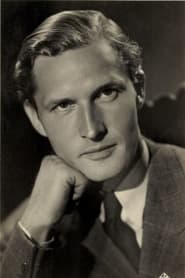
Hannes Stelzer
Actor
- Born
- June 20, 1910, Graz, Austria-Hungary
- Died
- December 27, 1944
- Active
- 1936-1943
Films 1
About Hannes Stelzer
Hannes Stelzer was a prominent Austrian-born film actor who became a leading star of German cinema during the late 1930s and early 1940s. Born into a family of traveling actors, he spent his childhood moving across Germany and Austria, which fostered a deep-seated passion for the stage despite his parents' initial reservations. At just fourteen, he independently sought admission to the Vienna Drama School, supporting his studies by working as a carpenter. After successful stage engagements in Frankfurt, Bremen, and Darmstadt, he was discovered for the screen and made his film debut in 'Traumulus' (1936) alongside the legendary Emil Jannings. Stelzer quickly rose to fame as a versatile leading man, often cast as the youthful hero in both lighthearted comedies and intense dramas. His career became increasingly intertwined with the political climate of the era, leading to starring roles in several high-profile propaganda films directed by Karl Ritter. During World War II, Stelzer balanced his film career with active military service as a pilot in the Luftwaffe, a dual life that eventually led to his tragic death in a plane crash during a snowstorm in late 1944.
More about Hannes Stelzer
On screen
Stelzer was noted for his naturalistic and youthful screen presence, which allowed him to transition seamlessly from romantic leads to heroic military figures. He possessed a 'boy-next-door' quality that made him highly relatable to audiences of the time, yet he was capable of delivering disciplined, intense performances in dramatic roles. His training in classical theater provided him with a strong vocal delivery and a command of physical expression that translated well to the early sound era of German cinema.
Impact on culture
Hannes Stelzer represented the idealized 'German Youth' on screen during a pivotal and controversial era of European history. His image was utilized by the state to promote specific cultural and nationalistic values, particularly through his roles as artists resisting 'degenerate' influences or as brave aviators. While his films are now viewed through a critical historical lens due to their propaganda content, his popularity during his lifetime was immense, making him one of the most recognizable faces of the Third Reich's cinema industry.
Lasting legacy
Stelzer's legacy is complex, as it is inextricably linked to the propaganda machine of the Nazi era. He is remembered by film historians as a talented actor whose career was cut short by the very war his films often glorified. Today, his work is primarily studied in the context of film history and political communication, specifically regarding how the UFA studio system developed stars to serve state interests. His tragic death at age 34 remains a somber footnote to the end of the Golden Age of German film production.
Who they inspired
His portrayal of the 'heroic pilot' influenced the archetype of the military hero in German cinema for years, blending romanticism with duty. Younger actors of the period looked to his career as a template for rapid ascent within the studio system.
Off screen
Stelzer's personal life was marked by both professional success and personal tragedy. He was first married to Johanna Weyand in 1935, but the marriage ended in divorce. In 1940, he married the acclaimed German stage and film actress Maria Bard. Their relationship was reportedly intense but fraught with the pressures of the war and the political environment. Maria Bard tragically committed suicide in April 1944, just months before Stelzer's own death, leaving him devastated during his final missions as a pilot.
Education
Vienna Drama School (Schauspielschule Wien)
Career milestones
- Discovered by Emil Jannings for his film debut in 'Traumulus' (1936)
- Became a top-tier leading man for UFA studios in the late 1930s
- Starring role in the anti-modern art propaganda film 'Venus on Trial' (1941)
- Frequent collaborator with director Karl Ritter on 'Zeitfilms'
- Portrayed iconic military hero roles in 'Stukas' (1941) and 'The Crew of the Dora' (1943)
Iconic roles
- Peter Brake in 'Venus on Trial' (1941)
- Pilot Hans Wilde in 'Stukas' (1941)
- Fritz in 'Traumulus' (1936)
- Kurt in 'The Crew of the Dora' (1943)
Must-see films
- Traumulus (1936)
- Venus vor Gericht (Venus on Trial) (1941)
- Stukas (1941)
- Besatzung Dora (The Crew of the Dora) (1943)
- Der Herrscher (The Ruler) (1937)
- Truxa (1937)
Special recognition
- Promoted as a 'State Actor' (Staatsschauspieler) archetype during the early 1940s
Worked often with
- Karl Ritter (Director)
- Emil Jannings (Actor)
- Hansi Knoteck (Actress)
- Hans H. Zerlett (Director)
Studios
- UFA
- Bavaria Film
- Tobis Film
Family
- Johanna Weyand (1935-1940)
- Maria Bard (1940-1944)
Did you know?
- He was an actual pilot in the Luftwaffe while simultaneously maintaining his film career.
- Stelzer was originally offered the role of the young Frederick the Great in 'The Old and the Young King' but turned it down for a theater role.
- His death occurred in a plane crash near Komárom, Hungary, though some reports suggest it may have been over Slovakia.
- He was the son of traveling actors and grew up in extreme poverty before finding fame.
- He worked as a carpenter to pay for his acting tuition in Vienna.
- His final film, 'The Crew of the Dora', was banned by the Allied authorities after the war.
- He appeared in 18 films in total during his short career.
In their own words
I have always felt that the stage is where a man truly finds himself, but the camera is where he is remembered. (Attributed to an interview regarding his transition from theater to film)
To fly and to act are both forms of escape from the mundane. (Reflecting on his dual life as a pilot and actor)
Questions and answers
Who was Hannes Stelzer?
Hannes Stelzer was a popular Austrian actor who became a major star in German cinema during the 1930s and 1940s. He was known for his roles in both romantic comedies and state-sponsored propaganda films before dying as a pilot in World War II.
What films is Hannes Stelzer best known for?
He is best known for his debut in 'Traumulus' (1936), the anti-modern art film 'Venus on Trial' (1941), and the aviation-themed war films 'Stukas' (1941) and 'The Crew of the Dora' (1943).
When was Hannes Stelzer born and when did he die?
He was born on June 20, 1910, in Graz, Austria, and died on December 27, 1944, in a plane crash near Komárom, Hungary.
What awards did Hannes Stelzer win?
Stelzer did not win major international film awards, as his career was confined to the German studio system during the war years, where he was recognized primarily as a 'State Actor' and popular idol.
What was Hannes Stelzer's acting style?
He was known for a youthful, naturalistic style that combined his classical theater training with a relatable, heroic screen presence suitable for the leading man roles of the era.
Was Hannes Stelzer a real pilot?
Yes, Stelzer served as a pilot in the German Luftwaffe during World War II and flew combat missions between his filming schedules.