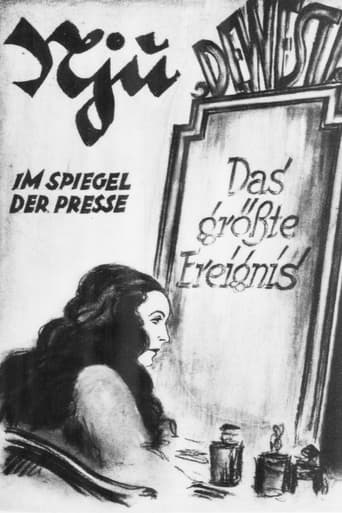

Elisabeth Bergner
Actor
Born: August 22, 1897 in Drohobycz, Austria-Hungary (now Drohobych, Ukraine) Died: May 12, 1986 Active: 1918-1973 Birth Name: Elisabeth Ettel
Films
1 film
About Elisabeth Bergner
Celebrated Austrian-born actress who rose to prominence in German cinema during the silent era and early sound period. She began her career on the Viennese stage at age 14, quickly establishing herself as a theatrical prodigy before transitioning to film in 1918. Bergner became popular and critically acclaimed actresses in Weimar Germany, known for her ethereal beauty and distinctive acting style that combined naturalism with intense emotional expression. With the rise of Nazism, she fled Germany in 1933 with her husband-director Paul Czinner, first settling in England and later working in Hollywood. She received an Academy Award nomination for Best Actress for her role in 'Escape Me Never' (1935), making her one of the first non-English speaking actresses to achieve this recognition. After World War II, she continued working in European cinema and television, with her final film appearance in 1973. Bergner's over six decades and multiple countries, making her a truly international star of classic cinema.
The Craft
On Screen
Bergner was known for her unique androgynous appeal and ethereal screen presence, often playing youthful, vulnerable characters with remarkable emotional depth. Her acting style combined naturalistic techniques with a distinctive dreamlike quality, setting her apart from the more theatrical performances common in silent cinema. She possessed an extraordinary ability to convey complex emotions through subtle facial expressions and body language, making her particularly effective in intimate psychological dramas. Her voice, when sound films arrived, was described as having a musical quality that added to her otherworldly charm.
Milestones
- Stage debut in Vienna at age 14
- Breakthrough film role in 'The Other I' (1918)
- International stardom in German cinema (1920s)
- Academy Award nomination for 'Escape Me Never' (1935)
- Successful transition to English-language films
- Return to European cinema post-WWII
Best Known For
Iconic Roles
Must-See Films
Accolades
Won
- Venice Film Festival Volpi Cup for Best Actress (1934)
- German Film Award for Lifetime Achievement (1971)
Nominated
- Academy Award for Best Actress (1935) for 'Escape Me Never'
- New York Film Critics Circle Award for Best Actress (1935)
Special Recognition
- Commander's Cross of the Order of Merit of the Federal Republic of Germany
- Austrian Decoration for Science and Art
- Honorary Citizen of Vienna
Working Relationships
Worked Often With
Studios
Why They Matter
Impact on Culture
Elisabeth Bergner's impact on cinema extends beyond her performances to her role as a cultural ambassador and symbol of artistic resistance. As. Her androgynous appeal and naturalistic acting style challenged traditional gender representations in cinema, influencing subsequent generations of performers. Bergner's flight from Nazi Germany and continued success abroad made her an icon of artistic freedom and resilience. Her work helped preserve and promote European artistic traditions in exile, contributing to the internationalization of film culture. Additionally, her Academy Award nomination in 1935 helped pave the way for greater recognition of foreign talent in Hollywood.
Lasting Legacy
Elisabeth Bergner's legacy in film history is that of a international star who successfully navigated the transition from silent to sound films across multiple national cinemas. She is remembered for her distinctive artistic vision that combined European sophistication with universal emotional appeal. Her performances continue to be studied by film scholars for their innovative approach to character development and psychological depth. Bergner's career trajectory from Viennese stage to international stardom exemplifies the possibilities and challenges faced by artists in the turbulent first half of the 20th century. Her autobiography 'Bewahrte Zeit' (Preserved Time) remains an important historical document about the golden age of European cinema. Film historians credit her with helping to establish the archetype of the sensitive, intelligent heroine in international cinema.
Who They Inspired
Bergner influenced numerous actors and filmmakers with her naturalistic acting style and approach to character development. Her technique of underplaying emotions while maintaining psychological intensity became a model for subsequent generations of method actors. Directors such as Max Ophüls and William Wyler cited her work as inspiration for their approaches to female characterization. Her success in multiple languages and film industries demonstrated the viability of international careers for performers, influencing later stars like Marlene Dietrich and Greta Garbo. Contemporary actresses who specialize in intelligent, emotionally complex roles owe a debt to Bergner's work in establishing the possibility of such characters in mainstream cinema.
Off Screen
Elisabeth Bergner led a life marked by both professional success and personal challenges. She married director Paul Czinner in 1924, and their professional partnership produced many of her most successful films. The couple fled Nazi Germany together in 1933, first to England and then to the United States. After divorcing Czinner in 1939, she married American writer Henry Norwind in 1948. Bergner was known for her intellectual pursuits and was fluent in multiple languages. She had no children but maintained close relationships with her extended family throughout her life. In her later years, she lived quietly in London, occasionally appearing in television productions and giving interviews about her remarkable career.
Education
Studied acting at the Vienna Conservatory and received private coaching from renowned theater director Max Reinhardt
Family
- Paul Czinner (1924-1939)
- Henry Norwind (1948-1986)
Did You Know?
- Was nicknamed 'The Bergner' by German audiences, indicating her iconic status
- Her distinctive voice was considered too high-pitched for early sound recording, requiring special microphone techniques
- Turned down the role that eventually went to Greta Garbo in 'Mata Hari' (1931)
- Was the first Austrian actress to receive an Academy Award nomination
- Her 1924 film 'Husbands or Lovers' was considered controversial for its time due to its themes of female sexuality
- Spoke fluent German, English, French, and Polish
- Was a close friend of Albert Einstein, who admired her artistic sensibility
- Her image appeared on Austrian postage stamps in 1997 as part of a series celebrating cultural figures
- Was offered a Hollywood contract by Paramount in 1930 but declined to continue working in Europe
- Published her autobiography in 1973, which became a bestseller in Germany
In Their Own Words
Acting is not about becoming someone else, but about finding the other person within yourself.
The camera is a truth-teller; it captures what the heart feels but cannot express.
I never played a character; I lived them, breathed them, and sometimes forgot to return to myself.
In every role, there is a piece of the actor's soul - that's why performance is both a gift and a sacrifice.
The best films are like dreams that you can return to again and again.
Frequently Asked Questions
Who was Elisabeth Bergner?
Celebrated Austrian actress who rose to fame in German cinema during the silent era and early sound period. She was known for her ethereal beauty, distinctive acting style, and international career that spanned Europe and Hollywood. She received an Academy Award nomination for Best Actress in 1935, becoming one of the first non-English speaking actresses to achieve this recognition.
What films is Elisabeth Bergner best known for?
Titles linked here include The Other I (1918), Husbands or Lovers (1924).
When was Elisabeth Bergner born and when did she die?
Born August 22, 1897; died May 12, 1986.
What awards did Elisabeth Bergner win?
Bergner received the Venice Film Festival Volpi Cup for Best Actress in 1934 and the German Film Award for Lifetime Achievement in 1971. She was nominated for an Academy Award for Best Actress in 1935 for her role in 'Escape Me Never' and received numerous honors including the Commander's Cross of the Order of Merit of the Federal Republic of Germany.
What was Elisabeth Bergner's acting style?
Bergner's acting style was characterized by a unique blend of naturalism and ethereal intensity. She was known for her androgynous appeal and ability to convey complex emotions through subtle facial expressions and body language. Her performances combined psychological depth with a dreamlike quality that set her apart from her contemporaries, making her particularly effective in intimate character studies.