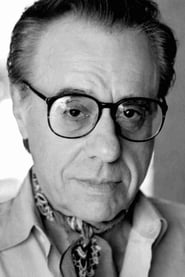
Peter Bogdanovich
Director
Born: July 30, 1939 in Kingston, New York, USA Died: January 6, 2022 Active: 1968-2022
Films
1 film
About Peter Bogdanovich
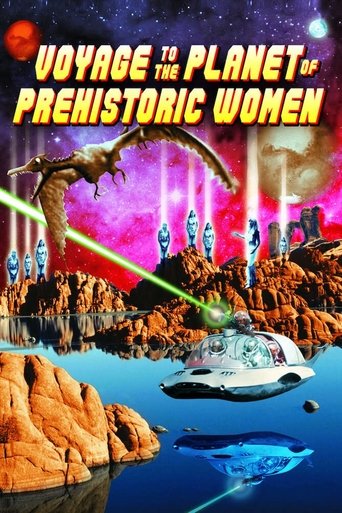
American film director, writer, actor, producer, and critic who emerged as a prominent figure in the New Hollywood era of the 1970s. Born to Serbian immigrant parents, Bogdanovich developed a passion for cinema at an early age, becoming a film programmer at the Museum of Modern Art in his twenties. His career began under Roger Corman, where he directed low-budget films including 'Voyage to the Planet of Prehistoric Women' (1968) using the pseudonym Derek Thomas. Bogdanovich achieved critical acclaim and commercial success with his breakthrough film 'The Last Picture Show' (1971), which earned eight Academy Award nominations. Throughout the 1970s, he directed several notable films including 'What's Up, Doc?' (1972), 'Paper Moon' (1973), and 'Nickelodeon' (1976). Later in his career, he faced both professional setbacks and creative resurgence, while also maintaining a parallel career as a film historian and author. He continued directing, acting, and writing until his death in 2022, leaving behind a complex legacy as both a filmmaker and cinema scholar.
The Craft
Behind the Camera
Bogdanovich's directing style was heavily influenced by classical Hollywood directors like Howard Hawks and John Ford. He favored naturalistic performances, careful composition, and a reverence for film history. His early work showed a mastery of genre conventions while his later films became more personal and experimental.
Milestones
- Directed 'The Last Picture Show' (1971) earning 8 Oscar nominations
- Directed 'What's Up, Doc?' (1972) starring Barbra Streisand
- Directed 'Paper Moon' (1973) earning Tatum O'Neal an Oscar
- Early work with Roger Corman including 'Voyage to the Planet of Prehistoric Women'
- Authored influential books on cinema including 'Who the Devil Made It'
Best Known For
Iconic Roles
Must-See Films
Accolades
Won
- National Society of Film Critics Award for Best Director (1971) for 'The Last Picture Show'
- New York Film Critics Circle Award for Best Director (1971) for 'The Last Picture Show'
- Writers Guild of America Award for Best Adapted Screenplay (1972) for 'The Last Picture Show'
Nominated
- Academy Award for Best Director (1971) for 'The Last Picture Show'
- Academy Award for Best Adapted Screenplay (1971) for 'The Last Picture Show'
- Golden Globe for Best Director (1971) for 'The Last Picture Show'
- BAFTA Award for Best Direction (1973) for 'What's Up, Doc?'
Special Recognition
- Hollywood Walk of Fame star (1987)
- American Film Institute Lifetime Achievement Award (pending)
- Film Heritage Award for 'The Last Picture Show'
Working Relationships
Worked Often With
Studios
Why They Matter
Impact on Culture
Peter Bogdanovich played a crucial role in the New Hollywood movement of the 1970s, helping to bridge the gap between classical Hollywood cinema and the more personal, auteur-driven films of the era. His work demonstrated how contemporary filmmakers could honor and learn from Hollywood's golden age while creating modern, relevant stories. His books and interviews preserved invaluable insights from Hollywood's greatest directors, making him both a creator and preservation of film history.
Lasting Legacy
Bogdanovich's legacy is twofold: as a director who created several enduring American classics and as a film historian who documented and celebrated cinema's past. His films like 'The Last Picture Show' and 'Paper Moon' remain touchstones of 1970s American cinema, while his writings and interviews with directors like Orson Welles, Howard Hawks, and Alfred Hitchcock provide invaluable primary sources for film scholarship. He influenced a generation of filmmakers to study and respect film history while pursuing their own artistic visions.
Who They Inspired
Bogdanovich influenced filmmakers through both his example of studying classic cinema and his own directorial work. Directors like Quentin Tarantino, Wes Anderson, and Noah Baumbach have cited his blend of genre awareness and personal expression as influential. His interviews and books with legendary directors became essential reading for film students and aspiring filmmakers worldwide.
Off Screen
Bogdanovich's personal life was often as dramatic as his films. He married production designer Polly Platt in 1962, with whom he had two daughters. During the filming of 'The Last Picture Show', he began an affair with actress Cybill Shepherd, leading to his divorce from Platt. He later married Shepherd in 1974, but they divorced in 1978. In 1980, he began a relationship with Playboy model Dorothy Stratten, who was tragically murdered by her estranged husband. Bogdanovich later married Stratten's sister Louise in 1988, though they divorced in 2001. He spent his final years with his partner Louise Stratten.
Education
Studied at Stella Adler's acting studio, largely self-taught in film through extensive viewing and study at Museum of Modern Art
Family
- Polly Platt (1962-1971)
- Cybill Shepherd (1974-1978)
- Louise Stratten (1988-2001)
Did You Know?
- Used the pseudonym Derek Thomas for 'Voyage to the Planet of Prehistoric Women'
- Was a film programmer at MoMA before becoming a director
- Conducted over 100 hours of interviews with Orson Welles
- Was one of the first film critics to become a successful director
- Appeared as Dr. Melfi's psychiatrist on 'The Sopranos'
- Wrote for Esquire and Film Comment magazines
- Was close friends with Jerry Lewis and helped preserve his legacy
- His first film job was as a gofer for Roger Corman
- Taught film classes at USC and UCLA
- Was considered to direct 'The Godfather' before Francis Ford Coppola
In Their Own Words
The whole point of making movies is to get people to see what you want them to see, when you want them to see it.
I've always felt that movies are about emotion, not about ideas.
The past is never dead. It's not even past.
I learned more from watching movies than from any school.
Directors are the authors of cinema, and the best ones have something personal to say.
Frequently Asked Questions
Who was Peter Bogdanovich?
American on YTB.my.
What films is Peter Bogdanovich best known for?
Titles linked here include The Last Picture Show (1971), What's Up, Doc? (1972).
When was Peter Bogdanovich born and when did he die?
Born July 30, 1939; died January 6, 2022.
What awards did Peter Bogdanovich win?
He won the National Society of Film Critics Award and New York Film Critics Circle Award for Best Director for 'The Last Picture Show', plus a Writers Guild Award for the screenplay. He received two Academy Award nominations for the same film.
What was Peter Bogdanovich's directing style?
Bogdanovich's directing style was heavily influenced by classical Hollywood directors like Howard Hawks and John Ford, featuring naturalistic performances, careful composition, and a reverence for film history while creating contemporary stories.
Did Peter Bogdanovich have a connection to classic Hollywood?
Yes, Bogdanovich was deeply connected to classic Hollywood through his friendships with directors like Howard Hawks, John Ford, and especially Orson Welles, whom he interviewed extensively and helped preserve Welles' legacy.
What was Peter Bogdanovich's role in The Sopranos?
Bogdanovich had a recurring role as Dr. Elliot Kupferberg, Dr. Melfi's psychiatrist, appearing in multiple episodes of the acclaimed HBO series 'The Sopranos'.