Films
1 film
About Erintzin Narbo
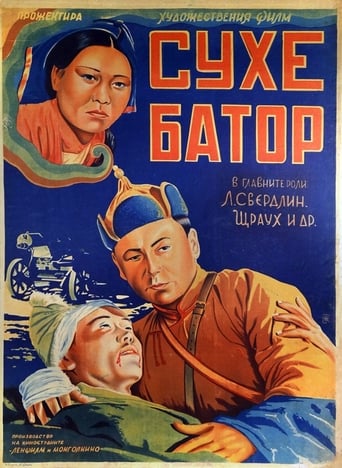
Erintzin Narbo appeared in Soviet-Mongolian cinema during the early 1940s. His only known film credit is in the 1942 historical biopic 'His Name Is Sukhe-Bator,' which depicted the life of Mongolian revolutionary leader Damdin Sükhbaatar. Given the film's production as a joint Soviet-Mongolian venture, Narbo was likely either a Mongolian actor or a Soviet performer of Mongolian heritage. His brief appearance in this significant political film suggests he may have been involved in the burgeoning Mongolian film industry of the era, which was heavily supported by Soviet cultural initiatives. Unfortunately, detailed records about his life, career trajectory, or other potential works have not been preserved in accessible film archives or databases from the period.
The Craft
Milestones
- Appeared in the Soviet-Mongolian co-production 'His Name Is Sukhe-Bator' (1942)
Best Known For
Must-See Films
Working Relationships
Studios
Why They Matter
Impact on Culture
Erintzin Narbo's contribution to cinema, while limited to a single known appearance, represents the broader cultural collaboration between the Soviet Union and Mongolia during the 1940s. The film 'His Name Is Sukhe-Bator' was part of Soviet efforts to promote socialist values and celebrate revolutionary heroes across Soviet republics and allied nations. Actors like Narbo, though their individual stories may be lost to time, were instrumental in bringing these politically significant narratives to life and helping establish national film industries in Soviet-aligned countries.
Lasting Legacy
Due to the extremely limited documentation available, Erintzin Narbo's legacy in film history remains obscure. His appearance in 'His Name Is Sukhe-Bator' places him within the important context of early Mongolian cinema and Soviet cultural diplomacy of the 1940s. While not a widely recognized figure in international film history, his participation in this significant historical biopic represents the contributions of countless actors from the early Soviet era whose individual stories have not been fully preserved in film archives.
Who They Inspired
There is insufficient information to determine Erintzin Narbo's influence on other actors or filmmakers. Given his brief and obscure film career, any direct influence on subsequent generations of performers would be difficult to trace without more comprehensive documentation of his work and potential teaching or mentorship activities.
Off Screen
Very limited information is available about Erintzin Narbo's personal life. As an actor from the early 1940s Soviet-Mongolian film industry, personal details about performers from this era and region are often scarce in Western film archives.
Did You Know?
- Appeared in only one known film: 'His Name Is Sukhe-Bator' (1942)
- The film was a Soviet-Mongolian co-production about the Mongolian revolutionary leader
- The movie was directed by Iosif Kheifits and Alexander Zarkhi
- This was during World War II when Soviet cinema focused heavily on patriotic and revolutionary themes
- The film was produced by Mosfilm in collaboration with Mongolkino
- Very little biographical information about actors from early Mongolian cinema survives in Western databases
Frequently Asked Questions
Who was Erintzin Narbo?
Screen credits include Soviet-Mongolian cinema. His only known film credit is in the 1942 historical film 'His Name Is Sukhe-Bator,' which was a joint Soviet-Mongolian production about the Mongolian revolutionary leader.
What films is Erintzin Narbo best known for?
Titles linked here include His Name Is Sukhe-Bator (1942).
When was Erintzin Narbo born and when did they die?
The birth and death dates of Erintzin Narbo are not known. Due to the limited documentation of actors from early Mongolian cinema and the obscurity of this performer, biographical details including birth and death information have not been preserved in available film archives.
What awards did Erintzin Narbo win?
There are no documented awards or nominations for Erintzin Narbo. Given his brief and obscure film career, primarily limited to one film in 1942, any awards or recognition he may have received are not recorded in accessible film history sources.
What was Erintzin Narbo's acting style?
There is insufficient information to determine Erintzin Narbo's acting style. With only one known film appearance and limited documentation of early Mongolian cinema performance techniques, any assessment of his artistic approach would be speculative without access to the film itself or contemporary reviews.