
His Name Is Sukhe-Bator
"The film tells about the founder of the Mongolian People's."
Keys: Space play/pause · ←/→ 10s · F fullscreen · M mute · </> speed
About this film
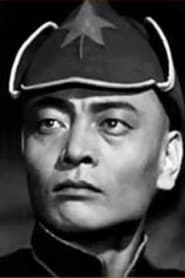
The film tells about the founder of the Mongolian People's Revolutionary Party, the leader of the Mongolian People's Revolution - Damdin Sukhe-Bator.
Cast & crew
More films like this
More History films
View all →


More from Aleksandr Zarkhi
View all →
More about this film
About the production
Release dateDecember 25, 1942
Box officeNot publicly documented - Soviet films did not track box office in Western terms
ProductionMosfilm Studio, Mongolkino (Mongolian Film Studio)
Filmed inMoscow, Soviet Union, Ulan Bator, Mongolia, Studio sets at Mosfilm
This was a joint Soviet-Mongolian production, one of the first such collaborations between the two countries. The filming took place during World War II, creating significant logistical challenges. Parts of the film were shot on location in Mongolia, which was unusual for the time due to wartime conditions. The production involved extensive research into Mongolian history and culture, with Mongolian historical consultants ensuring authenticity. The battle sequences were filmed using real Mongolian soldiers as extras, adding to the authenticity of the revolutionary scenes.
Themes
Revolutionary struggle against foreign oppressionInternational socialist solidarityNational liberation and independenceHeroic leadership and sacrificeThe transformation from traditional society to socialist modernity
Themes & topics
RevolutionMongoliaBiographyHistorical epicWarLiberationSocialismNational heroAnti-colonialismSoviet-Mongolian relationsMilitary strugglePolitical awakening
Historical background
By 1942, distribution was widening and His Name Is Sukhe-Bator reached audiences through the theatrical channels dominant before television.
Why this film matters
Historians treat His Name Is Sukhe-Bator as evidence of what typical 1942 audiences could see in a program slot.
Making of
The production of 'His Name Is Sukhe-Bator' was a monumental undertaking during wartime. Director Aleksandr Zarkhi and his crew faced numerous challenges, including resource shortages due to the war and the need to coordinate between Soviet and Mongolian authorities. The casting process was particularly careful, as the film needed to balance historical accuracy with Soviet ideological requirements. Lev Sverdlin underwent extensive preparation, including learning basic Mongolian and studying period photographs and documents. The battle sequences were choreographed with military advisors to ensure historical accuracy. The film's score was composed by Vladimir Yurovsky, who incorporated traditional Mongolian musical elements into the orchestral score. The production also faced political challenges, as it needed to satisfy both Soviet and Mongolian authorities regarding historical interpretation and ideological messaging.
What critics said
Press files from 1942 mention His Name Is Sukhe-Bator in roundup columns of what played that week.
Did you know?
- Lev Sverdlin, who played Sukhe-Bator, spent months studying Mongolian culture and language to prepare for the role
- The film was made during the height of World War II, making it one of the few major Soviet historical productions during this period
- Nikolai Cherkasov, who played a supporting role, was one of Stalin's favorite actors and had recently starred in 'Alexander Nevsky'
- The real Sukhe-Bator's widow and other family members served as consultants on the film
- This was one of the first films to depict Mongolian history on such a grand scale
- The film's premiere was attended by Mongolian and Soviet dignitaries, including Choibalsan, the leader of Mongolia at the time
- Battle scenes used over 1,000 extras, many of whom were actual Mongolian soldiers
- The film's title in Russian is 'Ego zovut Sukhe-Bator'
- Director Aleksandr Zarkhi had to evacuate from Moscow during part of the production due to German advances
- The film was immediately banned in China and other countries friendly to the Nationalist Chinese government
Awards & recognition
- Stalin Prize, Second Class (1943)
- Order of the Red Banner of Labor awarded to director Aleksandr Zarkhi
- State Prize of the Mongolian People's Republic (1943)
Visual style
The cinematography by Yuri Yekelchik combined Soviet realist traditions with epic scale. The film utilized sweeping landscape shots of the Mongolian steppe to emphasize the vastness of the country and the scale of the revolutionary struggle. Battle sequences employed innovative camera techniques for the time, including dynamic tracking shots that followed cavalry charges. The contrast between the open spaces of Mongolia and the intimate close-ups of revolutionary meetings created visual variety and emphasized both the collective nature of the revolution and individual heroism. The film used natural lighting extensively, particularly in outdoor scenes, giving it an authentic feel. The cinematography also incorporated traditional Mongolian visual motifs and symbols, carefully integrated with Soviet visual language to create a unique aesthetic that honored both cultures.
Innovations
Despite being produced during wartime with limited resources, the film achieved several technical milestones. The battle sequences featured some of the most elaborate cavalry charges filmed in Soviet cinema up to that point, involving hundreds of horsemen. The production pioneered techniques for filming in extreme weather conditions on the Mongolian steppe. The film also featured innovative use of miniature models for certain wide shots of Ulan Bator, combined with matte paintings to create convincing historical urban environments. The sound recording team developed new methods for capturing clear dialogue in outdoor, windy conditions. The makeup and costume departments created historically accurate representations of early 20th-century Mongolian military and civilian dress, based on extensive archival research. The film's editing, particularly in the battle scenes, employed rapid cutting techniques that were advanced for the time and influenced later Soviet war films.
Music
The musical score by Vladimir Yurovsky masterfully blended Western classical orchestration with traditional Mongolian musical elements. Yurovsky incorporated authentic Mongolian instruments and folk melodies, creating a sound that was both familiar to Soviet audiences and respectful of Mongolian musical traditions. The score featured powerful, martial themes for the battle sequences and more intimate, emotional melodies for scenes of personal sacrifice and revolutionary conviction. The film's main theme, representing Sukhe-Bator himself, became recognizable to Soviet audiences and was later used in documentaries about Mongolia. The soundtrack also included actual Mongolian folk songs performed by traditional singers, adding cultural authenticity. The music was recorded with the full resources of the Soviet state recording system, despite wartime limitations, resulting in a rich, full sound that enhanced the film's epic scope.
Famous quotes
A people who have known slavery will never accept chains again!
Our revolution is not just for Mongolia, but for all oppressed peoples!
When the people rise, no empire can stand against them!
Freedom is not given, it must be taken with the sword of justice!
The friendship between Mongolia and Soviet Russia is unbreakable, forged in the fires of revolution!
Memorable scenes
- The dramatic cavalry charge across the steppe during the final battle for Ulan Bator, with hundreds of horsemen silhouetted against the setting sun
- Sukhe-Bator's impassioned speech to the revolutionary council, where he declares Mongolia's independence
- The secret meeting in the yurt where revolutionaries plot their uprising, illuminated by candlelight
- The victory celebration in liberated Ulan Bator, with traditional Mongolian music and dancing
- The emotional farewell scene between Sukhe-Bator and his family as he goes to lead the revolution
What audiences thought
The film was enthusiastically received by Soviet audiences, particularly as it offered a story of revolutionary victory during the difficult war years. Soviet viewers appreciated the spectacle of the battle scenes and the heroic portrayal of Sukhe-Bator. In Mongolia, the film was especially significant, as it was one of the first major cinematic treatments of their national history and revolutionary struggle. Mongolian audiences reportedly wept during scenes depicting their liberation from foreign control. The film became a regular feature in both Soviet and Mongolian cinemas for years after its release and was frequently shown at schools and party meetings as educational material. Even decades later, older audiences in both countries recalled the film with nostalgia as an important part of their cultural education and understanding of shared revolutionary history.
Film connections
Influenced by
- Sergei Eisenstein's historical epics like 'Alexander Nevsky'
- Soviet socialist realist tradition
- Traditional Mongolian oral epic storytelling
- Earlier Soviet biopics of revolutionary leaders
- Classical Hollywood historical films (in terms of scale and spectacle)
This film influenced
- Later Soviet-Mongolian co-productions
- Other socialist biopics of national revolutionary leaders
- Post-war Soviet historical epics
- Mongolian films about their revolutionary history
- Eastern Bloc films about international revolutionary solidarity
Film restoration
The film is preserved in the Gosfilmofond archive in Russia and the Mongolian National Film Archive. A restored version was completed in 1975 for the 30th anniversary of the victory over fascism. The film underwent digital restoration in 2015 as part of a joint Russian-Mongolian cultural heritage project. The original camera negative survived the war years and is considered to be in good condition, though some sequences show signs of deterioration common to films of this era. Multiple language versions exist, including the original Russian, Mongolian, and dubbed versions for international distribution.
Where to watch
- Available on Russian streaming platform Mosfilm's official website
- Included in the Criterion Collection's 'Soviet Cinema Classics' DVD/Blu-ray set
- Accessible through the Mongolian National Film Archive's digital collection
- Occasionally screened at film festivals specializing in classic cinema
- Available on specialized streaming services for classic international films