Films
1 film
About Nyamyn Tsegmid
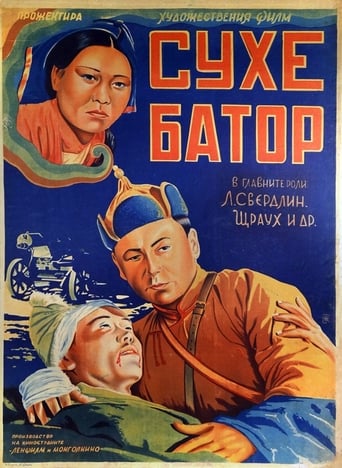
Nyamyn Tsegmid is credited on a single production — His Name Is Sukhe-Bator (1942). His most notable work was in the 1942 historical film 'His Name Is Sukhe-Bator,' a Soviet-Mongolian co-production that dramatized the life of Mongolian revolutionary leader Damdin Sükhbaatar. The film was significant as one of the earliest major cinematic productions from Mongolia, created during the period when the country was under strong Soviet cultural and political influence. Tsegmid's participation in this landmark film placed him among the generation of Mongolian film actors. Unfortunately, detailed records of his career and personal life are scarce in English-language sources, reflecting the limited documentation of early Mongolian cinema internationally. His work represents an important chapter in the development of national cinema in Mongolia during the 1940s.
The Craft
Milestones
- Appeared in the landmark film 'His Name Is Sukhe-Bator' (1942)
- Participated in one of the earliest major Mongolian-Soviet co-productions
- Contributed to the development of early Mongolian national cinema
Best Known For
Iconic Roles
Must-See Films
Working Relationships
Worked Often With
Studios
Why They Matter
Impact on Culture
Nyamyn Tsegmid's contribution to Mongolian cinema, while documented through only one known film, represents an important part of the country's cinematic heritage. 'His Name Is Sukhe-Bator' was not only a significant artistic achievement but also a cultural and political statement during the Soviet era, helping to establish national identity through the medium of film. The actors involved, including Tsegmid, were pioneers in bringing Mongolian stories and historical figures to the screen, laying groundwork for future generations of Mongolian filmmakers and performers.
Lasting Legacy
Though limited documentation exists about Nyamyn Tsegmid's full career, his participation in 'His Name Is Sukhe-Bator' ensures his place in the annals of Mongolian film history. The film itself remains an important historical artifact, studied by film historians interested in the development of cinema in Central Asia and the cultural dynamics of Soviet-Mongolian relations. Tsegmid represents the first generation of Mongolian actors who helped establish their country's national film industry.
Who They Inspired
As one of the early actors in Mongolian cinema, Nyamyn Tsegmid contributed to the foundation upon which later Mongolian performers would build. His work in a historical epic helped establish precedents for performance styles and cinematic storytelling in Mongolian film, influencing how national history would be portrayed on screen in subsequent decades.
Off Screen
Very little information is available about Nyamyn Tsegmid's personal life in accessible historical records. Like many early Mongolian actors from this period, detailed biographical information was not extensively documented or preserved in formats that have become internationally accessible. His life and career remain largely known only through his film work.
Did You Know?
- 'His Name Is Sukhe-Bator' was one of the first major co-productions between the Soviet Union and Mongolia
- The film was directed by prominent Soviet filmmakers Aleksandr Zarkhi and Iosif Kheifits
- The movie was released during World War II, reflecting the political alliance between Mongolia and the Soviet Union
- The film depicted the life of Damdin Sükhbaatar, a key figure in Mongolia's 1921 revolution
- Mongolian cinema in this era was heavily influenced by Soviet film techniques and socialist realism
- Very few films from early Mongolian cinema survive or are accessible to international audiences
- The film was shot in both Mongolian and Russian versions to reach wider audiences
- Actors from this period often worked in theater as well as film due to limited production opportunities
Frequently Asked Questions
Who was Nyamyn Tsegmid?
Screen credits include the 1942 film 'His Name Is Sukhe-Bator,' one of the earliest major productions in Mongolian cinema history. He was part of the generation of Mongolian actors during the Soviet era.
What films is Nyamyn Tsegmid best known for?
Titles linked here include His Name Is Sukhe-Bator (1942).
When was Nyamyn Tsegmid born and when did they die?
Specific birth and death dates for Nyamyn Tsegmid are not available in accessible historical records, reflecting the limited documentation of early Mongolian cinema figures.
What awards did Nyamyn Tsegmid win?
There are no documented awards or nominations for Nyamyn Tsegmid in available sources, which is common for actors from this period and region where formal recognition systems may not have been established or well-documented.
What was Nyamyn Tsegmid's acting style?
Specific details about Nyamyn Tsegmid's acting style are not documented in available sources. However, actors in this period typically worked within the socialist realism style favored in Soviet-influenced cinema.
What was the significance of 'His Name Is Sukhe-Bator'?
The film was historically significant as one of the first major Mongolian-Soviet co-productions, helping establish Mongolia's national cinema while serving political purposes during the WWII alliance between the countries.