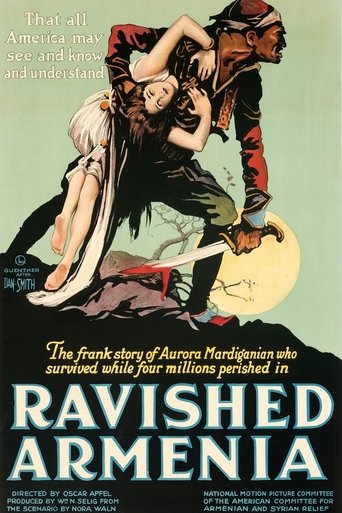

Aurora Mardiganian
Actor
Born: January 12, 1901 in Çemişgezek, Harput Vilayet, Ottoman Empire (present-day Turkey) Died: February 6, 1994 Active: 1919-1919 Birth Name: Aurora (Arshaluys) Mardiganian
Films
1 film
About Aurora Mardiganian
Remarkable figure in early cinema history, an Armenian Genocide survivor who transformed her traumatic experiences into a powerful testament through film. Born in the Ottoman Empire, she endured the horrific events of the 1915 Armenian Genocide, during which she lost her entire family and suffered unimaginable atrocities before escaping to the United States in 1917. Her story caught the attention of the American public and filmmakers, leading to her starring role in 'Auction of Souls' (1919), a silent film based on her memoir 'Ravished Armenia.' Mardiganian not only acted in the film but also served as a consultant to ensure authenticity, making her one of the first genocide survivors to bring such testimony to the silver screen. Following the film's release, she embarked on a nationwide tour to promote awareness of the Armenian plight, becoming an early advocate for human rights. Despite the film's success, her acting career remained limited to this single production, after which she largely withdrew from public life. Her legacy endures as both a figure in genocide testimony and proof of the power of cinema as a medium for bearing witness to historical atrocities.
The Craft
On Screen
Naturalistic and emotionally authentic, drawing directly from her traumatic real-life experiences rather than theatrical training
Milestones
- Survived the Armenian Genocide and escaped to America in 1917
- Published memoir 'Ravished Armenia' in 1918
- Starred in 'Auction of Souls' (1919) based on her life story
- Conducted nationwide lecture tours to raise awareness about the Armenian Genocide
- Became one of the first genocide survivors to testify through film
Best Known For
Iconic Roles
Must-See Films
Accolades
Special Recognition
- Recognized as a genocide survivor and witness
- Honored by Armenian communities worldwide for her courage
- Film 'Auction of Souls' preserved as important historical document
Working Relationships
Worked Often With
Studios
Why They Matter
Impact on Culture
Aurora Mardiganian's work in 'Auction of Souls' represented a groundbreaking moment in cinema history, establishing film as a medium for genocide testimony and human rights advocacy. Her story brought the Armenian Genocide to international attention at a time when many world governments remained silent, using the emerging power of motion pictures to reach mass audiences. The film's graphic depictions of genocide, though controversial, pushed boundaries of what could be shown on screen and established a precedent for documentary-style storytelling in narrative cinema. Mardiganian's courage in recounting her experiences helped lay groundwork for future generations of survivors to share their stories through various media.
Lasting Legacy
Aurora Mardiganian's legacy transcends her brief film career, positioning her as a pivotal figure in both cinema history and human rights documentation. Her story exemplifies the power of personal testimony in historical preservation, and her film remains one of the earliest cinematic depictions of genocide. Modern scholars and filmmakers continue to reference her work when discussing the representation of historical atrocities in media. Her life story has been the subject of numerous books, documentaries, and academic studies, cementing her place as an important voice in genocide studies and early cinema.
Who They Inspired
Mardiganian influenced subsequent generations of survivor-storytellers and demonstrated how personal trauma could be transformed into powerful advocacy through media. Her approach to authentic representation influenced later documentary filmmakers dealing with sensitive historical subjects. Contemporary filmmakers dealing with genocide and human rights themes often cite her work as an early example of bearing witness through cinema.
Off Screen
After her film career, Mardiganian married Martin Mardiganian and lived a relatively private life in Los Angeles. She struggled with the psychological trauma of her experiences for decades but remained committed to Armenian causes. In her later years, she participated in interviews and documentaries about the Armenian Genocide, ensuring her testimony would be preserved for future generations.
Education
Limited formal education due to the genocide; received some education in American orphanages after her arrival
Family
- Martin Mardiganian (1920s-1960s)
Did You Know?
- She was one of the first genocide survivors to star in a film adaptation of her own life story
- The film 'Auction of Souls' was also known as 'Ravished Armenia' and contained scenes so graphic that some were cut for American audiences
- She walked 1,400 miles during her escape from the genocide, much of it barefoot
- The film reportedly raised over $30 million (in today's money) for Armenian relief efforts
- She was discovered by a New York Times reporter while working in a New York garment factory
- Her memoir was ghostwritten but based on extensive interviews with her
- The film was considered lost for decades before fragments were rediscovered
- She performed many of her own stunts in the film, including dangerous falls and escapes
- Her real name was Arshaluys, which means 'dawn' in Armenian
- She continued to advocate for Armenian genocide recognition until her death at age 93
In Their Own Words
I wanted the world to know what happened to my people. If I could save even one person from suffering like I did, then my pain would have meaning.
When I acted in the film, I was not acting. I was reliving everything that happened to me and my family.
The camera became my voice when I could not find the words to describe the horrors I had witnessed.
Frequently Asked Questions
Who was Aurora Mardiganian?
Armenian Genocide survivor who became an actress, starring in the 1919 film 'Auction of Souls' based on her experiences. She was one of the first genocide survivors to document her testimony through cinema, using her platform to raise awareness about the Armenian plight.
What films is Aurora Mardiganian best known for?
Titles linked here include Auction of Souls (1919).
When was Aurora Mardiganian born and when did she die?
Born January 12, 1901; died February 6, 1994.
What awards did Aurora Mardiganian win?
While Aurora Mardiganian did not receive traditional film awards, she was honored by Armenian communities worldwide for her courage in testifying about the genocide and is recognized as a figure in genocide documentation through film.
What was Aurora Mardiganian's acting style?
Mardiganian's acting style was notably naturalistic and emotionally authentic, as she drew directly from her real traumatic experiences rather than formal theatrical training. Her performances were praised for their raw honesty and emotional intensity.
How did Aurora Mardiganian impact cinema?
Mardiganian pioneered the use of film as a medium for genocide testimony and human rights advocacy. Her work established a precedent for survivor storytelling in cinema and demonstrated how personal narratives could bring historical atrocities to mass audiences.
What happened to Aurora Mardiganian after her film career?
After her brief film career, Mardiganian married and lived a relatively private life in Los Angeles while remaining involved in Armenian causes. She continued to share her testimony through interviews and documentaries in her later years.