Frank Bates
Actor
- Active
- 1917-1917
Films 1
About Frank Bates
Frank Bates appears in surviving film records as a silent-era screen actor with a known credit in The Hero (1917), but very little reliably documented biographical information has been preserved under this exact name. His career, as currently traceable through available filmography references, places him in the active years of 1917 and suggests participation in early American motion pictures during the late silent period. Because he is not consistently covered in standard reference works, it is difficult to reconstruct a full personal history, and no authoritative source has been found that firmly establishes his birth date, birthplace, or later life. What can be said with confidence is that he belonged to the broad class of working actors who contributed to the development of silent cinema, often appearing in supporting or uncredited capacities that were not always carefully documented. His presence in The Hero indicates involvement in feature filmmaking at a time when the industry was rapidly professionalizing and when many performers moved between stage, short subjects, and features with little archival trace. Beyond that single confirmed credit, his broader career arc, personal background, and later activities remain elusive in the surviving historical record. For a database entry, he should therefore be treated as a sparsely documented early film performer whose surviving significance rests primarily on his association with The Hero and the silent-film era generally.
More about Frank Bates
In film history
Frank Bates's cultural impact is difficult to measure because the surviving record preserves only a narrow slice of his career, yet his presence in a 1917 feature places him within the formative years of American silent cinema. Performers like Bates were essential to the functioning of the industry even when they did not become marquee stars, helping populate the screen worlds that defined early narrative film. His work reflects the historical reality that many silent-era actors contributed to cinema's growth without leaving behind substantial publicity, interviews, or studio publicity materials. In that sense, he is representative of the thousands of working players whose names survive in cast lists but whose lives remain largely undocumented.
Later reputation
His legacy is primarily archival rather than celebratory: Frank Bates survives in film history as one of the many early screen actors whose name appears in silent-film credits and production records. For researchers, his importance lies in the evidence of his participation in The Hero (1917) and in the broader study of the labor force behind early American filmmaking. If additional credits or personal records emerge from newspapers, studio lists, or trade publications, his profile may be expanded, but at present his legacy is that of a little-documented contributor to the silent era. In classic-cinema databases, such figures are valuable because they help reconstruct the full ecosystem of early film production, not only the stars but also the supporting performers who made those films possible.
Influence
There is no documented evidence that Frank Bates directly influenced later actors or filmmakers in a traceable, named way. His influence is best understood indirectly: as part of the workforce of silent-era performers who helped establish acting conventions for the screen before sound transformed film performance. Actors like Bates contributed to the collective development of expressive, gesture-based silent acting, even when individual stylistic signatures were not recorded. His presence in early feature filmmaking adds to the historical fabric from which later screen acting evolved.
Off screen
No reliable biographical record has been identified that confirms Frank Bates's family background, marriages, children, or private life. Unlike more prominent silent-era performers, he does not appear to have left behind a well-documented personal archive in standard film reference sources. As a result, any claims about his relationships, education, or later life would be speculative rather than factual. For database purposes, his personal life should be marked as unknown pending further archival discovery.
Credits
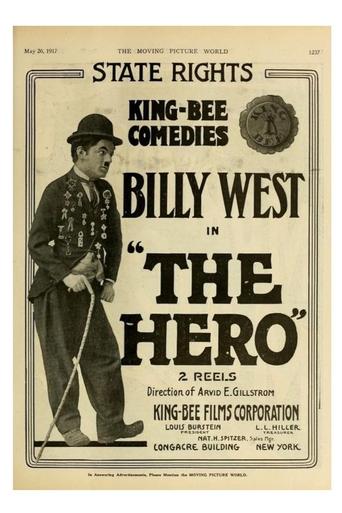
- Appeared in the silent feature The Hero (1917), the only firmly identified screen credit currently associated with this name
- Worked in American silent cinema during the mid-1910s, when feature-length productions were becoming increasingly common
- Represents the many early film performers whose careers are visible in filmographies but only faintly documented in biographical sources
Roles
- Role in The Hero (1917)
Films
- The Hero (1917)
Notes
- The only widely traceable screen credit currently associated with him is The Hero (1917).
- He appears to be one of many silent-era actors whose careers are preserved mainly through cast lists rather than detailed biographies.
- His record illustrates how incomplete early Hollywood documentation can be for supporting performers.
- Because his biography is so sparse, he is a useful example for film historians studying archival gaps in silent cinema.
- There is no authoritative standard-reference biographical profile readily available under this exact name.
- His surviving credit places him in the same year that Hollywood was rapidly shifting toward feature-length storytelling.
- He should not be confused with later or unrelated individuals with similar names.
Questions
Who was Frank Bates?
Frank Bates was a silent-era screen actor whose surviving film record currently identifies him in The Hero (1917). Very little biographical information has been preserved about him, so his historical significance rests mainly on his participation in early American cinema. He is representative of the many working actors from the silent period whose names appear in film credits but whose personal histories remain obscure.
What films is Frank Bates best known for?
He is best known for The Hero (1917), which is the main surviving screen credit currently associated with his name. No additional films can be stated with confidence from the available record. If more archival evidence is discovered, his filmography may be expanded.
When was Frank Bates born and when did he die?
At present, no reliable birth or death dates have been verified for Frank Bates. The historical record available under this exact name does not provide confirmed details about his birthplace, lifespan, or later life. For database purposes, those fields should remain unknown until supported by primary documentation.
What awards did Frank Bates win?
No awards or formal honors are currently documented for Frank Bates. This is not unusual for early silent-era supporting actors, many of whom worked before the modern awards system existed. His contribution is better understood through his screen credit rather than through accolades.
What was Frank Bates's acting style?
There is no surviving critical description of Frank Bates's individual acting style. Because he worked in the silent era, his performance would have relied on visual expression, gesture, and physical presence rather than spoken dialogue. Any more specific assessment would require surviving reviews, publicity stills, or film footage.
What is Frank Bates's legacy in film history?
His legacy is that of an early silent-film performer whose documented contribution helps fill out the cast lists of American cinema's formative years. Even when detailed biographical information is missing, actors like Bates are important to film history because they show how many people participated in the creation of early feature films. His name remains part of the archival record of The Hero (1917) and of the silent-era industry more broadly.