Films
1 film
About Oscar Johanson
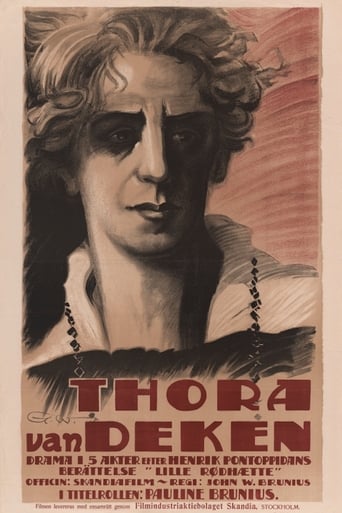
Oscar Johanson worked on one surviving credit: Thora van Deken (1920). Primarily known for his role in the 1920 Swedish drama 'Thora van Deken.' His career appears to have been brief, with his only documented film credit being this adaptation of Victor Rydberg's novel. The film, directed by John W. Brunius, was one of the significant Swedish productions of its time, featuring prominent actors like Pauline Brunius and Karin Molander. Johanson's specific role in the production is not well-documented in surviving film archives, suggesting he may have played a supporting or minor character. Like many actors from early European cinema, particularly those who worked primarily in their native countries, detailed records of his career and personal life are scarce. His brief appearance in film history represents the countless actors who contributed to the foundation of cinema during its formative years but whose stories remain largely untold.
The Craft
Milestones
- Appeared in 'Thora van Deken' (1920), a significant Swedish silent film adaptation
Best Known For
Must-See Films
Working Relationships
Worked Often With
Studios
Why They Matter
Impact on Culture
Oscar Johanson's contribution to cinema, while minimal in scope, represents the collective effort of countless actors who helped establish the foundation of film during the silent era. His appearance in 'Thora van Deken,' an adaptation of classic Swedish literature, was part of the important cultural movement that brought national literary works to the screen during early cinema. Though his individual impact was small, he was part of the broader artistic endeavor that established Sweden as a significant force in early European filmmaking, a legacy that would influence future generations of Swedish filmmakers including Ingmar Bergman.
Lasting Legacy
Oscar Johanson's legacy is primarily preserved through his participation in 'Thora van Deken,' a film that represents an important moment in Swedish cinematic history. While he may not be remembered as an individual star, his contribution exists as part of the tapestry of early Swedish cinema, a period that produced some of the most artistically significant films of the silent era. His story serves as a reminder of the many actors whose names have been lost to time but who were essential to the creation of cinema's earliest masterpieces.
Who They Inspired
Due to the limited scope of his documented career, there is no evidence of Oscar Johanson directly influencing other actors or filmmakers. However, as part of the ensemble that brought Victor Rydberg's literary work to the screen, he contributed to the tradition of literary adaptation in Swedish cinema that would influence future generations of filmmakers in their approach to bringing national literature to film.
Off Screen
Very little is known about Oscar Johanson's personal life, which is typical for many supporting actors from the silent era who worked primarily in European cinema. His brief film career and the passage of time have left few surviving records about his background, family, or life outside of his single known film appearance.
Did You Know?
- Oscar Johanson's only known film appearance was in 'Thora van Deken' (1920)
- The film he appeared in was based on a novel by renowned Swedish author Victor Rydberg
- His film was directed by John W. Brunius, one of Sweden's prominent early film directors
- Like many silent era actors, his complete filmography may be lost to incomplete record-keeping
- The film he appeared in was part of Sweden's golden age of silent cinema (1917-1924)
- No photographs or promotional materials featuring Oscar Johanson are known to survive
- His active years covered only one known year, making him one of cinema's briefest working actors
Frequently Asked Questions
Who was Oscar Johanson?
Swedish with credits in this catalog.' His career appears to have been extremely brief, with only one documented film credit to his name.
What films is Oscar Johanson best known for?
Titles linked here include Thora van Deken (1920).
When was Oscar Johanson born and when did he die?
Unfortunately, specific birth and death dates for Oscar Johanson are not available in surviving records. This is common for many supporting actors from early European cinema whose biographical information was not preserved.
What awards did Oscar Johanson win?
There are no records of Oscar Johanson receiving any awards or nominations for his work. During the early 1920s, formal acting awards were not yet established, especially for supporting actors in European cinema.
What was Oscar Johanson's acting style?
Due to the limited documentation of his career and the likely loss of the film 'Thora van Deken,' there is no available information about Oscar Johanson's specific acting style or technique.
Why is so little known about Oscar Johanson?
The scarcity of information about Oscar Johanson is typical of many supporting actors from early European cinema. Poor record-keeping, the loss of films, and the fact that he worked primarily in Swedish cinema have all contributed to the limited biographical data available.