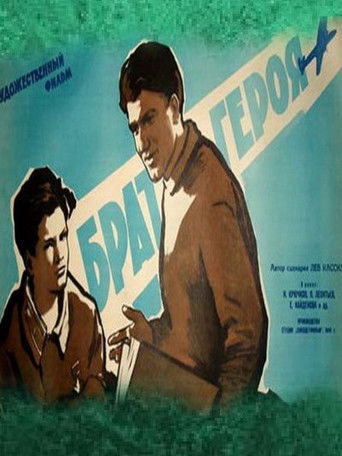

Dagmara Deringer
Actor
- Active
- 1940-1940
Films 1
About Dagmara Deringer
Dagmara Deringer is a little-documented screen performer best known for appearing in the 1940 film "Brother of a Hero." Based on the surviving film record available in major film-reference sources, she appears to have had a very limited on-screen career and is associated with only a single identified credit from the early sound era. No reliable biographical profiles, interviews, studio publicity files, or biographical notices have been located in standard classic-cinema reference sources, which suggests that she was either a short-lived or extremely minor screen participant rather than a widely publicized star. Because of this scarcity of documentation, the details of her early life, training, personal background, and later career remain unknown. She is nevertheless part of the broader ecosystem of European and international performers whose work survives primarily through individual film credits rather than substantial biographical records. In database terms, her significance lies in preserving the historical record of a specific wartime-era screen performance rather than in an expansive star career. Further verification in archival cast lists, production paperwork, and regional film histories would be needed to clarify her exact nationality, life dates, and broader professional background.
More about Dagmara Deringer
In film history
Dagmara Deringer’s cultural impact is limited by the extremely small amount of surviving documentation about her career, but her presence in the record still matters to film historians and database curators. Performers like Deringer help complete the historical picture of cinema beyond major stars, reminding researchers that films were made by large casts of credited and uncredited artists whose lives were often never fully documented. Her record also illustrates how wartime and pre-war filmographies can contain many names that survive in cast lists while the surrounding biographical details have been lost. In that sense, her contribution is archival and historical as much as artistic: she represents the many lesser-known actors whose work remains part of the moving-image heritage of the period.
Later reputation
Dagmara Deringer’s lasting legacy is primarily the preservation of her name in film records, which allows her participation in early-1940s cinema to remain visible to historians and researchers. While she does not appear to have attained star status, awards recognition, or a well-documented body of work, her single known film credit still contributes to the completeness of classic-cinema archives. Her case also highlights the importance of careful identification in vintage-film databases, where names may be scarce, variant spellings may exist, and many artists are known only from one surviving credit. For modern researchers, her legacy is the reminder that film history includes not only celebrated icons but also obscure performers whose work survives in fragmentary form.
Influence
There is no documented evidence that Dagmara Deringer directly influenced other actors or directors in the way major screen personalities did. Her influence is therefore best understood indirectly: as part of the historical roster of performers whose credited appearances help scholars reconstruct cast lists, production networks, and national or regional cinema histories. Even without a documented body of work, her existence in the record supports broader research into forgotten or understudied contributors to early sound-era filmmaking. Any deeper assessment of influence would require archival discoveries such as interviews, correspondence, or additional film credits that are not currently available.
Off screen
No reliable public information has been found regarding Dagmara Deringer’s personal life, including family background, marriages, children, residence, education, or later activities. She does not appear to have left behind the kind of press coverage typically associated with larger studio-era personalities. As a result, any claims about her private life would be speculative and should not be stated as fact in a database entry. For archival purposes, she should currently be treated as a sparsely documented performer whose off-screen biography remains unknown.
Credits
- Credited screen appearance in the 1940 film "Brother of a Hero"
- Association with early-1940s cinema documentation through surviving cast records
- Representation of a little-known performer preserved in film history databases despite limited biographical information
Roles
- Role in "Brother of a Hero" (1940) not further specified in surviving reference data
Films
- Brother of a Hero (1940)
Notes
- Dagmara Deringer is currently identified in surviving reference data with only one known film credit.
- Her only widely documented screen appearance is in "Brother of a Hero" (1940).
- No reliable birth or death dates have been established in standard film-reference sources.
- Her biography appears to be underdocumented enough that even basic personal details remain unverified.
- She is an example of a classic-cinema performer whose historical footprint exists mainly through cast lists rather than publicity material.
- Because her record is so sparse, she is a useful case study for film archivists dealing with incomplete personnel data.
- No known awards, nominations, or studio affiliations have been reliably linked to her.
- Her name survives primarily through database indexing and filmography references rather than through contemporary fan or press coverage.
Questions
Who was Dagmara Deringer?
Dagmara Deringer was a little-documented actor known primarily for appearing in the 1940 film "Brother of a Hero." Surviving reference sources preserve her name in cast records, but do not provide a fuller biography or a broad filmography. She appears to have been a minor or very limited-screen-credits performer from the early sound era.
What films is Dagmara Deringer best known for?
She is best known for "Brother of a Hero" (1940), which is the only film credit currently identifiable in the available record. No additional confirmed film appearances have been established in standard reference sources. Her film reputation therefore rests on this single surviving credit.
When was Dagmara Deringer born and when did she die?
Her birth date and death date are not currently available in the surviving reference record. Likewise, her birthplace and life dates have not been reliably established. At present, she should be listed as having unknown vital statistics.
What awards did Dagmara Deringer win?
No awards or nominations are currently documented for Dagmara Deringer. There is also no evidence of major industry honors or formal recognition in the available classic-cinema record. Her historical presence is archival rather than award-based.
What was Dagmara Deringer’s acting style?
Her acting style cannot be assessed with confidence because there are no substantial surviving biographical or critical descriptions of her performances. Without reviews, interviews, or multiple credited roles, any characterization would be speculative. The safest conclusion is that her style remains undocumented.
What is Dagmara Deringer’s legacy in film history?
Her legacy lies in preserving the record of a performer who appeared in early-1940s cinema but did not leave behind a well-documented public career. She represents the many lesser-known artists whose names survive in filmographies even when personal histories are lost. For historians, that makes her a small but meaningful part of classic film documentation.