
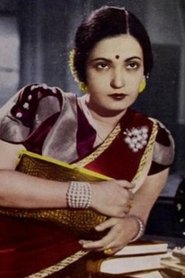
Begum Akhtar
Actor
Born: October 7, 1914 in Faizabad, Uttar Pradesh, British India (now India) Died: October 30, 1974 Active: 1930s-1974 (singing), 1942 (acting) Birth Name: Akhtari Bai Faizabadi
Films
1 film
About Begum Akhtar
Begum Akhtar, born Akhtari Bai Faizabadi, was primarily known as one of India's greatest ghazal singers but also had a brief acting career in the early 1940s. Born in 1914 in Faizabad, Uttar Pradesh, she showed musical talent from a young age and was trained in classical music by Ustad Imdad Khan. Her singing several decades, earning her the title 'Mallika-e-Ghazal' (Queen of Ghazals). While her filmography was limited, she appeared in a few Hindi films including Roti (1942), which showcased both her acting and singing abilities. After her marriage to barrister Ishtiaq Ahmed Abbasi in 1945, she reduced her film appearances but continued her singing career, becoming respected classical and ghazal singers in South Asia. Her emotional depth, perfect diction, and ability to convey the essence of poetry through her voice made her a legend in Indian music. She received the Padma Shri in 1968 and continued performing until her death in 1974.
The Craft
On Screen
Limited film appearances, natural and emotive performances that complemented her singing
Milestones
- Debut in film Ek Din Ka Badshah (1933)
- Acted in Roti (1942)
- Became known as Mallika-e-Ghazal (Queen of Ghazals)
- Received Padma Shri award in 1968
- Posthumously received Padma Bhushan in 1975
Best Known For
Iconic Roles
Must-See Films
Accolades
Won
- Padma Shri (1968)
- Padma Bhushan (1975, posthumous)
- Sangeet Natak Akademi Award (1972)
Special Recognition
- Title of Mallika-e-Ghazal (Queen of Ghazals)
- Padma Bhushan posthumously
- Sangeet Natak Akademi Award
Working Relationships
Worked Often With
Studios
Why They Matter
Impact on Culture
Begum Akhtar revolutionized the ghazal singing tradition in South Asia, bringing it from elite gatherings to the mainstream. Her emotive style and perfect diction set a new standard for ghazal interpretation, making the genre accessible to wider audiences while maintaining its classical integrity. Her brief film career in Roti (1942) demonstrated how classical music could be integrated into cinema, influencing later film music composers. She broke gender barriers in a male-dominated classical music scene and became a cultural icon for women artists in South Asia.
Lasting Legacy
Begum Akhtar's legacy as the 'Mallika-e-Ghazal' continues to influence generations of singers in India and Pakistan. Her recordings are still considered definitive interpretations of many classical ghazals. She paved the way for women in classical music and demonstrated that traditional art forms could evolve with changing times. Her brief but memorable appearance in Roti (1942) remains proof of her versatility as an artist. Music institutions continue to honor her contributions, and her birthday is celebrated by music lovers across South Asia.
Who They Inspired
Begum Akhtar's influence extends beyond ghazal singing to film music, where her emotive style inspired playback singers. Her approach to poetry and music influenced artists like Jagjit Singh, who brought ghazals to even broader audiences. Contemporary singers continue to study her recordings to understand the nuances of ghazal interpretation. Her ability to balance classical rigor with emotional accessibility became a model for artists seeking to bridge traditional and popular music.
Off Screen
Begum Akhtar married barrister Ishtiaq Ahmed Abbasi in 1945, after which she was known as Begum Akhtar. Her marriage influenced her career trajectory, leading her to focus more on concerts and less on films. She had one daughter. Her personal life was marked by her dedication to music and her ability to balance her artistic pursuits with her family responsibilities. She struggled with health issues in her later years but continued performing until her final days.
Education
Trained in classical music under Ustad Imdad Khan and other renowned musicians of her time
Family
- Ishtiaq Ahmed Abbasi (1945-1974)
Did You Know?
- She was also known as Akhtari Bai Faizabadi before her marriage
- She gave her first public performance at age 15
- Roti (1942) was one of her few film appearances
- She could sing in multiple languages including Urdu, Hindi, and Bengali
- Her last performance was just days before her death
- She was discovered by poet Saroj Naidu
- She suffered from diabetes in her later years
- Her voice was described as having the quality of 'pathos and poetry'
- She never received formal schooling but was well-educated in music and poetry
- Her recordings continue to be re-released decades after her death
In Their Own Words
Music is not just entertainment, it's prayer
When I sing, I become the poetry
A ghazal must come from the heart to reach the heart
My voice is God's gift, I'm just the vessel
Classical music is not about complexity, it's about emotion
Frequently Asked Questions
Who was Begum Akhtar?
Legendary Indian ghazal singer and classical vocalist, also known as the Mallika-e-Ghazal (Queen of Ghazals), who had a brief acting career in the early 1940s, including the film Roti (1942).
What films is Begum Akhtar best known for?
Titles linked here include Roti (1942).
When was Begum Akhtar born and when did she die?
Born October 7, 1914; died October 30, 1974.
What awards did Begum Akhtar win?
Begum Akhtar received the Padma Shri in 1968, the Sangeet Natak Akademi Award in 1972, and was posthumously awarded the Padma Bhushan in 1975 for her contributions to Indian music.
What was Begum Akhtar's acting style?
Begum Akhtar's acting style was natural and emotive, complementing her singing abilities, though her film career was brief. Her performances were characterized by the same emotional depth that defined her singing.
How did Begum Akhtar influence Indian music?
Begum Akhtar revolutionized ghazal singing by bringing it from elite gatherings to mainstream audiences, setting new standards for interpretation and influencing generations of singers across South Asia.
Was Begum Akhtar primarily an actor or singer?
Begum Akhtar was primarily a world-renowned ghazal and classical singer, with acting being a brief secondary pursuit in the early 1940s. Her lasting legacy is in music, not cinema.