
Roti
"Salvation among tribal Roti."
Keys: Space play/pause · ←/→ 10s · F fullscreen · M mute · </> speed
About this film
The millionaire is saved by the couple after an air crash, the tribal couple emigrate to the city, do not find happiness and return. The millionaire is ruined in the city, tries futilely to find salvation among the tribal. Roti made in the early 1940s inspired by the German Expressionism, is a real critique of Indian society with prophetic insight.
Cast & crew
More films like this
More Drama films
View all →







More from Mehboob Khan
View all →

More about this film
About the production
Release date1942
Box officeModerately successful - exact figures not documented
ProductionMehboob Productions
Filmed inBombay (now Mumbai) studios, Jungle sets created in studios
The film was made during the Quit India Movement of 1942, adding to its social significance. Mehboob Khan built elaborate jungle sets in the studio to create the contrast between urban and natural environments. The film's production was challenging due to wartime restrictions on film stock and resources.
Themes
Critique of industrialization and capitalismNatural versus artificial existenceMaterialism versus spiritual fulfillmentUrban corruption versus rural purityThe emptiness of wealth without meaning
Themes & topics
social critiquemillionairetribal lifeair crashurban corruptionnatural livingspiritual emptinessmaterialismcivilization versus natureredemptionGerman Expressionismsocial commentary
Historical background
Viewers around 1942 encountered Roti in a market learning how screen stories could carry social themes as well as spectacle.
Why this film matters
For historians, Roti documents what typical program fare looked like in 1942, not only marquee blockbusters.
Making of
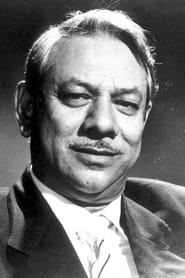
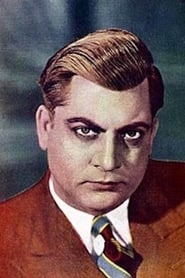
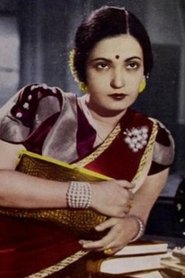
Mehboob Khan was deeply influenced by European cinema, particularly German Expressionist films like 'Nosferatu' and 'The Cabinet of Dr. Caligari'. He studied these films extensively and incorporated their dramatic lighting, angular sets, and psychological intensity into Roti. The production faced numerous challenges during World War II, including shortages of film stock and equipment. Khan insisted on building elaborate sets to create the contrast between the urban jungle and the natural forest. The cast underwent extensive preparation, with Chandramohan spending time studying wealthy industrialists to understand their psychology, while Sheikh Mukhtar and Sitara Devi researched tribal communities to bring authenticity to their roles. The film's social message was so strong that it underwent several rounds with British censors before approval.
What critics said
Specialist writers today emphasize preservation and access when a viewable copy of Roti survives.
Did you know?
- Roti was one of the first Indian films to be heavily influenced by German Expressionism, particularly in its visual style and lighting techniques
- Director Mehboob Khan considered this one of his most socially relevant works, even more so than his later masterpiece 'Mother India'
- The film's critique of industrialization and capitalism was unusually bold for its time, especially during British colonial rule
- Chandramohan's performance as the millionaire Lalaji was considered groundbreaking for its psychological depth
- The tribal characters were played by Sheikh Mukhtar and Sitara Devi, who underwent extensive preparation to understand tribal lifestyles
- The film's title 'Roti' (bread) symbolizes both basic human needs and the corruption that comes from material excess
- Despite its artistic merits, the film faced censorship challenges due to its social critique
- The jungle sequences were filmed using innovative techniques with miniature models and matte paintings
- The film's message about the dangers of unchecked industrialization was prophetic for post-independence India
- Sitara Devi, known primarily as a dancer, delivered a highly praised dramatic performance in this film
Awards & recognition
- No major formal awards were given for Indian films in 1942, but received critical acclaim at film screenings
Visual style
The cinematography of Roti was revolutionary for its time, heavily influenced by German Expressionism. Cinematographer Faredoon Irani used dramatic lighting techniques with strong contrasts between light and shadow (chiaroscuro) to create psychological tension. The urban sequences were shot with angular compositions and distorted perspectives to convey the corruption and artificiality of city life. In contrast, the jungle scenes used softer, more natural lighting to represent purity and harmony. The film employed innovative camera movements and angles that were uncommon in Indian cinema of the 1940s. Special attention was given to visual metaphors, such as using shadows to represent the characters' inner conflicts. The film's visual style created a powerful dichotomy between the mechanical world of the city and the organic world of the forest.
Innovations
Roti achieved several technical milestones for Indian cinema in 1942. The film pioneered the use of German Expressionist lighting techniques in Indian films, creating dramatic shadows and contrasts. The production design featured innovative set constructions that could transform from urban to jungle environments. Special effects techniques, including matte paintings and miniatures, were used to create the illusion of vast jungle landscapes within studio constraints. The film's sound design was advanced for its time, using natural sounds from the jungle environment to create atmospheric contrast with urban noise. The editing employed rapid cuts in urban sequences to convey chaos and longer, flowing takes in natural settings to represent harmony. These technical innovations helped establish new possibilities for visual storytelling in Indian cinema.
Music
The music for Roti was composed by Anil Biswas, among the leading respected music directors of the era. The soundtrack featured songs that contrasted the artificial urban music with natural, folk-inspired melodies for the tribal sequences. The film's songs were not just entertainment but served to reinforce the central themes. Notable songs included 'Dukh Ke Din Ab Beetat Nahin' which expressed the emptiness of material wealth, and 'Jungle Mein Mangal Shobha' which celebrated natural living. The background score used orchestral arrangements for city scenes and simpler, folk instruments for forest sequences. The soundtrack was praised for its ability to enhance the film's social message while remaining accessible to audiences.
Famous quotes
Roti sirf pet nahi bharati, dil aur dimag bhi nark mein le jaati hai
Bread doesn't just fill the stomach, it takes the heart and mind to hell)
Jab insaan paisa ke peeche bhagta hai, woh insaan se shernasheer ho jaata hai
When a man runs after money, he becomes worse than an animal)
Shahar ki roshni mein andhera chhupa hai, jungle ki andheri mein roshni
In the city's light, darkness is hidden; in the jungle's darkness, there is light)
Hamari sanskriti hamari pehchan hai, machine hamari barbaadi
Our culture is our identity, machines are our destruction)
Memorable scenes
- The dramatic airplane crash sequence using innovative special effects and camera techniques
- The first meeting between Lalaji and the tribal couple, highlighting the stark contrast between their worlds
- The transformation of the tribal characters as they experience city life for the first time
- Lalaji's breakdown in his empty mansion, surrounded by wealth but devoid of happiness
- The final scene where Lalaji returns to the forest seeking redemption, only to find he cannot belong
- The dance sequence performed by Sitara Devi representing the purity of tribal life
- The montage contrasting the mechanical rhythm of the city with the natural rhythms of the forest
What audiences thought
Upon its release in 1942, Roti received a mixed response from audiences. While educated urban viewers appreciated its social message and artistic qualities, mass audiences found it too serious and preachy compared to typical commercial films of the era. The film's runtime of nearly three hours was also challenging for audiences accustomed to shorter entertainments. However, the film developed a cult following among intellectuals and film enthusiasts. Over time, as Indian audiences became more sophisticated, Roti gained appreciation as a pioneering work. Today, film enthusiasts and students of cinema regard it as a classic that was ahead of its time. The film's themes about materialism versus simplicity have found renewed relevance in contemporary India.
Film connections
Influenced by
- German Expressionist cinema (particularly 'The Cabinet of Dr. Caligari' and 'Nosferatu')
- Charlie Chaplin's 'Modern Times' for its critique of industrialization
- Russian cinema of the 1920s for its social messaging
- Indian traditional folk tales about simple living
- Mahatma Gandhi's philosophy of simple living and rural development
This film influenced
- Mehboob Khan's later 'Mother India' (1957) for its social themes
- Satyajit Ray's 'Pather Panchali' (1955) for rural-urban contrast
- Mrinal Sen's 'Bhuvan Shome' (1969) for social critique
- Parallel cinema movement of the 1950s-70s
- Contemporary films addressing environmental and social issues
Film restoration
Roti is considered partially preserved. Some reels of the film exist in the National Film Archive of India, but the complete version in pristine condition is not available. Parts of the film have been restored, but it remains challenging to view the complete work as originally intended. The film's historical significance has led to ongoing preservation efforts, but like many films from the 1940s, it suffers from nitrate deterioration and incomplete records. Several film institutions worldwide hold fragments of the film, and there have been attempts to reconstruct the most complete version possible from available sources.
Where to watch
- The film is extremely rare and not readily available on mainstream streaming platforms. Film enthusiasts can sometimes find screenings at film festivals or special cinema retrospectives. The National Film Archive of India occasionally organizes screenings of preserved versions. Some film archives and university collections may have access to the film for academic purposes. Online, only fragments or poor quality copies might be found on specialized classic film websites. The best chance to view it is through film society screenings or special programs dedicated to Indian cinema history.