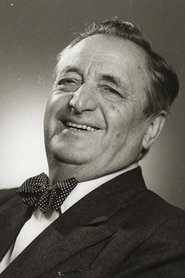
Hans Moser
Actor
Born: August 6, 1880 in Vienna, Austria-Hungary Died: July 19, 1964 Active: 1920s-1960s Birth Name: Johann Julier
Films
1 film
About Hans Moser
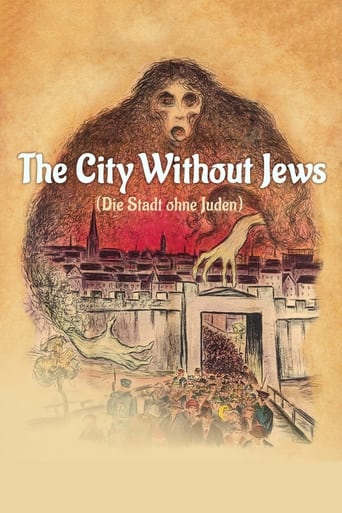
Renowned Austrian actor who became beloved figures in Austrian cinema history. Born Johann Julier in Vienna, he began his career on the stage before transitioning to silent films in the early 1920s. His breakthrough came during the silent era with appearances in films like 'The City without Jews' (1924), where he demonstrated his emerging comedic talent. Moser successfully transitioned to sound films, developing a unique acting style that combined Viennese charm with impeccable comedic timing. Throughout the 1930s and 1940s, he became Austria's most popular film star, appearing in dozens of comedies and musicals that celebrated Austrian culture and traditions. His career continued successfully after World War II, making him one of the few major stars whose popularity spanned from the silent era through the 1950s. Moser's distinctive appearance, complete with his trademark mustache and bowler hat, made him instantly recognizable to generations of Austrian and German filmgoers.
The Craft
On Screen
Moser developed a unique acting style characterized by his distinctive Viennese dialect, impeccable comedic timing, and ability to portray the 'little man' with both humor and pathos. His performances often featured a subtle blend of slapstick and sophisticated wit, using facial expressions and body language to convey complex emotions. He was particularly known for his mastery of the double-take and his ability to deliver witty lines with deadpan precision. His style embodied the essence of Viennese charm and humor, making him beloved across German-speaking countries.
Milestones
- Stage debut at Vienna's Volkstheater
- Breakthrough in silent films of the 1920s
- Successful transition to talkies
- Became Austria's most popular comedy star
- Post-war career resurgence
- Received Austrian Cross of Honour for Science and Art
Best Known For
Iconic Roles
Must-See Films
Accolades
Won
- Austrian Cross of Honour for Science and Art (1960)
- Karl Renner Prize (1956)
Nominated
- German Film Award nominations
- Venice Film Festival recognition
Special Recognition
- Postage stamps issued in his honor
- Streets named after him in Vienna
- Cultural icon status in Austria
Working Relationships
Worked Often With
Studios
Why They Matter
Impact on Culture
Hans Moser had an enormous cultural impact on Austrian and German-speaking cinema, becoming synonymous with Viennese humor and charm. His films provided comfort and laughter during difficult periods, including the Nazi era and post-war reconstruction. Moser's portrayal of the common Austrian citizen helped preserve and celebrate Austrian cultural identity during times of political upheaval. His distinctive acting style and catchphrases entered the popular lexicon, and his films remain cultural touchstones for understanding Austrian society of the mid-20th century. He represented a uniquely Austrian form of comedy that resisted German cultural dominance and celebrated local traditions.
Lasting Legacy
Hans Moser's legacy endures as Austria's most beloved actor and a symbol of Viennese culture. His films continue to be broadcast regularly on Austrian television, introducing new generations to his unique comedic genius. The Hans Moser Museum in Vienna preserves his memory and artifacts from his career. His influence on Austrian comedy is immeasurable, with many contemporary actors citing him as an inspiration. Moser represents the golden age of Austrian cinema and remains a cultural ambassador for Viennese charm and humor worldwide. His work has been studied by film scholars as an important example of national cinema and cultural identity.
Who They Inspired
Moser influenced generations of Austrian and German actors, particularly in the realm of comedy. His naturalistic approach to film acting, especially his ability to convey humor through subtle gestures and expressions, set a standard for comedic performance in German-language cinema. Many Austrian comedians, including Helmut Qualtinger and Alfred Dorfer, have acknowledged Moser's influence on their work. His success in preserving Austrian cultural identity through film during politically challenging times inspired other artists to use cinema as a means of cultural preservation.
Off Screen
Hans Moser led a relatively private personal life despite his immense fame. He married Blanca Hirschler in 1913, though the marriage ended in divorce. He later married actress Annemarie Schradiek in 1939, with whom he remained until his death. Moser had no children of his own but was known to be very close to his nieces and nephews. He remained in Vienna throughout his life, becoming deeply embedded in the city's cultural fabric. His later years were marked by declining health, though he continued working until shortly before his death.
Education
Attended acting school in Vienna, studied at various theatrical institutions
Family
- Blanca Hirschler (1913-1936)
- Annemarie Schradiek (1939-1964)
Did You Know?
- His real name was Johann Julier
- He appeared in over 150 films throughout his career
- His distinctive mustache became his trademark
- He was known for his love of horse racing
- Moser remained popular despite the political changes of the 1930s and 1940s
- He was one of the few Austrian stars who successfully transitioned from silent to sound films
- His films often featured traditional Viennese songs and music
- He was known for his professionalism and reliability on set
- Moser never fully recovered from a stroke in 1963
- His funeral was attended by thousands of mourning fans
In Their Own Words
'In Wien, da kann man alles sein, nur nicht langweilig.' (In Vienna, you can be anything, just not boring.)
'Der Humor ist die Würze des Lebens.' (Humor is the spice of life.)
'Ich bin ein einfacher Mann, aber mit komplizierten Gedanken.' (I'm a simple man, but with complicated thoughts.)
Frequently Asked Questions
Who was Hans Moser?
Hans Moser was one of Austria's most beloved and iconic actors, known for his roles in comedies and his distinctive Viennese charm. He became a cultural symbol of Austrian cinema, starring in over 150 films from the silent era through the 1950s. His unique comedic style and memorable performances made him a household name throughout German-speaking countries.
What films is Hans Moser best known for?
Titles linked here include The City without Jews (1924), Der Hofrat Geiger (1947).
When was Hans Moser born and when did he die?
Born August 6, 1880; died July 19, 1964.
What awards did Hans Moser win?
Hans Moser received the Austrian Cross of Honour for Science and Art in 1960 and the Karl Renner Prize in 1956. While he didn't receive many formal awards during his lifetime, his greatest recognition came from the immense popularity he enjoyed among audiences throughout the German-speaking world.
What was Hans Moser's acting style?
Hans Moser developed a unique acting style characterized by his distinctive Viennese dialect, impeccable comedic timing, and ability to portray the 'little man' with both humor and pathos. His performances featured a subtle blend of slapstick and sophisticated wit, using facial expressions and body language to convey complex emotions with minimal effort.