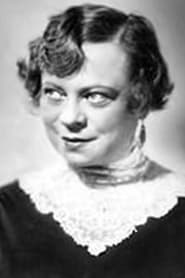
Emilia Unda
Actor
- Active
- 1923-1923
Films 1
About Emilia Unda
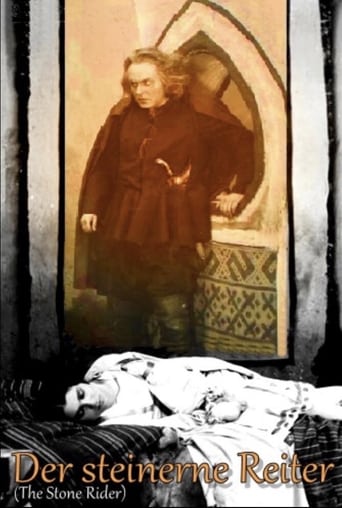
Emilia Unda was a German film actress of the silent era whose screen work is known chiefly from the early 1920s, including an appearance in the 1923 film The Stone Rider. Surviving documentation on her life is limited, and she appears to have worked during a brief period when German cinema was producing a large number of historical, literary, and popular entertainment films in the Weimar years. Her credited film presence places her among the many supporting performers who helped shape the texture of silent-era European cinema, even when their names were not widely publicized. Because reliable biographical records are scarce, details such as her birth date, birthplace, family background, and later life are not firmly established in readily available reference sources. She is best understood as a lesser-documented character or supporting actor whose surviving screen credit connects her to the broader landscape of early German film production. Her career is notable primarily for its rarity in the surviving record rather than for a long list of preserved credits. As with many performers of the silent period, much of her professional identity remains embedded in film archives and cast lists rather than in extensive contemporary publicity.
More about Emilia Unda
On screen
No detailed contemporary critical description of Emilia Unda's acting style appears to survive in widely accessible reference sources. As a silent-era performer, her work would have depended on expressive gesture, facial nuance, and clear physical presentation rather than spoken dialogue. Any assessment of her technique must remain cautious because her surviving record is extremely limited and may not include enough extant footage or commentary for firm conclusions.
In film history
Emilia Unda's cultural impact is primarily archival and historical rather than star-driven. She stands as part of the large and often overlooked group of actors who gave shape and realism to silent cinema, especially in Germany during the early 1920s, when the industry was internationally influential. Even when individual performers did not become marquee names, their contributions helped create the ensemble-rich fabric that defined many silent films. For modern film historians, names like hers are valuable because they document the breadth of participation in early cinema and remind us how many creative workers remain only partially preserved in the historical record.
Later reputation
Her legacy lies in her presence within silent-era film history and in the documentary record that preserves her name among the cast of The Stone Rider. While she does not appear to have left a large body of identified work, her credit is still meaningful to scholars reconstructing the personnel of early German cinema. Performers such as Emilia Unda illustrate how much of silent film history depends on surviving cast sheets, trade references, and archival catalogues. Her name endures as part of the effort to recover and acknowledge the many contributors to classic cinema whose careers were brief, lightly documented, or otherwise lost to time.
Influence
There is no evidence of a direct, traceable influence on later actors or filmmakers attributable specifically to Emilia Unda. However, as part of the silent-era acting tradition, she participated in a performance culture that shaped expectations for screen expression, ensemble acting, and physical characterization in early European film. Her broader influence is therefore indirect: she is part of the generation whose work established the grammar of silent performance later adapted by actors in early sound cinema and beyond.
Off screen
No reliable, widely accessible biographical information about Emilia Unda's personal life, family, marriages, or later career has been found in standard classic-cinema reference sources. Her life appears to be one of many silent-era performers whose public record survives only in fragments, mainly through cast listings and film indexes. Without verifiable documentation, it would be speculative to identify relationships, residence, education, or post-film activities. Her personal biography remains largely unknown to modern researchers.
Credits
- Appeared in the 1923 silent film The Stone Rider
- Represents the under-documented supporting performers of Weimar-era German cinema
- Has a surviving screen credit from the silent era despite limited biographical records
- Associated with early 1920s German film production during a highly creative period in European cinema
Roles
- Cast member in The Stone Rider (1923)
Films
- The Stone Rider (1923)
Notes
- Emilia Unda is documented in surviving film records primarily through a single known credit, The Stone Rider (1923).
- She belongs to the large group of silent-era performers whose biographies are frustratingly sparse compared with major stars of the period.
- Her known career activity falls entirely within the silent film era.
- She is associated with German cinema, one of the most artistically influential film industries of the 1920s.
- Because her surviving documentation is limited, she is often of interest mainly to archival researchers and silent-film historians.
- Her name appears in film history databases even though biographical details such as birth and death information remain unverified in accessible sources.
Questions
Who was Emilia Unda?
Emilia Unda was a German silent-era film actress known from surviving film records, including a credit in The Stone Rider (1923). She appears to have been an early 1920s screen performer whose career is only sparsely documented today. Her historical importance lies largely in her presence within the silent-film record.
What films is Emilia Unda best known for?
She is best known for The Stone Rider (1923), which is the principal surviving credit associated with her in accessible filmography references. No broader, reliably documented list of additional films is readily available. As a result, her known screen legacy is narrowly centered on this early German silent production.
When was Emilia Unda born and when did she die?
Her birth date and death date are not confirmed in the readily accessible classic-cinema reference record. Likewise, her birthplace and later life details remain unavailable in standard sources. She is one of many silent-era performers whose biographical data has not survived clearly in public documentation.
What awards did Emilia Unda win?
No awards or formal honors are documented for Emilia Unda in the available historical sources. This is not unusual for supporting performers from the silent era, especially those with very limited surviving records. Her recognition is primarily historical rather than award-based.
What was Emilia Unda's acting style?
There is no surviving critical description that clearly defines her individual acting style. As a silent-film actress, her performance would have relied on physical expressiveness, gesture, and facial communication rather than spoken dialogue. Any detailed stylistic assessment would be speculative without more preserved footage or contemporary reviews.
Why is Emilia Unda significant in film history?
She is significant as part of the documented workforce of silent-era German cinema, especially because her name survives even though her biography does not. Figures like Unda help historians reconstruct the full cast and production ecology of early film. Her credit in The Stone Rider places her within a formative period of European screen history.