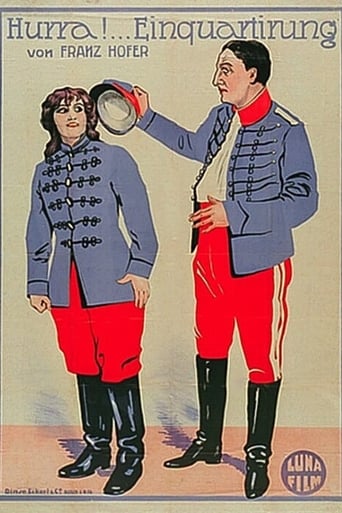
Karl Harbacher
Actor
- Active
- 1913-1913
Films 1
About Karl Harbacher
Karl Harbacher was an Austrian-born stage and screen actor who worked in the German-speaking film world during the silent era. He is documented in filmographies primarily as a performer active in 1913, with Hurra! Einquartierung! among the surviving titles associated with his name. Like many actors of the early 1910s, his screen career appears to have been brief or sparsely recorded, and very little personal documentation has survived in widely accessible sources. He was part of the formative period of Central European cinema, when many actors moved between theatre and film and when credits were not always consistently preserved. Because of this, his life outside the screen remains obscure, and major biographical details such as birth and death dates are not reliably established in the standard reference material available today. His significance lies mainly in his presence within the early Austrian/German silent-film ecosystem and in the documentary value of his surviving credit(s).
More about Karl Harbacher
On screen
No detailed contemporary critical descriptions of Karl Harbacher's acting style are readily available in standard surviving sources. Given the period in which he worked, his performance would likely have relied on the stage-influenced expressive vocabulary common to early silent cinema, including clear physical gestures, facial expressiveness, and emphatic blocking. Early 1910s film acting in the Austro-German sphere typically balanced theatrical projection with the more intimate requirements of the camera, and Harbacher would have been working within that evolving style. Beyond this general historical context, no reliable specific assessment of his technique has been verified.
In film history
Karl Harbacher's cultural impact is best understood as archival and historical rather than celebrity-based. He belongs to the first generation of screen actors working in the German-language silent cinema before the industry fully standardized star systems, publicity departments, and surviving documentation. Performers like Harbacher helped shape the look and rhythm of early European screen performance, even when their individual names did not become widely famous. His preserved credit in Hurra! Einquartierung! contributes to the broader historical record of prewar cinema and offers researchers a point of reference for early Austrian/German film production.
Later reputation
Harbacher's legacy rests in his inclusion within the surviving film history of the silent era rather than in a large body of extant, widely circulated work. For film historians, names like his are important because they illuminate the many working actors who participated in cinema's formative years but left only faint traces in the record. His credit helps document the personnel and performance culture of 1913-era screen entertainment in Central Europe. In that sense, his lasting legacy is as part of the foundational cast of early cinema history, preserved in filmographies and archival indexes.
Influence
There is no verified evidence that Karl Harbacher directly mentored later famous performers or exerted a traceable personal influence on major figures. His broader influence is indirect: as one of the many early actors who helped normalize film acting as a professional craft, he participated in the transition from theatrical performance to cinematic expression. Such early performers collectively influenced the development of silent-screen conventions that later actors and directors refined. Any specific influence attributable uniquely to Harbacher cannot be confirmed from surviving sources.
Off screen
Very little verified information about Karl Harbacher's personal life is available in accessible film-reference sources. His family background, marital history, and private life do not appear to be documented in a way that can be stated confidently here. This is common for performers from the earliest silent era, especially those whose screen work was limited and whose careers predated systematic studio publicity. As a result, his off-screen biography remains largely unknown to modern researchers.
Education
Not publicly documented in reliable surviving sources.
Credits
- Appeared in the silent-era film Hurra! Einquartierung! (1913)
- Worked during the earliest years of narrative cinema in the German-speaking world
- Represents the class of stage-trained performers who helped establish screen acting conventions before World War I
Roles
- Role in Hurra! Einquartierung! (1913)
Films
- Hurra! Einquartierung! (1913)
Notes
- Karl Harbacher is chiefly documented in connection with a single known film credit from 1913.
- He worked during the silent era, before synchronized sound transformed acting styles and film production.
- His surviving record is sparse, which is typical of many early European film performers.
- He is associated with the German-language film world rather than the Hollywood studio system.
- His name appears in historical film references that help reconstruct early cinema personnel.
- Because credits were often inconsistently preserved in the 1910s, some details about his career may have been lost.
Questions
Who was Karl Harbacher?
Karl Harbacher was an Austrian actor active in the early silent-film era. He is best known from surviving film records for appearing in Hurra! Einquartierung! (1913).
What films is Karl Harbacher best known for?
The only firmly documented title currently associated with him in the provided filmography is Hurra! Einquartierung! (1913). Because surviving records are limited, he is not widely known for a large body of extant films.
When was Karl Harbacher born and when did he die?
Reliable birth and death dates for Karl Harbacher are not currently established in accessible standard reference sources. His biographical record appears to be incomplete, which is common for early silent-era performers.
What awards did Karl Harbacher win?
No awards, nominations, or formal honors are currently documented for Karl Harbacher in the available sources. This does not necessarily mean he received none, only that none are verifiable from surviving records.
What was Karl Harbacher's acting style?
No detailed contemporary criticism of his technique has survived, but as a 1913 silent-era actor he would likely have used expressive physical acting and clear facial gestures. His performance style would have reflected the transitional period between theatrical stage work and more naturalistic screen acting.
What is Karl Harbacher's legacy in film history?
His legacy is primarily historical and archival. He represents the many early performers whose work helped build silent cinema, even though their names and personal histories were only partially preserved.