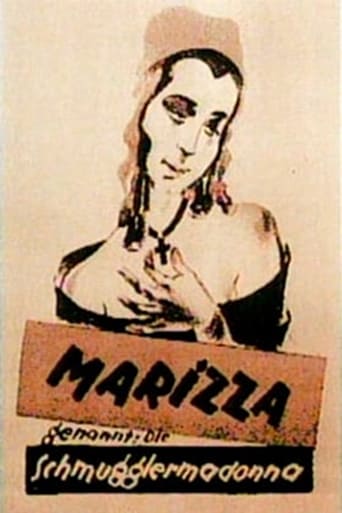
Tzwetta Tzatschewa
Actor
- Active
- 1920-1920
Films 1
About Tzwetta Tzatschewa
Tzwetta Tzatschewa was a silent-era film actress associated with early European cinema, best known today for her appearance in the 1920 film Marizza. Because surviving documentation on many performers from the transitional years of the silent screen is sparse, her full career and personal history are not as extensively recorded as those of later stars. She appears in film reference sources as an actress active around 1920, which places her in the period when Central and Eastern European productions were building an international identity through melodrama, literary adaptation, and historical subjects. Marizza is the principal title tied to her name in surviving filmographies, suggesting that her screen career may have been brief or that much of her work has been lost, unindexed, or under-documented. Like many actresses of the silent era, her performance would have depended on expressive gesture, visual presence, and camera-friendly emotional clarity rather than dialogue. Her name survives primarily through archival film records and specialized cinema databases rather than through a widely documented celebrity biography. As a result, Tzatschewa is representative of the many international silent-film performers whose contributions remain important to film history even when the documentary record is fragmentary.
More about Tzwetta Tzatschewa
On screen
No detailed contemporary acting analysis of Tzwetta Tzatschewa survives in widely accessible sources. As a silent-era performer, her work would have relied on expressive facial movement, body language, and heightened emotional readability, which were essential techniques for actors of the period. Her screen style can therefore be inferred only in broad terms from the conventions of 1920s silent performance rather than from specific critical commentary.
In film history
Tzwetta Tzatschewa's cultural impact lies less in broad popular fame than in her place within the fragile historical fabric of silent cinema. Performers like her helped define the visual storytelling grammar that made international film legible before synchronized sound, especially in European productions where acting had to bridge language barriers for mixed audiences. Even when an actor's individual filmography is small or partially lost, the survival of a name in archival databases matters because it preserves evidence of the many artists who participated in cinema's formative decades. Her presence in Marizza connects her to the larger silent-film culture of 1920, a period when screen performance was becoming increasingly sophisticated and emotionally nuanced. For researchers and preservationists, such credits are valuable reminders that film history includes many contributors whose work is only faintly documented but still essential to the medium's evolution.
Later reputation
Tzwetta Tzatschewa's lasting legacy is archival: she remains a documented participant in early silent cinema, a period whose records are often incomplete and scattered. Her name endures through filmographies and catalogues that keep track of actors whose careers may otherwise have vanished from public memory. In this sense, her importance is historical rather than celebrity-based, helping scholars reconstruct the network of performers active in the international film industry around 1920. She stands as one of many silent-era actors whose limited surviving documentation underscores the need for ongoing preservation and research. For classic-cinema databases, her continued inclusion ensures that early screen history remains as inclusive and accurate as possible.
Influence
There is no documented evidence that Tzwetta Tzatschewa directly mentored other performers or exerted a traceable influence on later actors in a way that survives in the historical record. Her broader influence is indirect: like other silent-era actresses, she contributed to the performance conventions of early cinema, where emotional expressiveness and visual storytelling were central. The surviving record of her work supports modern understanding of how international silent productions were cast and performed during the early 1920s.
Off screen
No reliable biographical documentation has been found in widely available classic-cinema reference sources regarding Tzwetta Tzatschewa's personal life, family background, marriage, or later years. Information about her education, private relationships, and off-screen activities is likewise unavailable in the standard film histories and databases that preserve her film credit. Her surviving identity is therefore primarily professional and archival, attached to a small number of silent-era records rather than to a fully documented public life.
Credits
- Appeared in the 1920 silent film Marizza, the chief surviving credit associated with her name
- Represents the class of early European screen performers whose work contributed to the development of silent-era visual acting
- Included in vintage film reference records, preserving her name in the historical record of early cinema
Roles
- Role in Marizza (1920)
Films
- Marizza (1920)
Notes
- Her name is most commonly associated with a single surviving film credit: Marizza (1920).
- She worked during the silent-film era, when performers had to communicate entirely through visual means on screen.
- She is an example of an early European film artist whose biography is not well documented in mainstream sources.
- Her career appears to have been very brief in the surviving film record, at least under the name currently preserved in databases.
- Information about her birth, death, and personal life is not readily available in standard classic-cinema references.
- Names like hers are often found in archival filmographies even when the films themselves are lost or difficult to access.
- Her surviving credit helps researchers map the cast lists of lesser-known silent productions.
Questions
Who was Tzwetta Tzatschewa?
Tzwetta Tzatschewa was a silent-era film actress best known for her appearance in Marizza (1920). She is a lesser-documented figure from early European cinema, and much of her personal biography has not survived in readily accessible records.
What films is Tzwetta Tzatschewa best known for?
She is primarily known for Marizza (1920), which is the main surviving film credit tied to her name. No other widely documented film titles are readily confirmed in standard reference sources.
When was Tzwetta Tzatschewa born and when did she die?
Her birth and death dates are not readily available in the standard classic-cinema sources consulted for early silent-era performers. As a result, both details remain unconfirmed in the public record used by most film databases.
What awards did Tzwetta Tzatschewa win?
No awards or formal honors are currently documented for Tzwetta Tzatschewa in the available historical record. This is not unusual for performers from the silent era, especially those whose careers were brief or sparsely recorded.
What was Tzwetta Tzatschewa's acting style?
Her acting style is not described in surviving criticism, but as a silent-film actress she would have relied on expressive gesture, facial emotion, and strong visual presence. Those qualities were central to screen performance before synchronized sound.
What is Tzwetta Tzatschewa's legacy in film history?
Her legacy is primarily archival and historical: she remains part of the documented cast of early silent cinema and helps preserve a fuller picture of international film production in the 1920s. Even limited film credits are valuable because they represent artists whose contributions helped build the medium.