Marizza
Plot
Marizza is a rural melodrama centered on a beautiful young woman whose allure seems to affect nearly every man around her. Exhausted by life under the harsh older woman Yelina, who exploits her and pressures her to manipulate customs officials for the benefit of smugglers, Marizza finally escapes that world of coercion. She takes refuge by finding work on the farm of Mrs. Avricolos, where she hopes to rebuild her life in a more honest and stable setting. The film’s surviving material is extremely incomplete, with only one reel known to survive, so the full dramatic resolution is lost; what remains suggests a story of desire, exploitation, and the search for freedom in a morally compromised environment.
About the Production
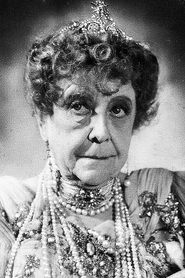
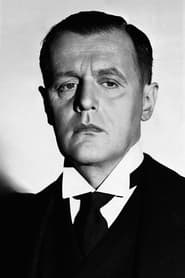
Marizza was made during F. W. Murnau’s early period in German silent cinema, before the internationally famous works that would later define his reputation. Like many productions from this era, it survives only fragmentarily, and the absence of complete records makes detailed production documentation difficult to verify. The cast includes Tzwetta Tzatschewa, Adele Sandrock, and Max Nemetz, but surviving documentation does not always make clear how extensive each performer’s role was in the intact version. The film is important primarily as part of Murnau’s development as a filmmaker and as a representative of early Weimar-era melodrama with folkloric and exoticized elements.
Historical Background
Marizza was produced in 1920, a pivotal moment in German history and cinema. Germany was emerging from the devastation of World War I, and the early Weimar Republic was marked by political instability, economic hardship, and cultural experimentation. Silent cinema became one of the most important art forms of the period, with German filmmakers developing a distinctive visual style that would soon be recognized internationally. Murnau’s early work belongs to this formative moment, when the industry was exploring psychologically charged melodrama, regional stories, and expressive mise-en-scène that would culminate in the expressionist-inflected masterpieces of the early 1920s. The film matters historically because it helps map the transition between Murnau’s apprentice years and his mature style, even though the film itself survives only in partial form.
Why This Film Matters
Although Marizza is not one of Murnau’s best-known surviving titles, it has significance for film history because it exemplifies how much of silent cinema’s legacy has been lost and how scholars reconstruct reputations from fragmentary evidence. The film contributes to understanding Murnau’s evolution, especially his attention to mood, social tension, and the emotional vulnerability of characters caught in oppressive environments. Its existence also reflects the broader cultural fascination in early German cinema with marginalized women, rural hardship, and the interplay between desire and social constraint. For archivists and historians, the film is a reminder that many silent-era works survive only in incomplete prints, reviews, production records, or catalog entries, yet still shape our knowledge of cinematic development.
Making Of
Marizza was produced in an era when German studios were rapidly expanding their artistic ambitions in the wake of World War I, and Murnau was still establishing his style. The film was made for Decla-Bioscop, one of the important companies in German cinema before and during the consolidation that would later help form UFA. Because the film is largely lost, behind-the-scenes records are sparse, and much of what can be said about its making must be inferred from the surviving filmography, trade references, and archival listings. The presence of prominent performers such as Adele Sandrock suggests that the production was intended to have strong dramatic appeal, but the exact scale of the shoot, design choices, and directorial methods are no longer fully documented. Its survival in fragmentary form makes it especially valuable to historians as evidence of Murnau’s early thematic interests and the visual culture of Weimar-era silent film production.
Visual Style
Specific cinematographic details are hard to verify because the film is incomplete, but early Murnau films are generally associated with careful visual composition, atmospheric framing, and an interest in expressive staging. Marizza likely employed the visual storytelling conventions of German silent drama, using gesture, location detail, and performance emphasis to convey emotional and social conflict. Surviving knowledge of the film suggests a rustic, borderland setting that would have allowed for contrasting images of domestic oppression and open countryside. Even in fragmentary form, the film is valued by scholars for the possibility of observing Murnau’s early handling of actors and environment before the more celebrated visual innovations of his later films.
Innovations
There are no specific technical innovations firmly documented for Marizza, especially since the film survives only in fragmentary form. Its main technical importance lies in its place within early German studio production and in the likelihood that it used the polished silent-era visual grammar that Murnau would later refine. The surviving material is of archival value because it allows comparison with Murnau’s later, more famous work, helping scholars trace his evolution in image composition, movement, and dramatic pacing. The film’s incomplete preservation status itself has made it an object of archival significance.
Music
As a silent film, Marizza originally would have been accompanied by live music in theaters, but no original commissioned score is reliably documented in the surviving record. Any modern presentations of the surviving reel may use a reconstructed, archival, or newly compiled accompaniment, depending on the venue or preservation source. Because the film is largely lost, there is no widely recognized standard score associated with it. Information about the original musical accompaniment is therefore unavailable.
Memorable Scenes
- Marizza’s decision to flee Yelina’s oppressive household and leave behind the world of smuggling and coercion.
- The scenes involving her manipulation of customs officials, which establish the film’s moral tension and atmosphere of compromise.
- Her arrival at Mrs. Avricolos’ farm, which marks the narrative shift from exploitation toward the possibility of a more stable life.
Did You Know?
- Marizza is generally regarded as a lost film, with only one reel surviving from the original feature.
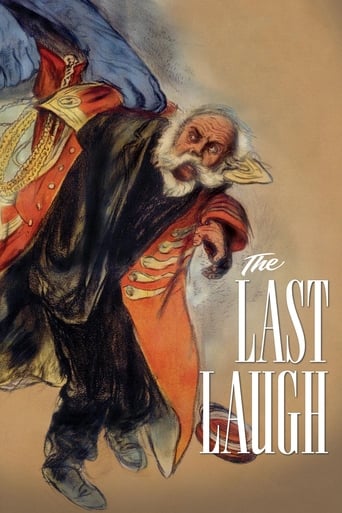
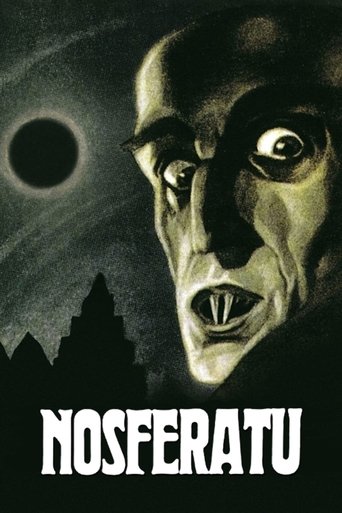
- It belongs to F. W. Murnau’s very early directorial period, before Nosferatu and The Last Laugh made him internationally famous.
- The film’s surviving plot descriptions indicate a mixture of melodrama, social exploitation, and romantic fascination.
- Adele Sandrock, one of the cast members, was a major stage and screen performer of the German-speaking cinema of the era.
- Because the film is mostly lost, many details about its full narrative structure, runtime, and production design remain uncertain.
- The story involves smugglers and customs officials, reflecting a popular silent-era interest in borderland intrigue and morally ambiguous rural settings.
- The title character’s name is often rendered as Marizza or Maritza in secondary sources, reflecting transliteration and cataloguing variation.
- The film is an example of the many early Murnau works that are known more from archival references than from complete surviving prints.
- Its themes of coercion and escape fit recurring patterns in early 1920s German melodrama.
What Critics Said
Contemporary critical reception is difficult to reconstruct in detail because surviving reviews and detailed press coverage are scarce in readily accessible sources. As with many lost or fragmentary silent films, later assessment has focused more on Murnau’s authorship, the surviving reel, and the film’s place in his chronology than on a full critical reevaluation of the complete work. Modern critics and historians tend to treat Marizza as an important but elusive early entry in Murnau’s filmography, notable less for widely discussed acclaim than for its archival and historical value. Its reputation today is largely one of scholarly interest rather than popular rediscovery, with attention centered on what the film may reveal about Murnau’s developing style and about German melodrama of the period.
What Audiences Thought
Audience reception cannot be measured reliably because comprehensive box-office records and detailed contemporary audience surveys are not available. As a silent-era German production, it would originally have been seen by domestic audiences accustomed to melodrama, rural intrigue, and star performers from stage and screen. The fact that the film has survived only in part suggests that it was not preserved as a canonical masterpiece in the same way as some of Murnau’s later films, though that does not necessarily reflect its original popularity. Today, audiences encounter it mostly through archival scholarship, retrospectives, or film-history references rather than regular exhibition.
Film Connections
Influenced By
- German silent melodrama
- Early rural and borderland dramas
- Stage melodrama traditions of the late 19th and early 20th centuries
This Film Influenced
- F. W. Murnau's later silent works
- Later Weimar-era psychological melodramas
- Archival reconstructions of lost silent cinema
You Might Also Like
More Drama Films
View allMore from F. W. Murnau
View allFilm Restoration
Mostly lost; only one reel is known to survive, making the film fragmentary and incomplete rather than fully preserved.