

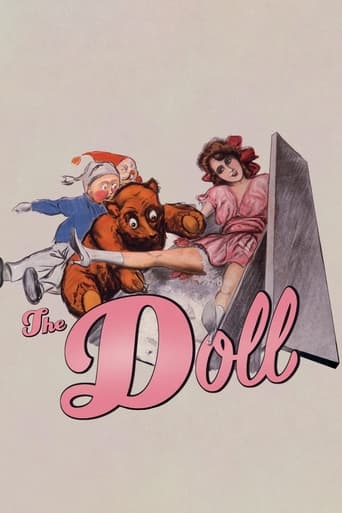
The Oyster Princess
"Mishaps, misunderstandings, and a foxtrot to remember"
Keys: Space play/pause · ←/→ 10s · F fullscreen · M mute · </> speed
About this film
A pampered American oyster tycoon decides to buy a husband for his daughter, but things don’t go quite as planned. Along the way there are mishaps, misunderstandings and a foxtrot sequence that must be seen to be believed.
Cast & crew
More films like this
More Comedy films
View all →







More from Ernst Lubitsch
View all →
More about this film
About the production
Release dateDecember 1919
BudgetNot documented - typical German production costs of 1919 were approximately 50,000-100,000 marks
Box officeNot precisely documented, but was commercially successful in Germany and internationally
ProductionUniversum Film AG (UFA)
Filmed inBerlin, Germany
Filmed during the chaotic post-WWI period in Germany, the movie was produced at the newly formed UFA studios. The production faced shortages of film stock and resources due to wartime devastation. The famous foxtrot sequence required extensive rehearsals and was choreographed by Ernst Lubitsch himself. The film's elaborate sets and costumes were designed to satirize American excess while actually commenting on German society's fascination with American wealth.
Themes
Satire of wealth and classAmerican vs. European cultural valuesRomantic comedy conventionsThe commodification of marriageThe illusion of social status
Themes & topics
arranged marriagemistaken identitywealthsocial satirefoxtrotballroomcomedy of errorsfather-daughter relationshipromantic misunderstandingluxuryAmerican cultureEuropean aristocracy
Historical background
Silent-era production in 1919 relied on intertitles, live accompaniment, and studio systems that were rapidly consolidating into national industries.
Why this film matters
Early works like The Oyster Princess help map how filmmakers, exhibitors, and viewers developed the visual language of cinema during the medium's first decades. Later revivals, archive screenings, and digitization have kept such titles accessible to researchers and dedicated viewers long after their first commercial runs.
Making of
The production took place during Germany's turbulent Weimar Republic period, with hyperinflation beginning to affect the economy. Ernst Lubitsch, already established as one of Germany's leading directors, used the film to develop his signature 'Lubitsch touch' - a sophisticated style of visual comedy and innuendo. The casting of Ossi Oswalda was crucial; she had been discovered by Lubitsch and became his muse during this period. The famous foxtrot sequence required the actors to learn the then-new American dance form, which was considered scandalous by conservative German standards. The film's satire of American wealth was particularly ironic given that many Germans blamed American capitalism for their economic hardships. Despite these tensions, the film was embraced by German audiences who appreciated its escapist fantasy during difficult times.
What critics said
Trade and newspaper reviews from the silent period for The Oyster Princess survive only in fragments, making precise reception history difficult to reconstruct. Modern assessment tends to emphasize historical value, craft, and cultural context rather than box-office performance.
Did you know?
- The film's original German title was 'Die Austernprinzessin'
- Ossi Oswalda was nicknamed 'The German Mary Pickford' due to her popularity and screen presence
- The foxtrot sequence was so popular that it inspired a dance craze in Weimar Germany
- Ernst Lubitsch considered this one of his favorite early German works
- The film was one of the first German movies to satirize American capitalism and culture
- Victor Janson, who played the father, was actually only 7 years older than Ossi Oswalda who played his daughter
- The movie was shot in just 3 weeks, remarkably fast for the elaborate production values displayed
- The film's success helped launch Lubitsch's international career, leading to his move to Hollywood in 1922
- The oyster motif was chosen because oysters were considered an extreme luxury in post-WWI Germany
- The film's sets were so elaborate that they were reused in several other UFA productions
Visual style
The cinematography by Theodor Sparkuhl and Alfred Hansen was innovative for its time, employing sophisticated camera movements and lighting techniques that enhanced the film's satirical tone. The use of deep focus allowed for complex visual gags involving foreground and background action. The lavish ballroom sequences featured elaborate lighting designs that created a sense of opulence and excess. The cinematographers employed subtle camera movements to follow the dance sequences, creating a sense of fluidity that was unusual for the period. The visual style balanced the exaggerated sets with realistic performances, creating a cohesive satirical world. The black and white photography was particularly effective in highlighting the contrasts between the characters' wealth and their emotional poverty.
Innovations
The film demonstrated several technical innovations for its time, including sophisticated editing techniques that enhanced comic timing. The famous foxtrot sequence required complex choreography and camera coordination to capture the full spectacle of the dance. The production design featured elaborate moving sets and mechanical effects that created the illusion of extreme luxury. The film's use of title cards was minimal for the period, relying instead on visual storytelling to convey narrative and character development. The lighting techniques employed in the ballroom scenes were particularly advanced, using multiple light sources to create depth and atmosphere. The film's pacing and rhythm represented a significant advancement in cinematic comedy, with Lubitsch developing techniques for building comic momentum through visual means.
Music
As a silent film, The Oyster Princess was accompanied by live musical performances during its original theatrical run. The score typically included popular American jazz tunes, particularly foxtrot music, to accompany the famous dance sequence. The original German cue sheets suggested a mix of classical pieces and contemporary popular music. Modern restorations have featured newly composed scores by musicians such as the Alloy Orchestra and Neil Brand, who have created period-appropriate accompaniments that blend jazz-age American music with German cabaret influences. The music plays a crucial role in establishing the film's satirical tone and enhancing the comic timing of the visual gags.
Famous quotes
(Title card) 'I want a prince for a husband!'
(Title card) 'Money can buy anything, even a prince!'
(Title card) 'In America, we don't wait for happiness - we buy it!'
(Title card) 'This foxtrot is absolutely divine!'
Memorable scenes
- The spectacular foxtrot sequence where Ossi and her guests dance in increasingly elaborate formations, featuring dozens of extras in luxurious costumes and representing the pinnacle of the film's visual comedy and social satire
- The opening sequence introducing Ossi's extravagant lifestyle with her being carried by servants and surrounded by luxury items
- The mistaken identity reveal at the ball where both couples discover they've been paired with the wrong partners
- The scene where Mr. Quaker attempts to 'purchase' a prince through comical negotiations
What audiences thought
The film was enormously popular with German audiences upon its release, becoming one of the biggest box office successes of 1919-1920. Audiences particularly enjoyed the escapist fantasy of extreme wealth and luxury during a period of economic hardship. The foxtrot sequence became so popular that it inspired dance trends across Germany. The film's success made Ossi Oswalda one of Germany's biggest stars of the early 1920s. International audiences also embraced the film, particularly in America where it was seen as an example of sophisticated European cinema. The movie's enduring popularity is evidenced by its continued screening at film festivals and revival houses, where modern audiences still respond to its visual wit and comedic energy.
Film connections
Influenced by
- American comedy films of the 1910s
- German theatrical traditions
- European operetta
- American jazz culture
- Charlie Chaplin's visual comedy style
- Mack Sennett's comedy techniques
This film influenced
- Lubitsch's later Hollywood comedies
- The Marriage Circle (1924)
- So This Is Paris (1926)
- Early Hollywood musicals
- Screwball comedies of the 1930s
- Modern romantic comedies
Film restoration
The film is well-preserved with complete copies existing in several archives including the Museum of Modern Art, the British Film Institute, and the Deutsche Kinemathek. A restored version was released by Kino Lorber in 2018 with a new musical score. The film has survived in excellent condition compared to many other silent films of the era, likely due to its importance in Lubitsch's filmography and its international success.
Where to watch
- Available on Blu-ray/DVD from Kino Lorber
- Streaming on The Criterion Channel
- Available on various classic film streaming platforms
- Screenings at film festivals and revival cinemas
- Available through some academic film archives