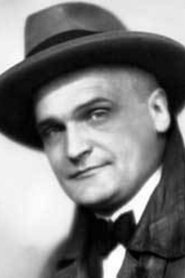
Arthur Robison
Director
Born: August 26, 1883 in Chicago, Illinois, United States Died: October 2, 1935 Active: 1919-1935
Films
2 films

About Arthur Robison
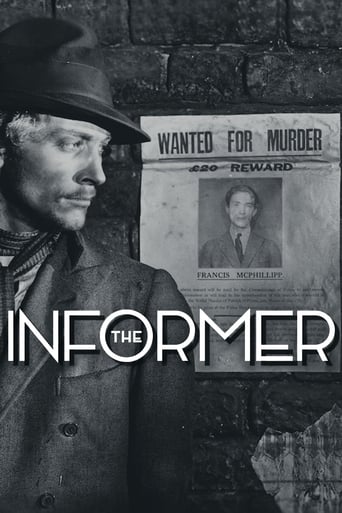
German film director and screenwriter best known for his work in the silent era and the early transition to sound cinema. He was born in Chicago, Illinois, to German parents and later built his career in Germany, where he became associated with psychologically expressive filmmaking and elegant visual storytelling. Robison came to prominence in the 1920s with atmospheric, character-driven films that often emphasized mood, suspense, and emotional subtlety over spectacle. His best-known silent works include films such as Schatten – Eine nächtliche Halluzination (Shadow, 1923), Die Straße (The Street, 1923), and Das Schloss des Irrtums (The Castle of Error, 1921), which helped establish him as a distinctive voice in Weimar cinema. In the late 1920s and early 1930s, he continued directing, including the English-language production The Informer (1929), which reflects his move into international work during the transition to sound. Robison’s career was ultimately cut short by his death in 1935, but his surviving films remain important examples of psychologically nuanced early European cinema.
The Craft
Behind the Camera
Arthur Robison’s directing style is generally associated with moody atmosphere, strong visual composition, and psychological tension. He favored expressive lighting, controlled pacing, and an emphasis on interior emotion rather than overt action. His films often feel intimate and unsettling, with a careful balance between realism and stylization that reflects the artistic ambitions of Weimar-era cinema. He was particularly skilled at building suspense through spatial design, shadows, and the suggestion of hidden motives or emotional instability.
Milestones
- Established himself in German cinema during the silent era with stylistically distinctive, atmospheric films
- Directed Schatten – Eine nächtliche Halluzination (Shadow, 1923), one of his most admired and discussed works
- Directed Die Straße (The Street, 1923), a notable early example of urban psychological drama in German film
- Worked during the crucial transition from silent films to early sound cinema
- Directed the English-language film The Informer (1929), showing his international reach
- Contributed to the broader artistic reputation of Weimar-era filmmaking through suspenseful, expressive direction
Best Known For
Must-See Films
Working Relationships
Worked Often With
Studios
Why They Matter
Impact on Culture
Arthur Robison contributed to the artistic maturation of German silent cinema at a time when the industry was becoming internationally influential. His films helped define the mood-centered, psychologically aware style that became closely associated with Weimar filmmaking, particularly in works built around suspense, urban alienation, and emotional complexity. Although he did not achieve the enduring celebrity of some contemporaries, his work stands as part of the broader movement that influenced later film noir, psychological drama, and modern suspense cinema. The visual restraint and expressive ambiguity seen in his best-known films continue to attract interest from scholars and classic film enthusiasts.
Lasting Legacy
Robison’s legacy rests primarily on a small but notable body of work that demonstrates the sophistication of German silent-era direction. He is remembered as a filmmaker who brought refinement and psychological nuance to genre-inflected material, especially in suspense and drama. Because several of his films survive and are studied as examples of Weimar cinema, he remains of interest to historians tracing the development of cinematic mood, visual storytelling, and urban unease. His career also illustrates the international mobility of early film artists, especially those working across European and American contexts.
Who They Inspired
Robison influenced later filmmakers through his atmospheric use of shadow, pacing, and psychological tension, elements that became central to later suspense and noir traditions. His work helped demonstrate how cinematic style could express subjective experience and inner conflict without heavy reliance on dialogue. While he was not a major studio-era figure with a large direct school of followers, his films remain useful reference points for directors and scholars interested in early horror-adjacent mood pieces and psychologically driven drama. His influence is felt more through the evolution of style than through a documented line of disciples.
Off Screen
Arthur Robison was born in the United States but worked primarily in Germany, reflecting the transnational character of many early film careers. Details about his private life, including marriage and children, are not well documented in standard film reference sources. He is chiefly remembered through his professional contributions rather than through a widely recorded public persona. Because of the limited surviving biographical record, much of his personal life remains obscure to modern researchers.
Education
Specific details about Robison’s formal education are not widely documented in readily available reference sources.
Did You Know?
- Although identified as a German director, Arthur Robison was born in Chicago, making him one of many early international filmmakers with cross-Atlantic backgrounds.
- He is best remembered today for silent films rather than for his later sound work.
- Schatten – Eine nächtliche Halluzination is often cited as.
- The Informer (1929) is an important transitional title in his career because it reflects his work during the move from silent to sound cinema.
- His surviving filmography is relatively small, which makes each preserved title especially important for assessing his style.
- Robison’s work is frequently discussed in the context of Weimar-era experimentation with mood and psychological realism.
- He is sometimes overshadowed by better-known contemporaries, but film historians value him for his subtle and intelligent direction.
Frequently Asked Questions
Who was Arthur Robison?
German on YTB.my. He is especially remembered for atmospheric, psychologically oriented films made in Germany during the Weimar period.
What films is Arthur Robison best known for?
Titles linked here include Schatten – Eine nächtliche Halluzination (Shadow, 1923), Die Straße (The Street, 1923).
When was Arthur Robison born and when did he die?
Born August 26, 1883; died October 2, 1935.
What awards did Arthur Robison win?
No major awards or formal honors are prominently documented for Arthur Robison in standard film reference sources. His reputation rests more on critical appreciation and historical importance than on awards recognition.
What was Arthur Robison's directing style?
Robison’s directing style was atmospheric, restrained, and psychologically focused. He used lighting, shadow, and careful composition to create suspense and emotional unease, making him a notable stylist within German silent cinema.
What is Arthur Robison's legacy in film history?
His legacy lies in the small but significant group of films he made during the Weimar era, which helped shape the visual language of suspense and psychological drama. He remains a respected figure among classic film historians for his elegant, mood-driven direction.