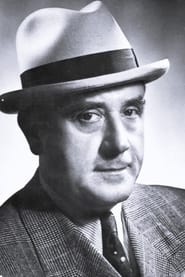
Herbert Hübner
Actor
- Born
- February 6, 1889, Breslau, German Empire (now Wrocław, Poland)
- Died
- January 27, 1972
- Active
- 1907-1966
- Birth name
- Herbert Richard Eberhard Hermann Hübner
Films 1
About Herbert Hübner
Herbert Hübner was a distinguished German stage and film actor whose career spanned over five decades, beginning in the late imperial era and continuing through the post-war period. Born in Breslau, he received formal acting training from Otto Gerlach and made his professional stage debut in 1907 at the Theater der Stadt Heidelberg. After serving as a soldier throughout World War I, he resumed his career with significant engagements at the Altes Theater in Leipzig and the Thalia Theater in Hamburg. In 1929, his talent was recognized by the legendary Max Reinhardt, who brought him to the Theater in der Josefstadt in Vienna. While he made sporadic appearances in silent films starting in 1920, his major cinematic breakthrough occurred in the 1930s with the advent of talkies, where he became a prolific character actor known for portraying authoritative figures. Despite the political complexities of the era, he remained a top-tier performer in Germany, appearing in over 150 films and eventually becoming a member of the prestigious Munich Kammerspiele in his later years.
More about Herbert Hübner
On screen
Hübner was renowned for his commanding presence and gravitas, which led to him being frequently cast as men of power, such as aristocrats, high-ranking officers, and industrial directors. His style was rooted in the classical German theatrical tradition, characterized by precise diction and a formidable physical stature that allowed him to dominate scenes. He possessed a versatile range that enabled him to play both dignified heroes and complex, sometimes villainous, antagonists with equal conviction.
Impact on culture
Herbert Hübner represented the 'authoritative' archetype in German cinema for decades, bridging the gap between the theatrical traditions of the Weimar Republic and the commercial demands of the sound era. His ability to portray high-society figures made him a staple of the 'Zille-filme' and historical dramas that defined mid-century German film. However, his participation in state-sponsored propaganda films like 'Robert and Bertram' remains a subject of study for film historians examining the intersection of art and ideology during the National Socialist period.
Lasting legacy
Hübner is remembered as one of the most reliable and prolific character actors in the history of German cinema. With a filmography exceeding 150 titles, he provided a sense of continuity in the German film industry through its most turbulent transitions. His work in the 1950s helped stabilize the post-war West German film industry (Heimatfilm and historical dramas), ensuring that the craft of the 'grand character actor' survived into the modern era.
Who they inspired
His disciplined approach to character acting and his transition from the Reinhardt school of theater to the screen influenced a generation of German actors who sought to maintain theatrical dignity within the medium of film.
Off screen
Hübner was born into a family in Breslau and spent much of his early life traveling between major German and Austrian cultural hubs for his theatrical work. He was a veteran of World War I, serving the entire duration of the conflict as a soldier before returning to the arts. His later years were spent in Munich, where he remained active in the local theater scene until his retirement.
Education
Received private acting lessons from the drama teacher and actor Otto Gerlach.
Career milestones
- Professional stage debut at the Theater der Stadt Heidelberg (1907)
- Recruited by Max Reinhardt for the Theater in der Josefstadt in Vienna (1929)
- Established himself as a leading character actor in German sound cinema (1930s)
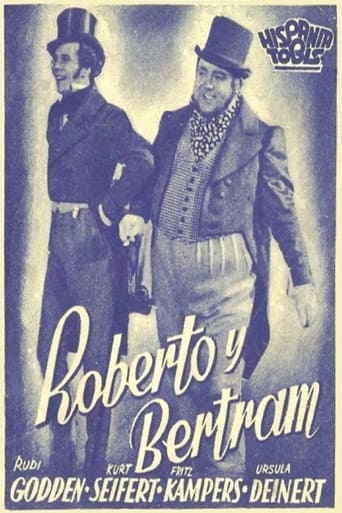
- Appeared in the controversial but technically significant 'Robert and Bertram' (1939)
- Included in the 'Gottbegnadeten-Liste' (God-gifted list) of essential artists (1944)
- Successfully transitioned to post-war cinema, working for both DEFA and West German studios
- Became a long-term ensemble member of the Munich Kammerspiele
Iconic roles
- Nathan Ipelmeyer in 'Robert and Bertram' (1939)
- Admiral Karl Rudolf Brommy in 'Geheimakte W.B.1' (1941)
- Grand Duke Fedor in 'The Czar's Courier' (1936)
- Sir John Conroy in 'Victoria in Dover' (1936)
- Dr. Albing in 'Ripening Youth' (1933)
Must-see films
- Robert and Bertram (1939)
- Hotel Sacher (1939)
- The Czar's Courier (1936)
- Paracelsus (1943)
- The Ballad of Berlin (1948)
- Ludwig II (1955)
- The Spessart Inn (1958)
Awards
- Staatsschauspieler (State Actor) title
- Golden Party Badge (awarded during the Third Reich era)
Special recognition
- Member of the Munich Kammerspiele
- Listed on the Gottbegnadeten-Liste (1944)
Worked often with
- Hans Albers
- Veit Harlan
- Hans H. Zerlett
- Max Reinhardt
- Hildegard Knef
Studios
- Tobis Film
- UFA
- DEFA
- Bavaria Film
Did you know?
- He appeared in the first German feature-length color film, 'Frauen sind doch bessere Diplomaten' (1941).
- Despite his frequent casting as elite figures, he began his career playing a lieutenant in a tragedy.
- He was one of the few actors who managed to work successfully for the East German DEFA studios immediately after the war before moving to West Germany.
- He served as a soldier for the entire duration of World War I (1914-1918).
- His career lasted so long that he appeared in silent films, early talkies, wartime propaganda, and 1960s television productions.
Questions and answers
Who was Herbert Hübner?
Herbert Hübner was a prominent German stage and film actor known for his prolific career in the mid-20th century. He was especially famous for playing authoritative figures like directors, aristocrats, and military officers.
What films is Herbert Hübner best known for?
He is best known for his roles in 'Robert and Bertram' (1939), 'Hotel Sacher' (1939), 'The Czar's Courier' (1936), and post-war classics like 'The Spessart Inn' (1958).
When was Herbert Hübner born and when did he die?
He was born on February 6, 1889, in Breslau (now Poland) and died on January 27, 1972, in Munich, West Germany.
What was Herbert Hübner's acting style?
He was known for a commanding, classical style with great gravitas and precise diction, often dominating the screen through his physical presence and authoritative voice.
Did Herbert Hübner win any awards?
He was honored with the title of 'Staatsschauspieler' (State Actor) and was recognized as an essential artist on the 'Gottbegnadeten-Liste' during his career.