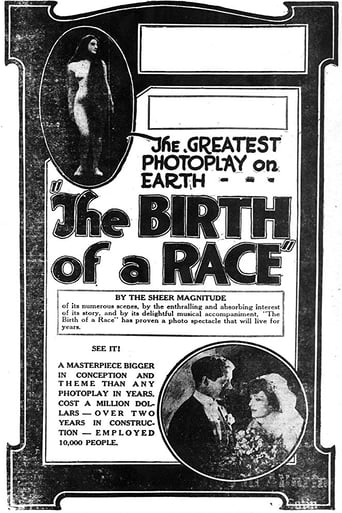
Films
1 film
About Harry Dumont
Actor during the silent film era, known primarily for his appearance in the 1918 film 'The Birth of a Race.' This significant production was created as a direct response to D.W. Griffith's controversial 'The Birth of a Nation' (1915), aiming to present a more positive and accurate portrayal of African Americans. Dumont's participation in this film places him among the early Black performers who worked to counter negative stereotypes in American cinema during a period when opportunities for minority actors were extremely limited. His career appears to have been brief, with no other documented film credits beyond this single appearance in 1918. The scarcity of information about Dumont reflects the broader historical neglect of Black performers in early Hollywood, where many actors from marginalized communities worked anonymously or left minimal documentary evidence of their careers. Despite his limited filmography, Dumont's contribution to this important early African American production marks him as part of the foundation upon which Black cinema would later build. His story illustrates the challenges faced by researchers in documenting the contributions of performers from the silent era, particularly those who worked outside the mainstream studio system.
The Craft
Milestones
- Appeared in 'The Birth of a Race' (1918)
Best Known For
Iconic Roles
Must-See Films
Why They Matter
Impact on Culture
Harry Dumont's contribution to cinema, while limited to a single known film, is culturally significant due to his participation in 'The Birth of a Race.' This film represented an early attempt by African American filmmakers and performers to counter the racist stereotypes prevalent in early American cinema, particularly those perpetuated by D.W. Griffith's 'The Birth of a Nation.' By participating in this effort, Dumont became part of a broader movement to establish more authentic and positive representations of Black Americans on screen. The film itself was an ambitious project that sought to present an alternative narrative of African American history and contributions to American society. Although the film was not commercially successful and has been largely lost to history with only fragments surviving, its historical importance cannot be overstated as one of the earliest responses to racist filmmaking in America. Dumont's involvement, however brief, places him among the early pioneers who challenged the status quo in Hollywood during a period when opportunities for Black performers were extremely limited and often restricted to demeaning roles.
Lasting Legacy
Harry Dumont's legacy is intrinsically tied to his participation in 'The Birth of a Race,' one of the earliest films produced by African Americans to challenge negative stereotypes in American cinema. While his individual contribution may seem small in the broader scope of film history, it represents an important moment in the struggle for representation and dignity in early Hollywood. The film itself, though largely lost, stands as proof of the early efforts of Black filmmakers and performers to reclaim their narrative and present a more accurate portrayal of African American life and history. Dumont's name, preserved in the film's credits, ensures his place in the historical record of African American cinema pioneers. His story also highlights the challenges faced by researchers and historians in documenting the contributions of actors from marginalized communities during the silent era, many of whom worked anonymously or whose careers were brief due to the limited opportunities available. The rediscovery and preservation of films like 'The Birth of a Race' continue to shed light on these forgotten figures and their important contributions to cinema history.
Who They Inspired
Due to the extremely limited documentation of Harry Dumont's career and life, it's difficult to trace his direct influence on other actors or filmmakers. However, his participation in 'The Birth of a Race' places him within a broader movement of early African American performers who paved the way for future generations. The film itself, as an early response to racist cinema, influenced subsequent efforts by Black filmmakers to create their own narratives and control their representation on screen. While Dumont may not have been a widely recognized figure during his time or in subsequent years, he contributed to the foundation upon which later African American cinema would build. The very existence of the film and performers like Dumont demonstrated that there was an alternative to the stereotypical portrayals common in mainstream Hollywood, influencing the trajectory of Black cinema in the decades that followed. His story serves as a reminder of the many unsung contributors to cinema history whose influence, though not always documented, was nonetheless significant in shaping the industry's evolution toward greater diversity and representation.
Off Screen
Very little is known about Harry Dumont's personal life due to the limited documentation of actors from the silent era, particularly those who appeared in only a few films. The scarcity of biographical information reflects the broader historical neglect of Black performers from this period, whose stories were often not preserved in mainstream film histories.
Did You Know?
- 'The Birth of a Race' was created as a direct response to D.W. Griffith's controversial 'The Birth of a Nation' (1915)
- The film was produced by the Emmett J. Scott Company, one of the earliest African American film production companies
- Only fragments of 'The Birth of a Race' are known to survive today
- The film had an ambitious scope, attempting to cover African American history from ancient times through World War I
- Harry Dumont appears in the film's credits, but the specific nature of his role is not well documented
- The film was considered groundbreaking for its time as one of the first major productions to present an African American perspective on history
- Despite its historical importance, the film was not a commercial success and received limited distribution
- Many actors who appeared in early African American films like 'The Birth of a Race' remain obscure due to limited documentation
- The film's budget was reportedly over $100,000, a substantial sum for 1918
- Emmett J. Scott, who produced the film, had previously served as secretary to Booker T. Washington
Frequently Asked Questions
Who was Harry Dumont?
with credits in this catalog.' Very little is documented about his life and career beyond this single film credit, which was significant as an early African American production created to counter the racist stereotypes in D.W. Griffith's 'The Birth of a Nation.'
What films is Harry Dumont best known for?
Titles linked here include The Birth of a Race (1918).
When was Harry Dumont born and when did he die?
Unfortunately, Harry Dumont's birth and death dates are not documented in available historical records. This is common for many actors from the silent era, particularly those who had brief careers or appeared in only a few films. The limited documentation of performers from marginalized communities during this period makes comprehensive biographical information difficult to obtain.
What awards did Harry Dumont win?
There is no record of Harry Dumont receiving any formal awards or recognition for his work in film. During the silent era, particularly for African American performers working outside the mainstream studio system, formal awards and honors were rare. His contribution is recognized primarily for its historical significance rather than any accolades received during his lifetime.
What was Harry Dumont's acting style?
Due to the extremely limited documentation of Harry Dumont's career and the fact that only fragments of 'The Birth of a Race' survive, it's difficult to assess his specific acting style. Like many performers from the silent era, he would have worked within the conventions of silent film acting, which emphasized exaggerated facial expressions and gestures to convey emotion without dialogue.
What is the historical significance of 'The Birth of a Race'?
'The Birth of a Race' (1918) is historically significant as one of the earliest feature films produced by African Americans to counter the racist stereotypes prevalent in American cinema. Although largely lost with only fragments surviving, it represents an important early effort by Black filmmakers to reclaim their narrative and control their representation on screen, paving the way for future African American cinema.
Why is so little known about Harry Dumont?
The scarcity of information about Harry Dumont reflects broader challenges in documenting the lives and careers of actors from marginalized communities during the silent era. Many performers from this period, especially those who appeared in only a few films or worked outside the mainstream studio system, left minimal documentary evidence. Additionally, historical biases in film scholarship have often overlooked the contributions of performers like Dumont who worked outside the Hollywood mainstream.