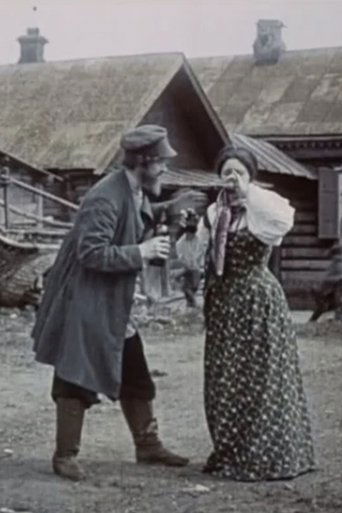
Diomidovskiy
Actor
- Active
- 1909-1909
Films 1
About Diomidovskiy
Diomidovskiy is an obscure early cinema actor credited in the 1909 Russian silent film The Dashing Merchant, but surviving reference sources provide very little biographical detail about him. He appears to belong to the first generation of screen performers working in the formative years of Russian pre-Revolutionary cinema, when many actors were credited only by surname or by a stylized transliteration that varied across sources. Because documentation from this period is incomplete, his full career arc, personal identity, and later life cannot be reconstructed with confidence from currently available mainstream archival references. His known screen activity is limited to the single surviving credit associated with 1909, suggesting either a brief film career or an unevenly documented one. As with many early film performers, his contribution is best understood as part of the broader emergence of acting for the camera in the silent era, when theatrical techniques were being adapted to a new medium. No reliable evidence has surfaced linking him to later sound-era work, stage celebrity, or a documented public profile. His historical significance lies primarily in his association with one of the very earliest surviving filmographies of Russian cinema.
More about Diomidovskiy
On screen
No detailed contemporary description of Diomidovskiy's performance style has survived. Given the film practices of 1909, his acting would almost certainly have relied on expressive pantomime, broad gestures, and clearly legible emotional signaling suited to silent cinema. Performers of this period often came from theatrical backgrounds, so his screen work likely balanced stage-derived projection with the more restrained visual storytelling emerging in early film.
In film history
Diomidovskiy's cultural impact is best understood as indirect and historical rather than celebrity-driven. As a performer in one of the earliest documented Russian silent films, he belongs to the foundational layer of national cinema history, helping to establish the presence of acting talent in a medium that was still defining its grammar and audience expectations. Although he is not known to have achieved star status, figures like him formed the acting workforce that made early feature and short-form production possible. His credited appearance in a 1909 film places him among the pioneers whose work predates the more widely remembered names of Russian and Soviet screen acting. For film historians, such performers are important because they help map the origins of screen performance in Russia before the industry became more systematized and better documented.
Later reputation
Diomidovskiy's legacy is that of a historically significant but minimally documented silent-era actor whose name survives through early film credits rather than through later fame or a preserved body of work. He stands as an example of how many early motion-picture performers have been partially lost to history, with only fragmentary evidence remaining in filmographies and archival listings. His association with The Dashing Merchant gives researchers a point of contact with the earliest phase of Russian cinematic production, when even basic casting records were often inconsistent. In film history terms, his survival in the record is valuable because it underscores the depth of the silent era beyond the famous directors and stars most often remembered today. For databases and historians, he remains a placeholder for the many unheralded artists who helped shape the first decades of screen acting.
Influence
There is no verifiable evidence that Diomidovskiy directly influenced later actors or directors in a documented, personal sense. His influence is therefore best understood at a structural level: as one of the early performers participating in the development of Russian silent-film acting conventions, he contributed to the performance culture from which later screen artistry evolved. Early actors like him helped establish how emotion, gesture, and physical presence could function on camera without spoken dialogue. Even when individual careers are obscure, the cumulative influence of these pioneers shaped the language of performance used by subsequent generations of Russian cinema artists.
Off screen
No reliable biographical record concerning Diomidovskiy's personal life has been located in standard film reference sources. His marriages, family background, education, and later activities are not presently documented in widely accessible archival materials. He remains one of many early cinema figures whose professional trace survives more clearly than their private life, which is typical of performers from the silent era in the Russian Empire. Any further claims about his relationships or later life would be speculative.
Credits
- Appeared in the 1909 silent film The Dashing Merchant, one of his only known screen credits
- Represents an early documented performer from the first decade of Russian cinema
- Associated with the silent film era when acting styles were transitioning from stage conventions to screen naturalism
Roles
- Role in The Dashing Merchant (1909)
Films
- The Dashing Merchant (1909)
Notes
- Diomidovskiy is known primarily from a single surviving 1909 film credit, making him one of the more obscure early cinema performers on record.
- His name is preserved in transliterated form, which is common for Russian-era film credits that were later cataloged by non-Russian sources.
- He worked during the first decade of Russian cinema, when film production and record-keeping were still rudimentary.
- The Dashing Merchant (1909) places him in the silent era before synchronized sound and before the rise of major Soviet studio systems.
- No confirmed birth or death dates are currently available in widely accessible film reference sources.
- He is an example of how many early film actors remain known to historians only through cast lists and archival indexes.
- Because of the scarcity of surviving documentation, it is possible that additional credits exist under variant spellings of his name.
- His surviving record illustrates the fragility of early film history, especially for performers who were not major stars.
Questions
Who was Diomidovskiy?
Diomidovskiy was an early Russian silent-film actor known from the 1909 film The Dashing Merchant. Very little biographical information survives about him, so he is primarily remembered through his film credit rather than a detailed public career.
What films is Diomidovskiy best known for?
He is best known for The Dashing Merchant (1909), which is the only film credit currently associated with him in commonly accessible sources. If other films existed, they have not been securely documented under a confirmed variant of his name.
When was Diomidovskiy born and when did he die?
His birth and death dates are not currently documented in reliable mainstream sources. The surviving record identifies him as a film performer active in 1909, but not enough biographical detail remains to establish those dates.
What awards did Diomidovskiy win?
No awards or formal honors are documented for Diomidovskiy. This is not unusual for very early silent-era performers, many of whom worked before modern film awards systems existed.
What was Diomidovskiy's acting style?
His exact acting style is not described in surviving records, but as a 1909 silent-film performer, he would likely have used expressive gestures, clear body language, and theatrical facial expression. Early silent acting depended on visual clarity, so performances were generally more emphatic than those of later naturalistic screen acting.
What is Diomidovskiy's legacy in film history?
His legacy is tied to the earliest phase of Russian cinema and the history of silent-film performance. Even though he is obscure, his name survives as part of the cast record for one of the formative works of the era, making him historically important to researchers studying the beginnings of screen acting.