
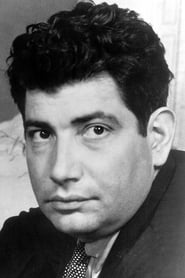
Edgar G. Ulmer
Director
Born: September 17, 1904 in Olomouc, Austria-Hungary (now Czech Republic) Died: September 30, 1972 Active: 1929-1965 Birth Name: Edgar Georg Ulmer
Films
1 film
About Edgar G. Ulmer
Edgar Georg Ulmer — Austrian-American film director who became for his ability to create atmospheric, visually striking films on minimal budgets. Born in 1904 in what was then Austria-Hungary, Ulmer began his career in German cinema, working as an assistant to F.W. Murnau on 'Sunrise' and collaborating with Billy Wilder and Robert Siodmak on early films. After emigrating to America in the 1930s, he became known as the 'King of the P's' for his prolific work on Poverty Row productions, where he developed his signature expressionistic style. His most acclaimed work, 'Detour' (1945), was made in just six days for under $100,000 yet became film noirs ever made. Despite being relegated to B-movie status for much of his career, Ulmer's technical innovation and artistic vision earned him a cult following among cinephiles and influenced generations of filmmakers. He continued directing through the 1960s, working in various genres including horror, science fiction, and melodrama, always maintaining his distinctive visual approach. Ulmer's career represents the triumph of artistic vision over commercial constraints, making him a beloved figure among film historians and noir enthusiasts.
The Craft
Behind the Camera
Ulmer's directing style was characterized by German Expressionist influences, featuring dramatic lighting, unusual camera angles, and atmospheric compositions. He excelled in creating psychological tension through visual means, using shadows, mirrors, and claustrophobic framing to reflect his characters' inner turmoil. Despite working with minimal budgets, Ulmer employed innovative techniques like forced perspective, creative set design, and location shooting to achieve maximum visual impact. His films often featured cynical protagonists, fatalistic narratives, and a sense of doom that became hallmarks of film noir. Ulmer's ability to transform budgetary limitations into artistic strengths through creative problem-solving became his signature approach.
Milestones
- Assistant to F.W. Murnau on 'Sunrise' (1927)
- Directed 'The Black Cat' (1934), first film to pair Boris Karloff and Bela Lugosi
- Created masterpiece 'Detour' (1945) in just six days
- Pioneered low-budget filmmaking techniques that influenced independent cinema
- Directed over 50 films across multiple genres
- Developed distinctive expressionistic visual style despite budget constraints
Best Known For
Must-See Films
Accolades
Special Recognition
- Detour selected for preservation in the National Film Registry (1992)
- Retrospective exhibitions at Museum of Modern Art and Cinémathèque Française
- Subject of academic studies and film festival tributes worldwide
Working Relationships
Worked Often With
Studios
Why They Matter
Impact on Culture
Edgar G. Ulmer's cultural impact extends far beyond his modest commercial success during his lifetime. His masterpiece 'Detour' became. Ulmer demonstrated that artistic vision could transcend budgetary limitations, inspiring generations of independent filmmakers working with limited resources. His expressionistic visual style influenced the development of film noir, horror, and science fiction aesthetics. Ulmer's work has been the subject of extensive academic study, with scholars examining his techniques for creating atmosphere and psychological tension. His films have been preserved and restored by major film archives, ensuring his contribution to cinema history is not forgotten. The term 'Ulmeresque' has been used to describe films that achieve artistic merit despite production constraints.
Lasting Legacy
Edgar G. Ulmer's legacy is that of the ultimate outsider artist who created enduring works despite constant obstacles. He proved that creativity and vision could flourish outside the studio system, paving the way for independent cinema. His films, particularly 'Detour,' are now recognized as masterpieces of American cinema, studied in film schools and celebrated at festivals worldwide. Ulmer's ability to transform budgetary limitations into artistic strengths became a model for resourceful filmmakers. His influence can be seen in the works of directors like Martin Scorsese, Jim Jarmusch, and the Coen Brothers. The preservation and restoration of his films have introduced new generations to his unique vision. Today, Ulmer is celebrated excelled in visual storytelling and a symbol of artistic integrity in the face of commercial pressure.
Who They Inspired
Ulmer influenced countless filmmakers through his demonstration of how to maximize artistic impact with minimal resources. His expressionistic lighting and camera techniques became staples of film noir and horror cinema. Directors like Martin Scorsese have cited Ulmer as an influence, particularly his ability to create psychological depth through visual means. The French New Wave directors, who admired American B-movies, recognized Ulmer's innovations. His work influenced the development of independent cinema, showing that compelling stories could be told outside the studio system. Contemporary filmmakers working with limited budgets continue to study Ulmer's techniques for creative problem-solving. His approach to genre filmmaking elevated B-movies from mere entertainment to artistic expression, influencing how genre films are perceived and created.
Off Screen
Ulmer's personal life was marked by both artistic passion and controversy. He had a romantic relationship with script Shirley Kassler while she was married to cinematographer Charles J. Stumar, leading to her divorce and their subsequent marriage. This scandal reportedly contributed to Ulmer's blacklisting from major studios, forcing him into Poverty Row productions. Despite these challenges, Ulmer remained dedicated to his craft and continued working throughout his life. He and Shirley had one daughter, Arianne Ulmer, who later became a film preservationist and advocate for her father's work. Ulmer was known as a cultured, multilingual intellectual who loved literature, music, and art, bringing these sensibilities to his films.
Education
Studied architecture and design in Vienna; informal film education through work in German film industry
Family
- Shirley Kassler (1936-1972)
Did You Know?
- Detour was filmed in only six days for a budget of $20,000
- Ulmer spoke multiple languages fluently, including German, French, English, and Hungarian
- He was nicknamed 'King of the P's' for his work on Poverty Row productions
- The Black Cat (1934) was Universal's biggest box office hit of 1934
- Ulmer worked as an architect and set designer before becoming a director
- He was blacklisted from major studios partly due to his relationship with his future wife
- Detour was selected for preservation in the National Film Registry in 1992
- Ulmer directed films in at least six different languages
- His daughter Arianne became a prominent film preservationist
- Ulmer's films were rediscovered and celebrated by French critics in the 1950s
- He often used the same actors repeatedly due to budget constraints and personal loyalty
- The Man from Planet X (1951) was one of the first films to feature an alien invasion of Earth
In Their Own Words
I make pictures for the masses and I think they're intelligent enough to understand what I'm doing.
In Hollywood, a director never knows what he's going to do next. He's at the mercy of the producer.
The only way to make a picture cheap is to be clever.
I was always more interested in the psychological aspect of a story than the plot.
Budget is only a limitation if you let it be. For me, it was a challenge to be creative.
Frequently Asked Questions
Who was Edgar G. Ulmer?
Austrian-American on YTB.my. He's best known for his film noir masterpiece 'Detour' (1945) and for being called the 'King of the P's' for his work on Poverty Row productions.
What films is Edgar G. Ulmer best known for?
Titles linked here include Detour (1945), The Black Cat (1934).
When was Edgar G. Ulmer born and when did he die?
Born September 17, 1904; died September 30, 1972.
What awards did Edgar G. Ulmer win?
Ulmer did not receive major industry awards during his lifetime, but his film 'Detour' was selected for preservation in the National Film Registry in 1992, and he has been honored with numerous film festival retrospectives and academic recognition for his contributions to cinema.
What was Edgar G. Ulmer's directing style?
Ulmer's directing style featured German Expressionist influences with dramatic lighting, unusual camera angles, and atmospheric compositions. He excelled at creating psychological tension through visual means, using shadows and claustrophobic framing despite working with minimal budgets.
Why was Edgar G. Ulmer called the 'King of the P's'?
Ulmer earned the nickname 'King of the P's' for his prolific work on Poverty Row productions - low-budget films made by small, independent studios. He became legendary for creating artistically ambitious films despite severe financial constraints.
How did Edgar G. Ulmer influence cinema?
Ulmer influenced cinema by demonstrating that artistic vision could transcend budget limitations, inspiring independent filmmakers. His expressionistic visual style influenced film noir and horror aesthetics, and his efficient storytelling techniques continue to be studied by filmmakers.