

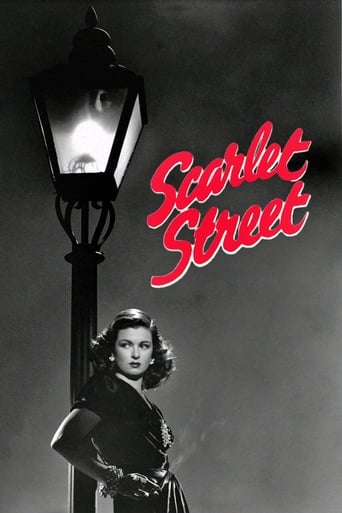
Detour
"an unemployed pianist"
Keys: Space play/pause · ←/→ 10s · F fullscreen · M mute · </> speed
About this film
Al Roberts, an unemployed pianist, arrives at a roadside diner in Reno, Nevada after hitching a ride. He becomes upset at a customer for playing a song on the jukebox, as it reminds him of his time squandering his talent at a cheap nightclub in New York City. When his girlfriend and the nightclub's lead singer Sue Harvey quits her job and leaves to seek fame In Hollywood, Al becomes depressed.
Cast & crew
More films like this
More Drama films
View all →







More about this film
About the production
Release dateNovember 30, 1945
Budget$20,000-$30,000 (one of the cheapest feature films ever produced)
Box officeModest but highly profitable relative to its minimal budget
ProductionProducers Releasing Corporation (PRC)
Filmed inHollywood, California (studio sets), Limited location shooting in the Los Angeles area
Filmed in just six days with a skeleton crew, utilizing only four main sets. Director Edgar G. Ulmer was famous for his ability to create visually compelling films on minimal budgets. The production reused sets and props from other PRC films, and many scenes were shot in single takes to save film and time. The famous opening sequence was achieved through rear projection rather than actual location shooting.
Themes
Fate vs. Free WillThe Corruption of InnocenceIdentity and DisplacementParanoia and Psychological EntrapmentThe Dark Side of the American Dream
Themes & topics
film noirhitchhikingblackmailmistaken identityfemme fataleroad moviepsychological thrillerdoomed protagonistfatalismpoverty row cinema
Historical background
Detour (1945) emerged during the studio era and wartime cinema. Al Roberts, an unemployed pianist, arrives at a roadside diner in Reno, Nevada after hitching a ride. Archival records and catalog entries help place the work within film-history surveys of the period.
Why this film matters
Preserved under Wikidata ID Q2062566, Detour is valued as a screen drama within catalog and archive collections. Wikipedia's "Detour (1945 film)" entry connect it to broader histories of cinema exhibition and restoration.
Making of
The production of 'Detour' is in Hollywood history for its extreme economy and creative problem-solving. Director Edgar G. Ulmer, working for the notoriously budget-conscious PRC studio, developed numerous techniques to create the illusion of a much more expensive production. The cross-country journey was suggested through minimal means: a few rear projection shots, stock footage, and clever dialogue. The infamous scene where Haskell dies in the car was accomplished by having actor Edmund MacDonald lie completely still while crew members rocked the vehicle and created wind effects with fans. Ann Savage's intensely aggressive performance was reportedly enhanced by her genuine dislike of co-star Tom Neal, creating an authentic tension that Ulmer capitalized on. The film was shot in chronological order, which was unusual but helped maintain narrative continuity given the rapid shooting schedule. Ulmer's background in German Expressionist cinema informed his use of shadows and camera angles to create psychological depth despite the limited resources.
What critics said
Trade and archival sources offer limited day-one review coverage for Detour. Modern reception rests on its availability in collections, repertory screenings, and reference works that document 1945 cinema.
Did you know?
- The film was selected for preservation in the United States National Film Registry in 1992, being deemed 'culturally, historically, or aesthetically significant'
- Director Edgar G. Ulmer was nicknamed the 'King of PRC' (Producers Releasing Corporation) for his ability to create quality films on poverty-row budgets
- Tom Neal and Ann Savage reportedly had genuine animosity off-screen, which Ulmer believed enhanced their on-screen chemistry
- The famous 'dead man in the car' scene was achieved by having the actor lie still while the car was rocked by crew members off-camera
- The film's entire budget was less than what major studios typically spent on a single day of shooting
- Ann Savage's performance as Vera is considered among the leading terrifying and memorable femme fatale portrayals in film noir history
- The film's bleak worldview and fatalistic tone were influenced by the post-World War II mood of American society
- Despite its low budget, the film's cinematography and lighting techniques influenced countless later noir films
- The original novel by Martin Goldsmith was adapted by Ulmer in just three days
- The film's runtime of 67 minutes made it perfect for double bills, which was common practice at the time
Awards & recognition
- National Film Registry Selection (1992)
- New York Film Critics Circle Special Citation (1945)
Visual style
The cinematography by Benjamin H. Kline is remarkable for its creative use of limited resources to maximum effect. Working with minimal lighting equipment and basic sets, Kline employed high-contrast lighting and deep shadows characteristic of film noir, creating an atmosphere of psychological unease and moral ambiguity. The visual style draws heavily from German Expressionism, with distorted camera angles and stark lighting that externalize the protagonist's tormented mental state. Kline utilized low-angle shots to emphasize power dynamics and claustrophobic framing to convey Roberts's entrapment. The famous diner scene uses reflective surfaces and strategic lighting to create a web-like visual pattern around the characters. Despite the budget constraints, the cinematography achieves a visual richness that enhances the narrative's themes of fate and paranoia, proving that artistic vision could triumph over technical limitations.
Innovations
Despite its minimal budget, 'Detour' achieved remarkable technical innovations through creative problem-solving. The film pioneered several cost-effective techniques that would become standard in low-budget filmmaking. Ulmer's use of rear projection for the driving sequences created the illusion of movement without expensive location shooting. The production developed innovative lighting techniques using minimal equipment to achieve the high-contrast noir aesthetic. The film's sound design, while sparse, demonstrated how selective use of audio elements could maximize psychological impact. Perhaps most significantly, 'Detour' proved that compelling narrative and visual style could be achieved through creative resourcefulness rather than expensive technology. These technical achievements have made the film a case study in efficient filmmaking, influencing generations of independent and low-budget filmmakers.
Music
Due to the extreme budget constraints, 'Detour' features a minimal but effective musical score primarily composed of stock music and library tracks. The limited original music was composed by Leo Erdody, who had to create atmospheric cues with minimal resources. The film makes strategic use of diegetic music, particularly the nightclub piano pieces that establish Al Roberts's background and profession. The soundtrack's sparseness actually enhances the film's tense atmosphere, with long stretches of silence punctuated by sudden musical stings that emphasize moments of psychological crisis. The absence of a lush orchestral score contributes to the film's raw, gritty quality, making the musical moments more impactful when they do occur. This economical approach to sound design has been praised by later critics for its effectiveness in creating mood and tension.
Famous quotes
That's life. Whichever way you turn, Fate sticks out a foot to trip you.
I was caught up in the nightmare of a cheap dime novel, and I was living it.
Vera: 'You're a real loser, aren't you?' Al: 'I'm a loser all right, but I'm not the kind that goes around looking for a chance to lose.'
So we meet again, Al. Funny how things turn out, isn't it?
I felt as if I were riding a phantom express that thundered through a black night with only one destination—the cemetery.
Memorable scenes
- The opening narration where Al Roberts sits alone in a roadside diner, establishing the film's fatalistic tone and flashback structure
- The death scene in the car where Haskell dies mysteriously, forcing Al to make his fateful decision
- Vera's first appearance, emerging from the shadows with predatory intensity, immediately establishing her as a threatening presence
- The blackmail sequence where Vera systematically destroys Al's psychological defenses through manipulation and threats
- The final struggle in the hotel room, culminating in Vera's accidental death and Al's complete entrapment by fate
What audiences thought
Initial audience response to 'Detour' was modest, as was typical for PRC releases which primarily played in second-run theaters and as part of double bills. However, the film developed a strong cult following over the years, particularly among film noir enthusiasts and cinema scholars. Audiences were drawn to its raw intensity and the palpable chemistry between the leads. The film's bleak worldview and uncompromising narrative found resonance with later generations of viewers who appreciated its unflinching approach to dark themes. In the modern era, 'Detour' has become a staple of revival houses and film festivals, with contemporary audiences responding to its timeless themes and the authenticity of its performances. The film's reputation has grown through home video releases and streaming availability, introducing it to new audiences who continue to be captivated by its nightmarish journey into the heart of American darkness.
Film connections
Influenced by
- German Expressionist cinema
- Hardboiled detective fiction
- Italian neorealism
- French poetic realism
- The works of Cornell Woolrich
- Double Indemnity (1944)
- The Maltese Falcon (1941)
This film influenced
- Kill Bill (2003)
- Pulp Fiction (1994)
- The Hitcher (1986)
- U Turn (1997)
- No Country for Old Men (2007)
- Blue Velvet (1986)
- Lost Highway (1997)
Film restoration
The film has been preserved by the Library of Congress as part of the National Film Registry. Multiple restoration efforts have been undertaken, with the most comprehensive being a 4K restoration by the Criterion Collection in 2020, which cleaned up damage and enhanced the contrast to better reflect Ulmer's original vision. The original negatives are stored in the UCLA Film and Television Archive. Despite the film's low-budget origins and the typical deterioration issues associated with poverty row productions, 'Detour' survives in excellent condition and remains widely accessible through various home media and streaming platforms.
Where to watch
- The Criterion Channel
- HBO Max
- Amazon Prime Video
- Apple TV
- Google Play Movies
- YouTube Movies
- Blu-ray/DVD - Criterion Collection
- Blu-ray/DVD - Kino Lorber
- Tubi (free with ads)
- Pluto TV (free with ads)